Press Brake Bending
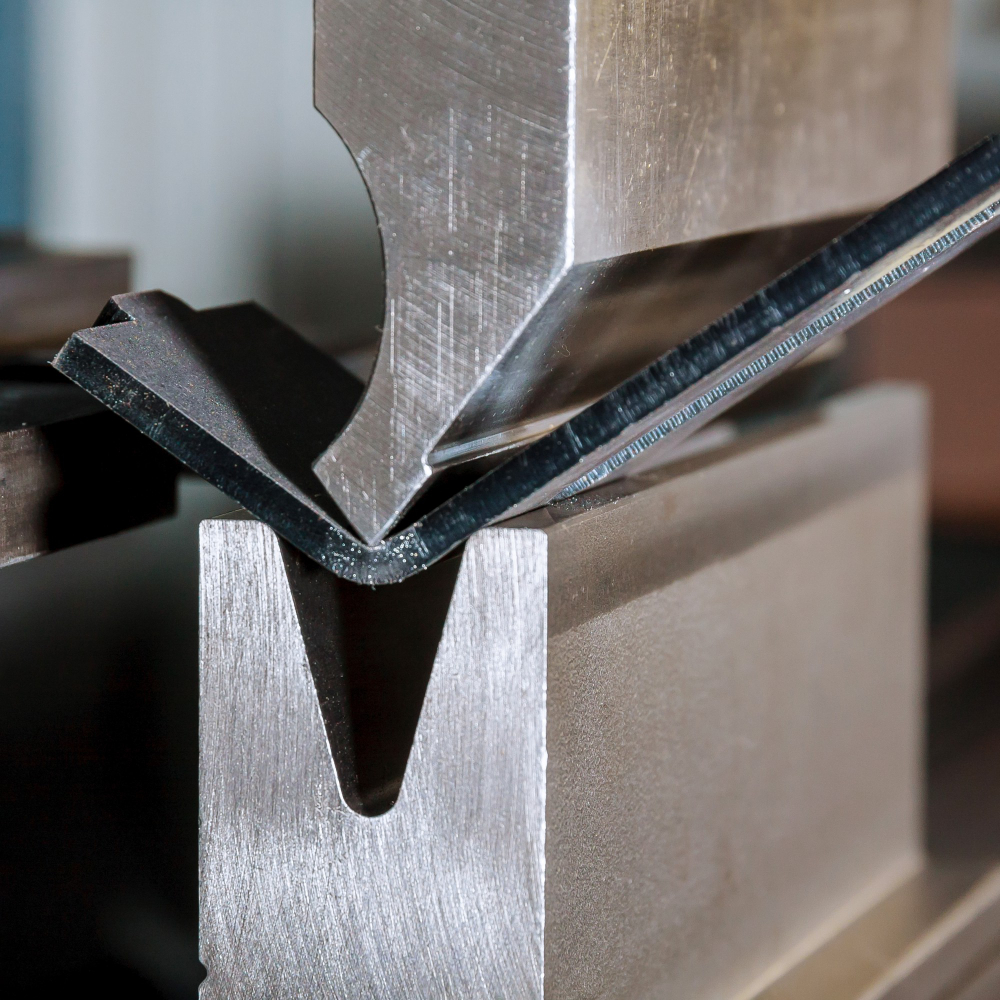
When choosing a press brake bending service, sheet thickness, material properties, bending angle, part dimensions, and production volume should be evaluated together. A properly planned bending process helps ensure that parts are formed according to technical drawings and allows subsequent welding and assembly operations to proceed more efficiently.
Key evaluation criteria:
-
Sheet metal type and thickness
-
Bending angle and bend line
-
Part dimensions
-
Tolerance requirements
-
Production volume and repeatability
Avrasya Galvaniz evaluates press brake bending requirements for sheet metal parts used across various industries based on project-specific details and plans the production process in accordance with technical requirements.
What Does a Press Brake Bending Service Include?
Press brake bending involves forming flat metal sheets to specified angles and dimensions. During the process, the part’s technical drawing, material thickness, bend points, and intended application are taken into consideration.
A bending plan can be developed for different requirements, ranging from one-off parts to recurring production orders. For parts with multiple bend lines, determining the correct bending sequence is particularly important.
“Achieving the right result in press brake bending depends not only on reaching the specified angle but also on maintaining the overall geometry of the part.”
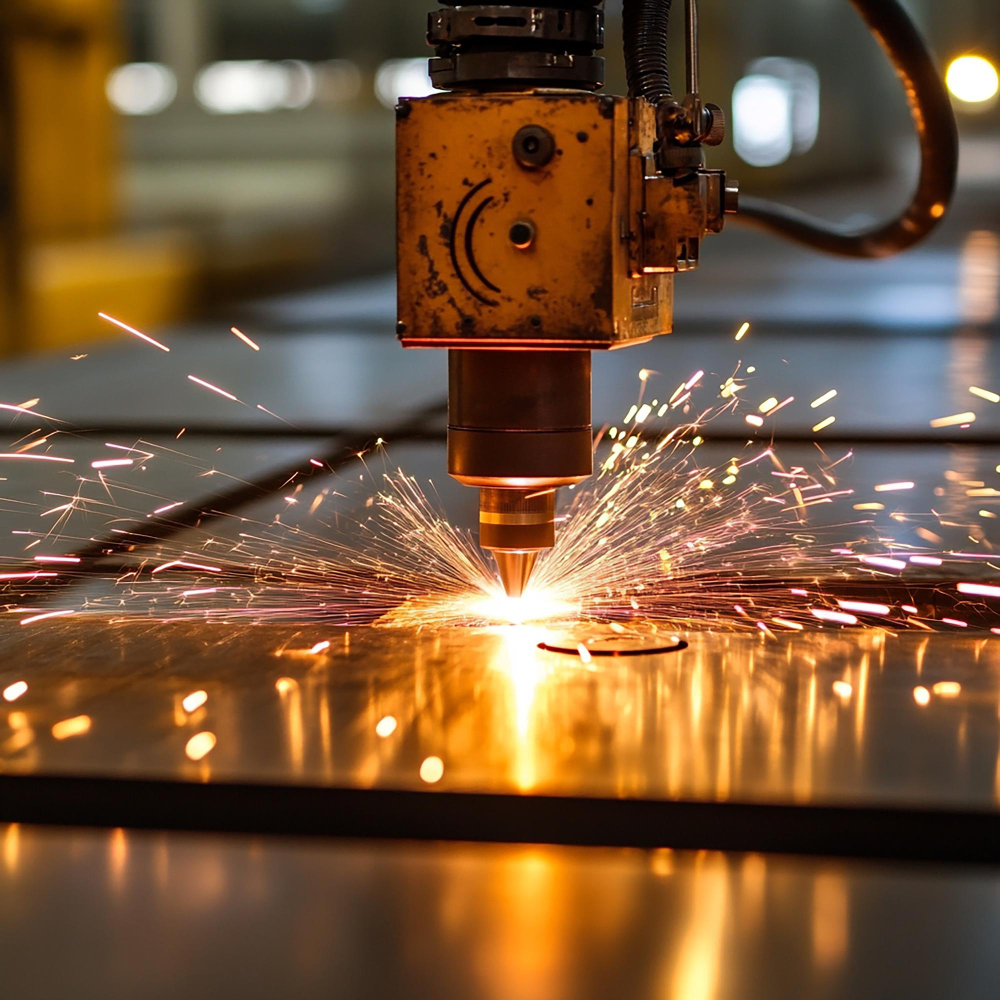
A key consideration in practice is that bending should not be treated independently from the cutting process. If the dimensions and bend allowances of the cut part are not planned correctly, dimensional deviations may occur in the finished part.
For your press brake bending requirements, you can share your technical drawings, sheet thickness, and quantity information with Avrasya Galvaniz to determine the appropriate production scope.
Which Technical Details Are Evaluated in Press Brake Bending?
Before bending, evaluating only the overall dimensions of the part is not sufficient. The bending angle, flange length, material thickness, bending sequence, and subsequent manufacturing operations should all be considered together.
| Technical Criterion | Importance in Production |
|---|---|
| Sheet thickness | Helps determine the appropriate bending parameters |
| Bending angle | Affects the part’s ability to achieve the required shape |
| Flange dimensions | Helps maintain the final dimensions of the part |
| Bending sequence | Affects the manufacturability of complex parts |
| Tolerance | Plays a key role in assembly and part compatibility |
| Production volume | Influences repeatability and production planning |
“Technical planning before bending is a key step in reducing dimensional deviations and unnecessary rework.”
The bending sequence becomes particularly critical for parts where multiple surfaces must be positioned accurately in relation to one another. For this reason, reviewing the technical drawing before production helps ensure a more controlled manufacturing process.
Why Is Precision Press Brake Bending Important?
Precision press brake bending aims to form parts as consistently as possible according to specified angles and dimensions. In welded fabrication, panels, enclosures, profile-type components, and various metal fabrication applications, accurate bending geometry directly affects assembly quality.
In series or repeat production, maintaining consistent dimensions across identical parts is also important. Even minor dimensional variations can lead to alignment and joining issues during subsequent operations.
“Dimensional and angular consistency in press brake bending helps ensure that parts move smoothly through subsequent manufacturing stages.”
The critical point is to prevent unnecessary rework during the technical planning stage rather than after production has been completed. Accurate part data and clearly defined production requirements help ensure a more controlled and efficient process.
How Does the Press Brake Bending Order Process Work?
Providing complete technical information for press brake bending orders helps streamline production planning. Part drawings, sheet metal type, thickness, bending angles, and quantity are the key inputs required for the process.
- The general process consists of the following steps:
- Submission of technical drawings and part specifications
- Evaluation of sheet thickness and dimensions
- Planning of bend points and the bending sequence
- Execution of the press brake bending process
- Dimensional and form inspections
- Preparation of parts for subsequent manufacturing stages
Avrasya Galvaniz evaluates press brake bending requirements according to the technical specifications of each part and the required production volume.
Effective Production Planning for Press Brake Bending
When selecting a supplier for press brake bending services, it is important to consider not only the bending operation itself but also technical communication, production capabilities, dimensional control, and process monitoring. Planning and repeatability become particularly important in the regular production of parts with different geometries.
Evaluating technical drawings for manufacturability helps create a more efficient transition between cutting, bending, welding, and assembly processes. This approach strengthens operational control for both one-off projects and recurring production requirements.
For your press brake bending project, share your part dimensions, sheet thickness, technical drawings, and production quantity with Avrasya Galvaniz to develop a production solution tailored to your requirements.