What Is Galvanizing?
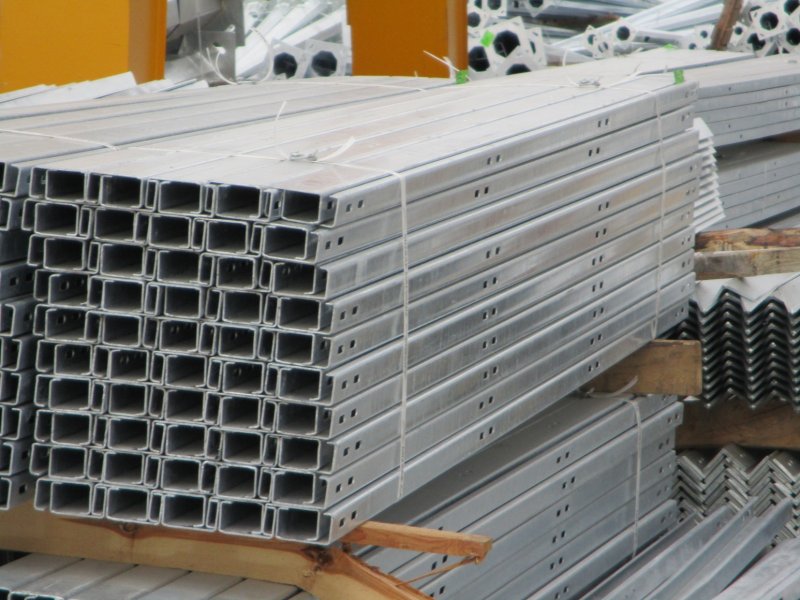
Galvanizing is the process of coating the surfaces of iron and steel products with zinc to delay rusting. Through this process, the metal becomes more resistant to rain, moisture, air, and outdoor environmental conditions.
The main purpose of galvanizing is to extend the service life of steel products and reduce maintenance requirements. Poles, railings, steel structures, agricultural equipment, and road safety products used outdoors can remain protected for longer periods thanks to galvanized coating.
The key features of galvanizing include:
- Reduces direct contact between the steel surface and air.
- Slows down rusting caused by moisture.
- Provides protection against outdoor conditions.
- Extends the service life of metal products.
- Can reduce maintenance and replacement requirements.
- Can reach corners, edges, and recessed areas.
- Can be applied to large and complex steel components.
- Can be used in industrial, construction, energy, and infrastructure projects.
- Creates a strong protective layer on the steel surface.
- Contributes to the durability of the product during transportation and installation.
Galvanizing does not simply mean applying zinc to a surface. Successful application requires cleaning the steel surface, designing the part correctly, and carrying out the coating process under controlled conditions.
How Does Galvanizing Protect Steel?
Galvanized coating creates a protective layer between the steel and the external environment. When zinc covers the surface, it makes it more difficult for water, air, and moisture to reach the steel directly. This slows down the rusting process.
Another important feature distinguishes galvanizing from some other surface coatings. Zinc begins to corrode before steel. When a small scratch occurs in the coating, the surrounding zinc continues to help protect the steel surface.
Galvanized coating both separates the steel surface from the external environment and can continue to provide protection against minor surface damage.
The protection provided by galvanizing can be summarized as follows:
- Limits contact between the steel surface and water.
- Reduces the amount of oxygen reaching the metal surface.
- Delays rust formation.
- Helps prevent small scratches from developing further.
- Supports longer-term outdoor use of the metal.
- Contributes to longer maintenance intervals.
- Can reduce the rate at which surface deterioration progresses.
- Helps maintain the structural integrity of the steel component.
The durability of the coating may vary depending on the characteristics of the steel and the environment in which the product is used. Operating conditions should be evaluated separately for products that remain continuously submerged in water, are exposed to intensive chemical effects, or come into contact with abrasive substances.
What Are the Galvanizing Methods?
Galvanizing is not performed using a single method. The method used is determined according to the size of the part, its intended application, surface requirements, and manufacturing method.
The most common galvanizing methods include:
- Hot-dip galvanizing
- Electrolytic galvanizing
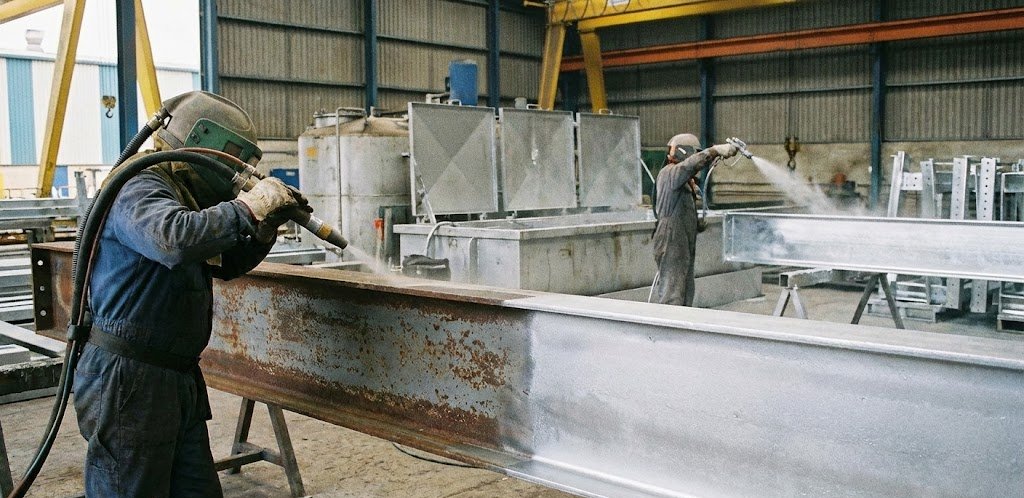
- Zinc spraying
- Galvanized sheet production
- Local surface repair
- Special-purpose zinc coating applications
| Galvanizing Method | How Is It Applied? | Main Feature | Applications |
|---|---|---|---|
| Hot-dip galvanizing | The steel part is immersed in a bath of molten zinc | Creates a thick and durable coating | Poles, railings, and steel structures |
| Electrolytic galvanizing | Zinc is applied to the surface using electric current | Provides a thinner and more uniform appearance | Small parts and fasteners |
| Zinc spraying | Zinc is sprayed onto the prepared surface | Can be applied to large surfaces | Large steel components and repair work |
| Galvanized sheet | Continuous coating is applied on the sheet production line | Suitable for mass production | Roofing, façades, ducts, and metal products |
Hot-dip galvanizing is frequently preferred for large steel components intended for outdoor use. Electrolytic galvanizing is more commonly used for smaller metal parts where a thinner and more uniform surface is required.
The correct galvanizing method should be selected according to the operating conditions of the product rather than its appearance.
Applying the same galvanizing method to every part is not appropriate. For example, a large lighting pole and a small fastener have different coating requirements. Product size, wall thickness, intended application, and level of outdoor exposure should be evaluated together when selecting the method.
How Is Hot-Dip Galvanizing Performed?
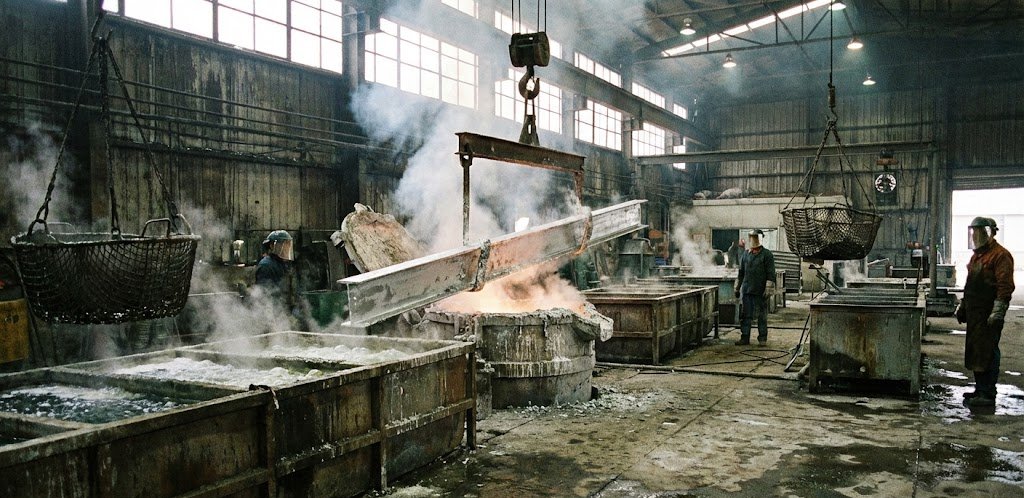
In the hot-dip galvanizing process, the steel part is immersed in a bath of molten zinc after undergoing specific preparation stages. If the surface is not sufficiently clean, the zinc cannot adhere evenly to every part of the metal.
The general process steps are as follows:
- The product is inspected.
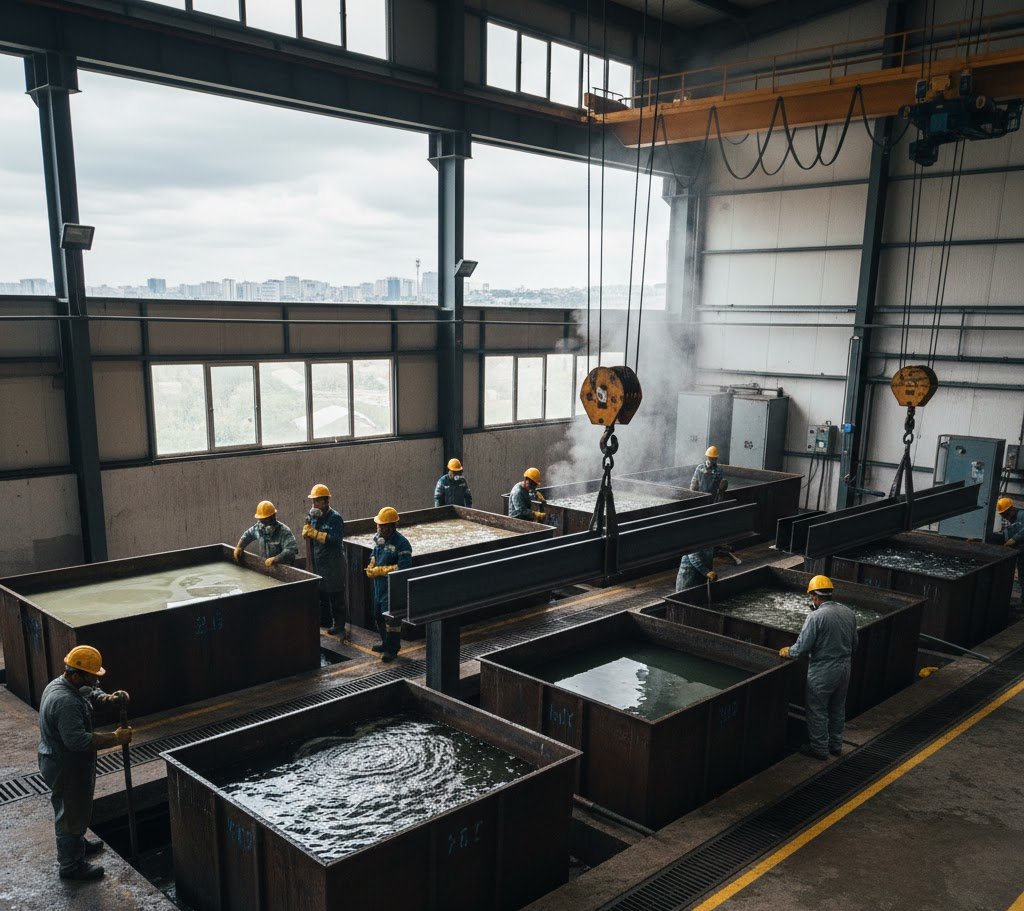
- Oil and dirt are removed from the surface.
- Rust and metal oxides are removed.
- The surface is prepared for coating.
- The product is immersed in the zinc bath.
- A coating layer forms between the zinc and steel.
- The product is removed from the bath.
- Excess zinc is removed from the surface.
- The product is cooled.
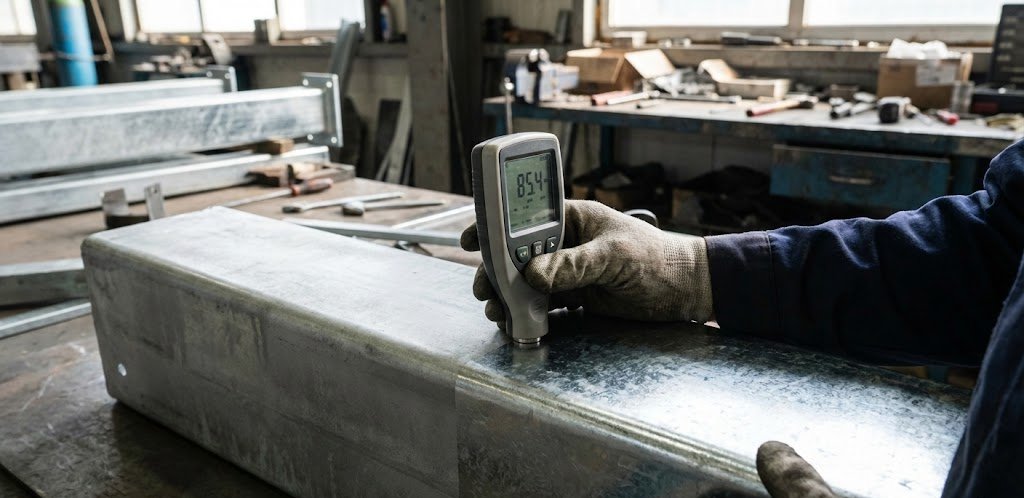
- The surface and coating are inspected.
The following residues should be removed before processing:
- Oil
- Grease
- Paint
- Rust
- Welding slag
- Labels and adhesives
- Contaminants generated during manufacturing
- Chemical residues remaining on the surface
- Metal burrs
- Weld spatter
Hollow profiles and enclosed sections should have vent holes. These holes help the part enter the zinc bath safely and allow liquid zinc to drain from inside the product.
A high-quality galvanized coating begins with proper surface preparation before the zinc bath.
Insufficient surface preparation can result in uncoated areas, irregular surfaces, and inadequate zinc adhesion in certain areas. For this reason, cleaning and preparation are among the most important stages of the coating process.
Where Is Galvanizing Used?
Galvanizing can be used in almost any industry where steel products are exposed to outdoor conditions. It provides important protection, particularly for products exposed to rain, snow, moisture, and temperature fluctuations.
In the Construction Industry
- Steel structures
- Stairs
- Railings
- Roof support structures
- Façade connection components
- Platforms
- Walkways
- Steel columns and beams
- Scaffolding components
- Structural connection components
In the Energy Sector
- Power transmission poles
- Substation components
- Cable support systems
- Solar panel support structures
- Electrical distribution equipment
- Lighting poles
- Electrical panel supports
- Energy facility platforms
In Transportation and Infrastructure
- Road barriers
- Traffic sign poles
- Bridge railings
- Pedestrian crossing components
- Parking systems
- Culvert and drainage components
- Railway infrastructure equipment
- Directional sign supports
- Road lighting components
In Agriculture and Livestock Farming
- Greenhouse support systems
- Fence posts
- Animal shelters
- Metal components of agricultural machinery
- Irrigation system components
- Storage area support structures
- Feeding and partition systems
- Agricultural facility platforms
In Industrial Facilities
- Machine frames
- Pipe supports
- Metal platforms
- Service stairs
- Ventilation ducts
- Production line equipment
- Warehouse racking systems
- Maintenance platforms
- Steel support systems
- Internal facility safety railings
The main reason galvanized products are widely used is that galvanizing can be applied to components of different dimensions while providing strong protection under outdoor conditions.
What Are the Advantages of Galvanizing?
While protecting steel, galvanized coating can also provide easier maintenance and operation for businesses. A properly applied coating can help reduce the need for intervention throughout the service life of the product.
The main advantages of galvanizing include:
- Delays rusting.
- Supports the service life of steel.
- Provides resistance to outdoor conditions.
- Covers most of the surface in a single process.
- Provides protection at corners and edges.
- Can be applied to products with complex shapes.
- Is suitable for large steel components.
- Can reduce maintenance requirements.
- Can reduce the frequency of repainting.
- Provides resistance to minor impacts during transportation.
- Enables rapid inspection after production.
- Can be used across different industries.
- Gives the steel surface a more uniform appearance.
- Can provide long-term protection in project and field applications.
- Can be used in indoor and outdoor environments.
- Creates a continuous protective layer on the metal surface.
- Supports more organized maintenance planning.
- Helps protect hard-to-reach surfaces.
One important advantage of galvanizing is that the coating can be visually inspected. Uncoated areas, excessive zinc build-up, or sharp surface projections can be identified during inspection.
What Affects Galvanizing Quality?
The quality of galvanized coating does not depend solely on the zinc bath. Steel composition, product design, welding quality, surface cleanliness, and processing time directly affect the coating result.
The main factors affecting quality include:
- Chemical composition of the steel
- Wall thickness of the product
- Welded areas
- Oil and paint remaining on the surface
- Amount of rust and oxide
- Angle at which the product enters the zinc bath
- Position of vent holes
- Adequacy of drainage holes
- Size and shape of the part
- Immersion time in the zinc bath
- Cooling process
- Transportation and stacking method
- Cleanliness of weld seams
- Manufacturing method of the part
- Burrs and sharp edges on the surface
- Positioning of the product in the bath
Not all galvanized products may have the same level of brightness. Some surfaces may appear more matte, while others may appear brighter. These differences do not always indicate a coating defect.
Galvanizing quality should be evaluated according to coating continuity and operating conditions, not solely by surface brightness.
The following points should be checked during inspection:
- Are there any uncoated areas?
- Are there any sharp zinc projections?
- Have any holes been blocked by zinc?
- Is there slag or residue on the product?
- Are the mounting points usable?
- Has any transportation-related surface damage occurred?
- Has the coating reached the entire product?
- Has the product experienced bending or deformation?
- Are there irregularities in welded areas?
- Are there any areas where water may accumulate?
Avrasya Galvaniz’s Production Approach
Avrasya Galvaniz is a domestic brand operating in the fields of hot-dip galvanizing and metal processing. The company carries out the manufacturing, preparation, and galvanizing processes of steel products used across various industries.
The main areas served by Avrasya Galvaniz include:
- Hot-dip galvanizing applications
- Steel structure manufacturing
- Pole manufacturing
- Railing systems
- Sheet metal processing
- Metal component manufacturing
- Custom steel fabrication
- Surface protection for industrial products
- Coating of large steel components
- Post-production quality control
- Preparation of steel components for coating
- Project-specific production planning
- Preparation of welded metal products
- Manufacturing for infrastructure and industrial projects
- Processing of components in different dimensions
Coordinating metal processing and galvanizing processes helps ensure that components are properly prepared for coating. Considering holes, welded areas, and enclosed sections during the manufacturing stage has a positive effect on the galvanizing result.
Successful galvanizing depends on combining proper manufacturing design with a controlled coating process.
With its domestic manufacturing approach, Avrasya Galvaniz provides solutions for the fabrication, surface preparation, and hot-dip galvanizing of steel products. Carrying out every stage in a planned manner, from manufacturing to post-coating inspections, helps maintain product quality.
Points to Consider When Using Galvanized Products
Proper transportation, storage, and installation of galvanized products help protect the coating. Products should not be left wet, without ventilation, or tightly stacked for extended periods.
The following points should be considered for galvanized products:
- Products should be stored in a dry area.
- Stacking methods that cause water accumulation should be avoided.
- Air circulation should be maintained between components.
- Sharp chains should not be used during transportation.
- Products should not be dragged on the ground.
- Unnecessary scratching of the surface should be avoided during installation.
- Cut areas should be repaired with an appropriate protective treatment.
- Welded areas should be protected again.
- Horizontal surfaces where water may accumulate should be inspected.
- Connection points should be inspected at regular intervals.
- Direct contact with chemicals should be avoided.
- Damaged areas should be repaired promptly.
- Products should not be placed directly on muddy ground.
- Proper drainage should be provided in storage areas.
- Installation equipment should not damage the surface.
- Sharp impacts should be avoided.
- A general surface inspection should be carried out after transportation.
- Products stored for extended periods should be inspected at regular intervals.
The clearest answer to the question “What is galvanizing?” is that it is a zinc coating process that protects steel against rust. However, achieving a good result requires proper product design, a clean surface, an appropriate galvanizing method, and controlled use.
Avrasya Galvaniz provides corporate solutions for the manufacturing and hot-dip galvanizing of steel products with its domestic production infrastructure and metal processing capabilities.