Use of Galvanized Coating in Steel Structures

Steel structures are an essential part of today’s construction industry. Their relatively low weight, high load-bearing capacity, and fast installation make them suitable for a wide range of projects. However, because steel is susceptible to corrosion, structures exposed to outdoor or aggressive environmental conditions require effective corrosion protection. This is where galvanized coating plays an important role.
Galvanizing protects steel by applying a zinc coating to its surface. This helps prevent rust and corrosion, extends the service life of steel structures, and can significantly reduce long-term maintenance requirements. Galvanized steel structures are widely used in industrial facilities, warehouses, hangars, agricultural buildings, infrastructure, and outdoor structures.
Importance of Galvanizing for Structural Protection
Galvanizing is not merely an aesthetic surface treatment; its primary purpose is to protect steel against corrosion and support long-term structural durability. Corrosion can gradually reduce the cross-section and performance of steel components, particularly in humid, coastal, industrial, or chemically aggressive environments.
Hot-dip galvanizing creates metallurgically bonded zinc-iron alloy layers on the steel surface. This coating provides two forms of protection.
First, it acts as a physical barrier that reduces direct exposure of the steel to moisture and oxygen. Second, zinc provides sacrificial protection because it is more electrochemically active than steel. If a small area of steel becomes exposed, the surrounding zinc can corrode preferentially and help protect the underlying steel.
How Is Galvanizing Applied to Steel Structures?
Different zinc coating methods are available, including hot-dip galvanizing and electrogalvanizing. For many fabricated structural steel components intended for outdoor use, hot-dip galvanizing is commonly selected.
The typical hot-dip galvanizing process includes:
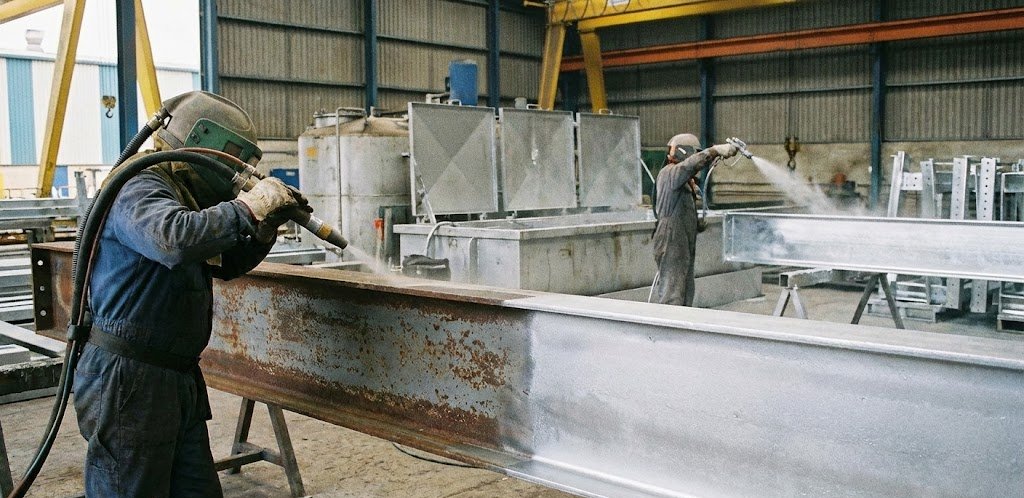
- Surface cleaning and degreasing
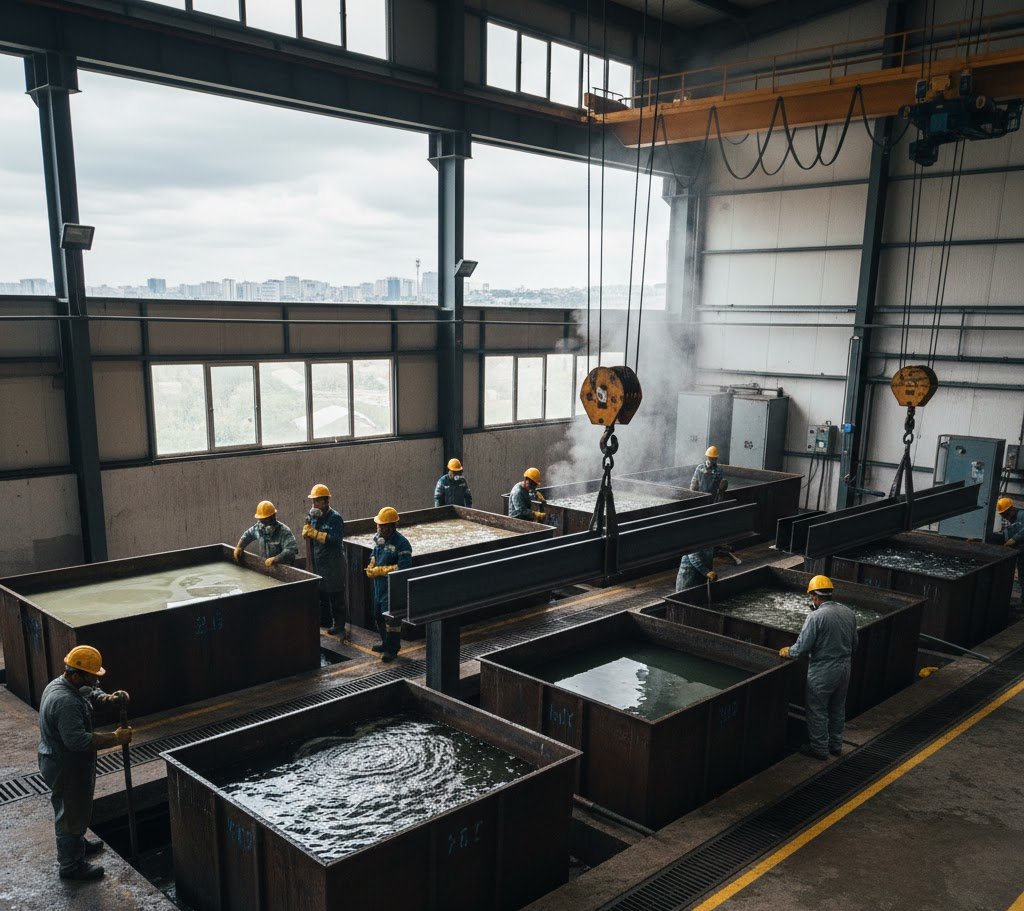
- Pickling to remove rust and mill scale
- Rinsing
- Fluxing
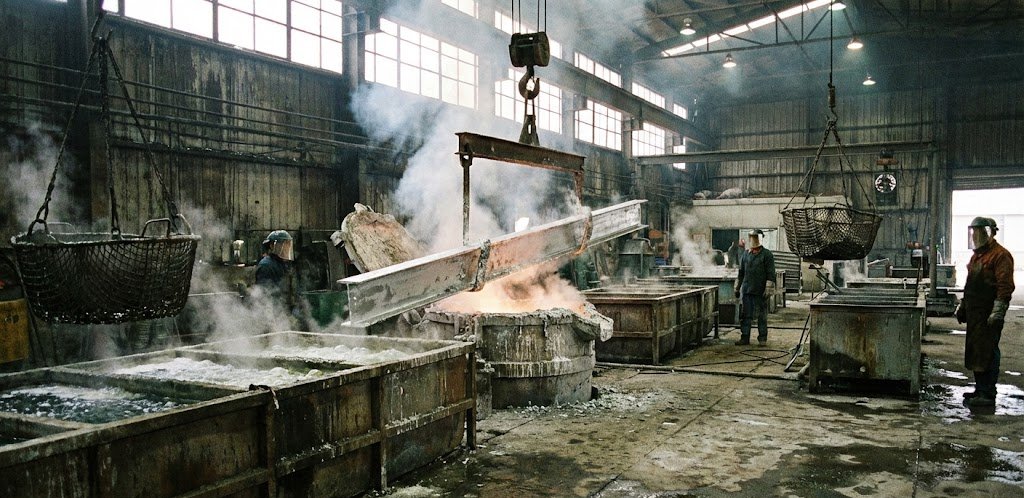
- Immersion in molten zinc at approximately 450°C
- Controlled withdrawal and drainage
- Cooling
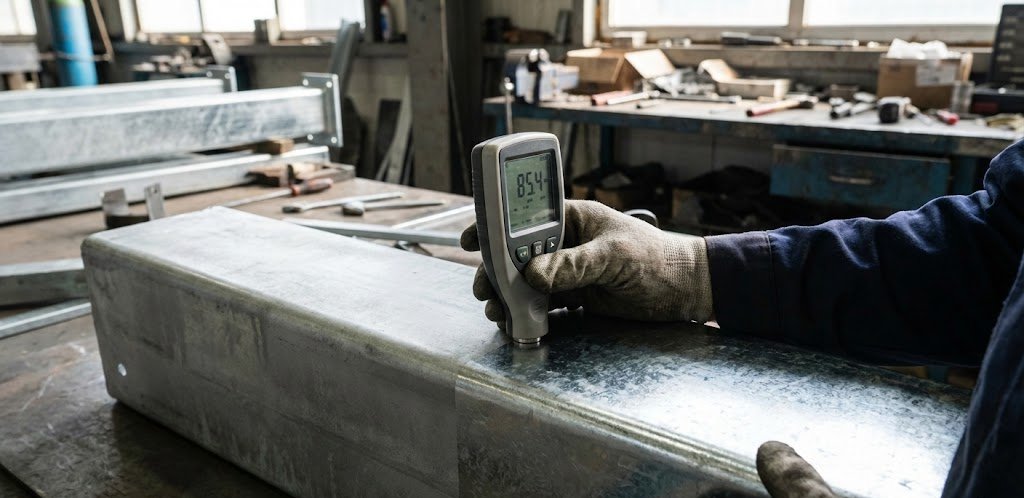
- Inspection and quality control
During immersion, zinc reacts with the steel and forms a metallurgically bonded protective coating.
For hollow sections and complex fabricated components, correct venting and drainage design is essential for safe and effective galvanizing.
Advantages of Galvanized Coating for Steel Structures
Galvanizing provides several technical and economic benefits for steel construction projects.
High Corrosion Resistance
Hot-dip galvanized coatings provide strong protection against atmospheric corrosion. This makes them suitable for many structures exposed to rain, snow, humidity, temperature changes, and industrial environments.
The required protection system should always be selected according to the actual environmental conditions of the project.
Long Service Life and Reduced Maintenance
Galvanized steel can provide corrosion protection for decades depending on coating thickness, environmental corrosivity, steel design, and exposure conditions.
Reduced repainting and maintenance requirements can provide important lifecycle cost advantages, particularly for structures where future access is difficult or expensive.
Durable Coating
The zinc-iron alloy layers formed during hot-dip galvanizing are metallurgically bonded to the steel. This provides good resistance to handling, transportation, installation, and many forms of mechanical wear.
Severe impacts, cutting, welding, or grinding can still damage the coating and may require an appropriate repair process.
Metallic Appearance
Galvanized steel has a characteristic metallic appearance that may vary from bright silver to matte gray. This variation depends on factors such as steel chemistry, material thickness, cooling conditions, and the galvanizing process.
Where a specific color or additional corrosion protection is required, a compatible paint system can be applied over the galvanized surface to create a duplex coating system.
Recyclability
Steel and zinc can both be recovered through established recycling processes. Extending the service life of structural steel can also reduce the frequency of replacement and maintenance, supporting long-term resource efficiency.
Which Types of Structures Use Galvanized Steel?
Galvanized coating can be used for many fabricated steel structures, particularly where long-term corrosion protection is required.
Industrial Facilities and Factories: Structural steel, platforms, stairs, railings, and outdoor support systems
Warehouses and Hangars: Frames, roof structures, columns, and secondary steel components
Infrastructure: Bridges, highway barriers, utility structures, and transportation components
Energy Projects: Utility poles, transmission structures, solar panel supports, and substation steelwork
Agricultural Structures: Greenhouses, animal shelters, fencing systems, and storage structures
Outdoor Structures: Canopies, walkways, railings, lighting structures, and various urban infrastructure components
The appropriate galvanizing specification should be determined according to the structure’s environment, design, and expected service life.
Project-Specific Solutions from Avrasya Galvaniz
Avrasya Galvaniz provides hot-dip galvanizing solutions for fabricated steel and industrial projects. The galvanizing process can be planned according to component dimensions, geometry, steel characteristics, project quantities, coating requirements, and delivery schedules.
Project planning may include:
- Evaluation of technical drawings
- Review of component dimensions and geometry
- Assessment of venting and drainage requirements
- Surface preparation and galvanizing
- Quality control
- Production and delivery planning
- Technical coordination for project-specific requirements
Sharing fabrication drawings before production can help identify design details that may affect galvanizing quality and process safety.
Quality Standards for Galvanized Coating
Hot-dip galvanized coatings on fabricated iron and steel articles are commonly evaluated according to EN ISO 1461, depending on the applicable project specification.
The standard addresses requirements such as coating properties, minimum coating thickness according to material category, appearance, and inspection methods.
It is important to note that galvanizing standards address the coating itself. Structural design, welding, fabrication, bolted connections, fire protection, and installation may be governed by separate standards and project requirements.
Benefits of Galvanized Steel During Installation
Galvanizing can also simplify certain aspects of site installation. Components that are fully fabricated and galvanized before delivery arrive on site with corrosion protection already applied.
This can reduce the need for site painting and associated preparation work.
For best results, fabrication should generally be completed before hot-dip galvanizing whenever practical. Cutting, drilling, grinding, or welding after galvanizing can damage the zinc coating and require repair.
→ Fabricate first, galvanize second: minimizing field modifications helps preserve coating continuity.
Galvanizing for Long-Lasting Steel Structures
Galvanizing is an established corrosion protection method for steel structures used in construction, energy, industry, agriculture, and infrastructure. Its combination of barrier protection, sacrificial zinc protection, durable coating characteristics, and relatively low maintenance requirements makes it suitable for many long-term structural applications.
Successful performance depends on selecting the correct coating specification and coordinating steel design, fabrication, venting, drainage, galvanizing, transportation, and installation from the beginning of the project.
For steel construction projects requiring hot-dip galvanizing, Avrasya Galvaniz can evaluate technical drawings, component dimensions, quantities, and operating conditions to provide a project-specific galvanizing solution.