Safety and Durability with Galvanized Railing Systems
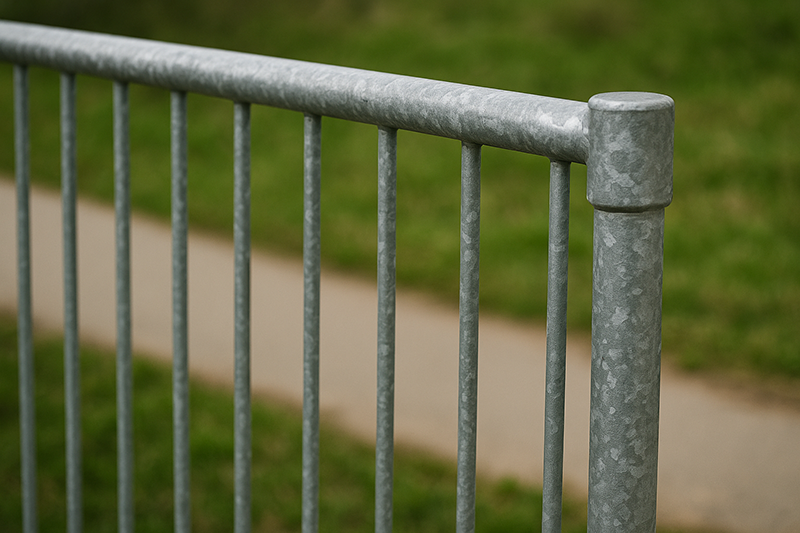
Galvanized railing systems are steel or iron railing components protected with a zinc coating, commonly applied through hot-dip galvanizing. This coating provides strong resistance to environmental exposure and helps protect the steel against rust and corrosion. When properly designed, manufactured, galvanized, and installed, these systems can provide long-term durability and reliable protection.
Applications
Galvanized railing systems provide solutions for both residential and commercial projects. Common applications include:
- Gardens and residential properties
- Industrial facilities and factories
- Public buildings
- Schools and hospitals
- Parking facilities
- Stadiums and sports complexes
- Bridges and viaducts
- Pedestrian walkways
- Stairs and platforms
This wide range of applications makes galvanized railings suitable for projects requiring both functional performance and architectural compatibility.
Safety Provided by Galvanized Railings
Safety is a fundamental requirement in any railing project. Galvanized railings can contribute to perimeter protection, fall prevention, access control, and safe movement around elevated areas when they are properly engineered.
The steel structure provides mechanical strength, while galvanizing protects the steel against corrosion that could otherwise reduce its long-term integrity.
However, galvanizing itself does not determine the safety of a railing. Safety performance also depends on factors such as:
- Profile dimensions
- Structural design
- Railing height
- Spacing between elements
- Connection details
- Anchoring system
- Welding quality
- Design loads
- Installation quality
- Applicable building and safety requirements
For this reason, galvanized railing systems should be designed and installed according to the technical requirements of the specific project.
Durability Through Galvanizing
One of the main advantages of galvanized railings is the long-term corrosion protection provided by zinc.
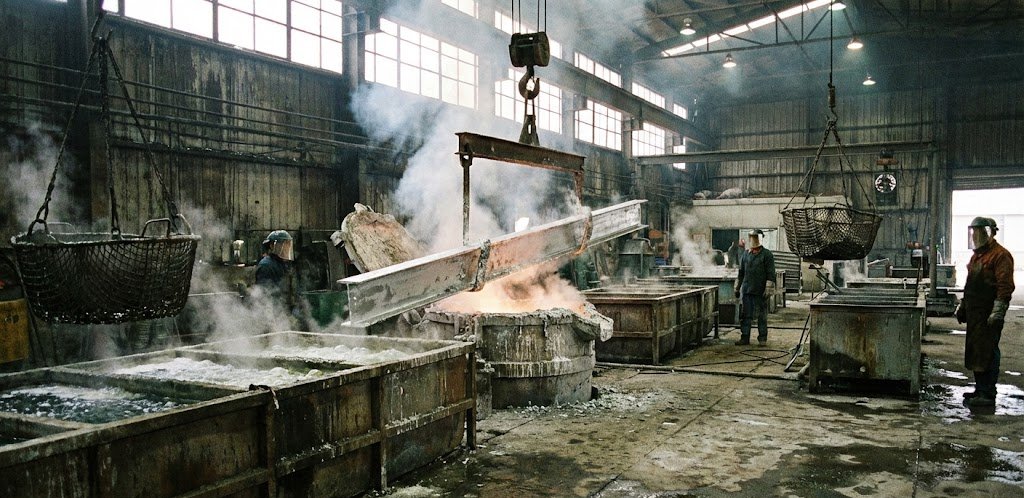
During hot-dip galvanizing, zinc reacts metallurgically with the steel surface and forms protective zinc-iron alloy layers. These layers help isolate the underlying steel from environmental exposure while also providing sacrificial protection.
The service life of the coating depends on factors such as:
- Zinc coating thickness
- Environmental corrosivity
- Moisture exposure
- Salt concentration
- Industrial pollutants
- Mechanical damage
- Component design
- Maintenance conditions
In coastal, industrial, or highly humid environments, the coating specification should be selected according to the expected exposure conditions.
Architectural Appearance
The visual compatibility of a railing system can be important alongside its functional performance. Galvanized railings have a characteristic metallic appearance that can complement modern, industrial, and minimalist architectural designs.
The galvanized surface may range from bright silver to matte gray depending on steel chemistry and process conditions. These appearance variations do not necessarily indicate a difference in coating quality.
Where a specific color or additional corrosion protection is required, galvanized steel can also be painted using a compatible coating system. Combining galvanizing and paint is commonly known as a duplex coating system.
Installation and Lifecycle Cost Advantages
Galvanized railing systems can be manufactured in modular or prefabricated sections, helping simplify installation on suitable projects. Accurate fabrication and connection planning before galvanizing can reduce the need for field modifications.
Hot-dip galvanized steel also generally requires relatively low routine maintenance. This can reduce lifecycle costs compared with unprotected steel or systems requiring frequent repainting.
For efficient project delivery, the following should be planned in advance:
- Railing dimensions
- Module lengths
- Connection details
- Anchoring method
- Welding requirements
- Vent and drain holes
- Transportation dimensions
- Site installation conditions
→ Complete fabrication before galvanizing; minimize cutting and welding after coating.
Choosing the Right Manufacturer
The quality and durability of a galvanized railing system depend on more than the zinc coating alone. Steel quality, fabrication accuracy, welding, component design, galvanizing suitability, inspection, and installation all contribute to final performance.
When selecting a supplier, evaluate:
- Steel fabrication capabilities
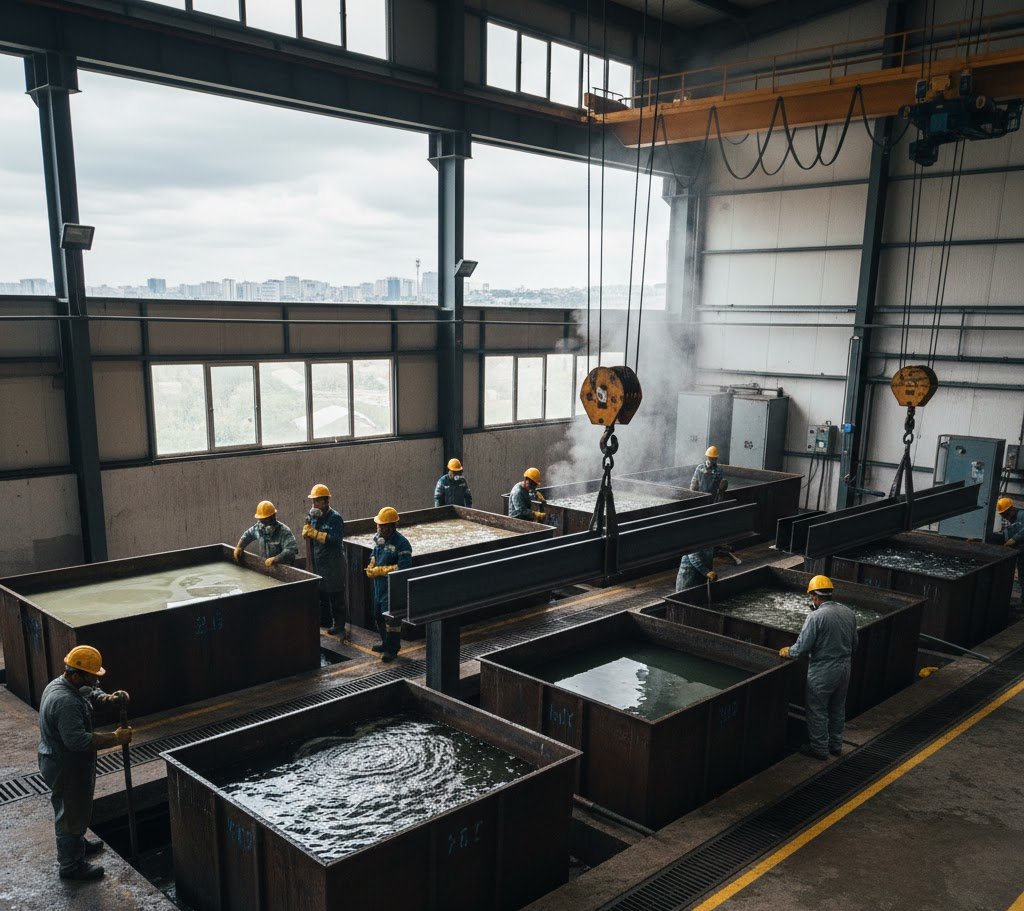
- Galvanizing infrastructure
- Technical experience
- Quality control processes
- Ability to work from technical drawings
- Project-specific production capability
- Delivery planning
- Technical communication
Why Consider Avrasya Galvaniz?
Avrasya Galvaniz provides solutions for steel fabrication and galvanizing requirements in industrial and construction projects. Project-specific details such as dimensions, steel profiles, connection points, fabrication requirements, galvanizing suitability, and delivery schedules can be evaluated during production planning.
For galvanized railing projects, technical drawings, approximate quantities, installation conditions, and intended application should be shared before production. This helps coordinate fabrication and galvanizing requirements more effectively.
What Should Be Considered When Selecting Galvanized Railings?
Material Quality
The quality and dimensions of the steel profiles directly affect structural performance. The material should be selected according to the design loads and applicable project requirements.
Galvanized Coating Requirements
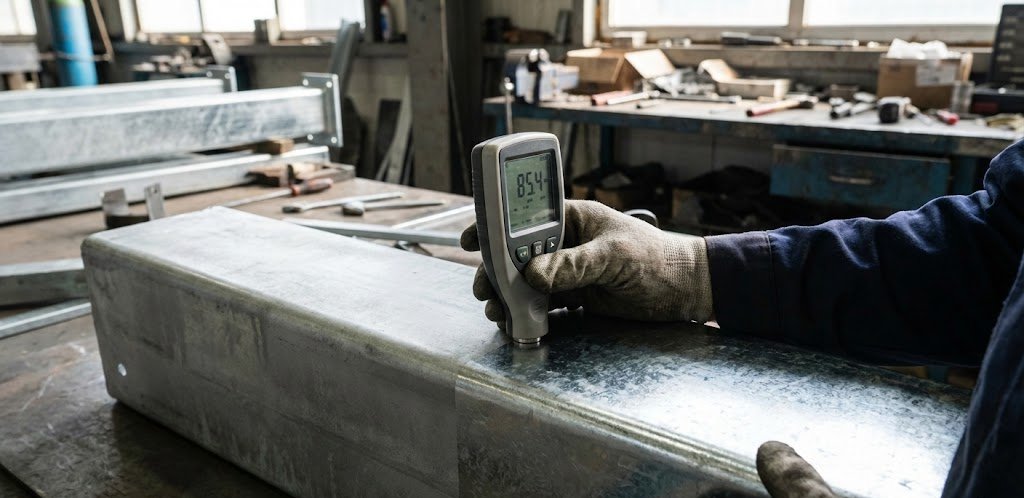
The required coating should be specified according to the steel product, operating environment, and relevant galvanizing standard. For fabricated iron and steel products galvanized after fabrication, EN ISO 1461 is commonly used as a reference for coating requirements.
The thickest possible coating is not automatically the best specification; the appropriate requirement should be determined according to the product and environment.
Welding and Connection Points
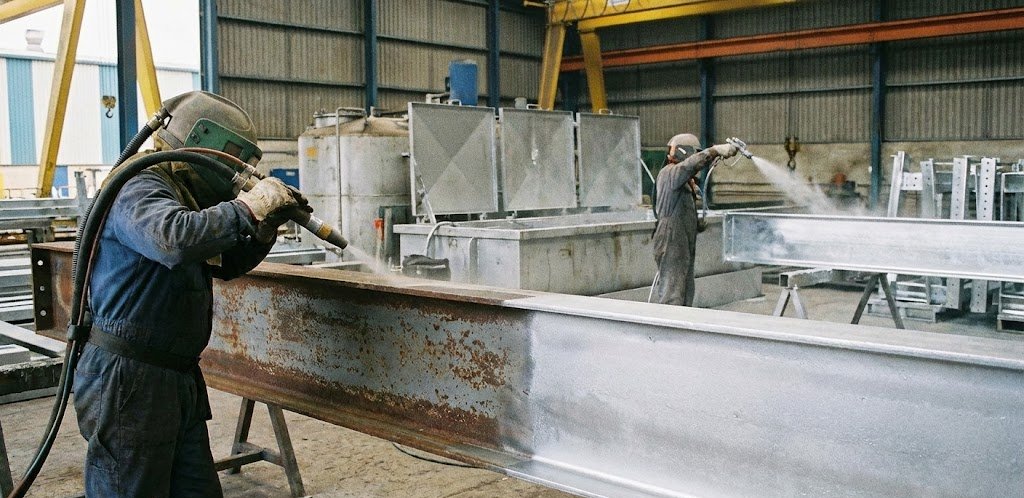
Whenever possible, welding and fabrication should be completed before hot-dip galvanizing. This allows the fabricated component to receive corrosion protection after manufacturing.
Any cutting, drilling, or welding carried out after galvanizing may damage the zinc coating and require an appropriate repair process.
Local Environmental Conditions
The corrosion protection system should be selected according to the environment in which the railing will be installed. Coastal, industrial, humid, and chemically aggressive environments may require additional consideration.
For demanding environments, a duplex system combining hot-dip galvanizing and paint may provide additional protection where appropriate.
Sustainability and Resource Efficiency
Galvanized railing systems can contribute to long-term resource efficiency because their extended service life can reduce the frequency of replacement, repair, and recoating.
Steel and zinc can also be recovered through established recycling processes. The overall environmental performance of the system, however, should be evaluated across its complete lifecycle, including production, transportation, maintenance, service life, and end-of-life recycling.
Long-Term Safety Requires the Right System
Galvanized railing systems can provide an effective combination of corrosion protection, structural durability, relatively low maintenance requirements, and architectural flexibility.
Their long-term performance depends on coordinating structural design, material selection, fabrication, galvanizing, connections, and installation correctly from the beginning of the project.
For project-specific galvanized railing requirements, Avrasya Galvaniz can evaluate technical drawings, dimensions, quantities, application conditions, and galvanizing requirements to support the selection of an appropriate solution.