How Thick Should Galvanized Coating Be?

Galvanizing is a widely used method for protecting metal surfaces against rust. It is particularly preferred in the construction, automotive, energy, and infrastructure sectors to provide durability and long-term use. However, for galvanized coating to be effective, the coating thickness must be properly determined. So, how thick should galvanized coating be, and what determines the required thickness? Here are the details.
What Is Galvanized Coating?
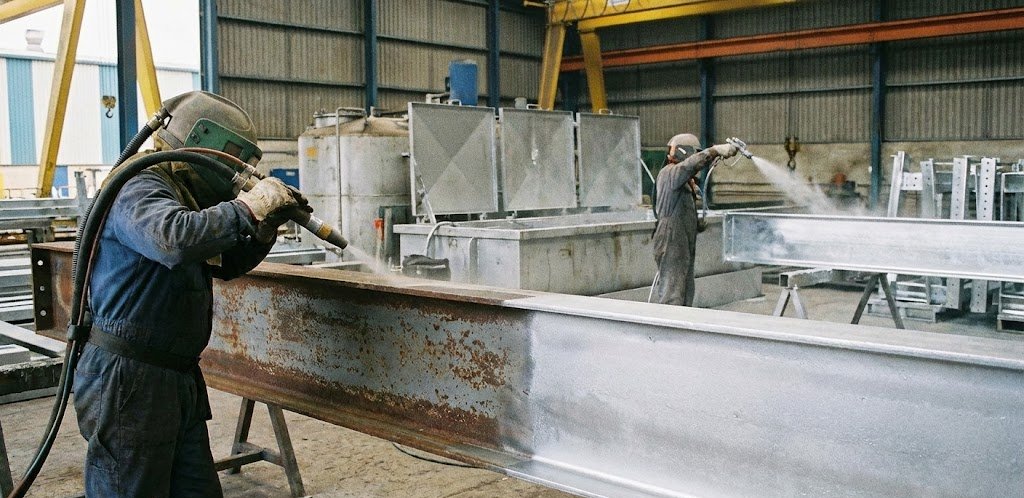
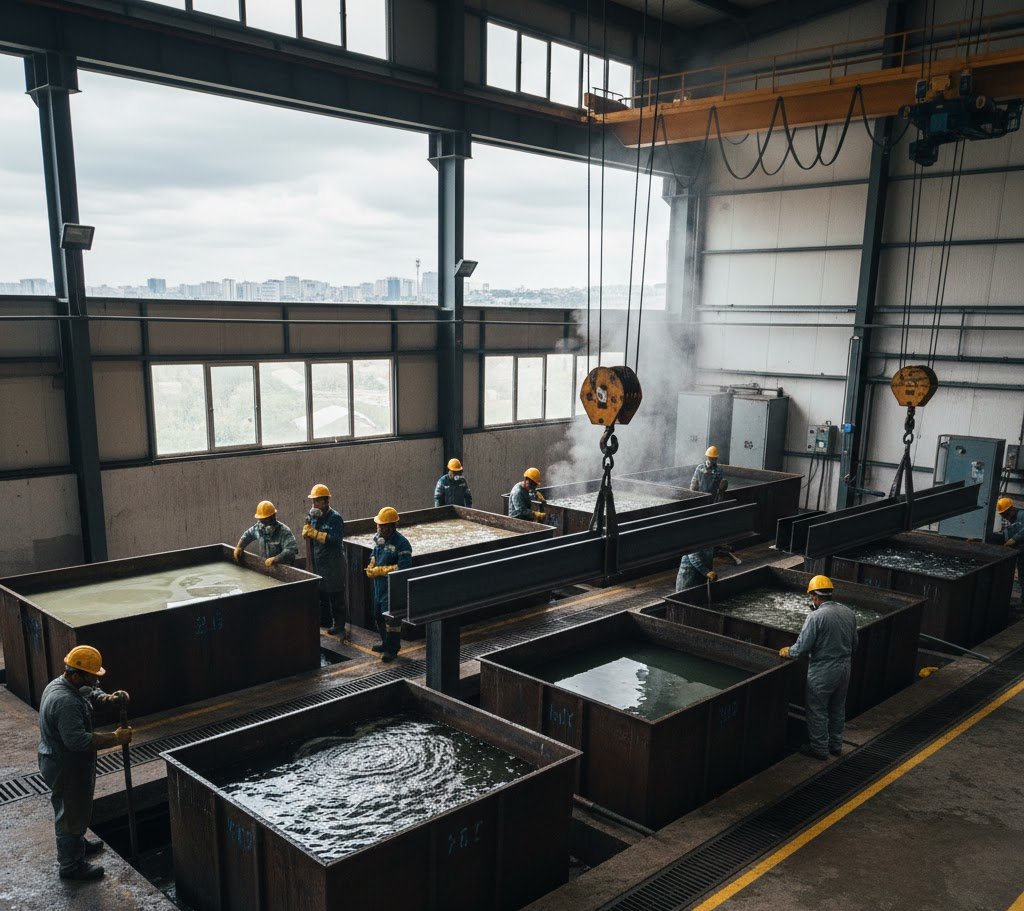
Galvanizing is the process of coating metal surfaces with a layer of zinc. Zinc prevents oxidation on metal surfaces, helping protect them against rust. The zinc layer protects the metal surface against external factors and increases its mechanical durability. The coating process is generally carried out using hot-dip galvanizing or electrogalvanizing methods.
Why Is Galvanized Coating Thickness Important?
Galvanized coating thickness is directly related to the level of surface protection. The thicker the coating, the better the metal surface is protected against external factors. However, several factors should be considered when determining coating thickness:
Environmental Conditions:
If the metal surface will be used in a humid or corrosive environment, a thicker coating should be preferred. For example, galvanized coating thickness should be higher in coastal areas or locations exposed to chemicals.
Material Type:
The type of metal to which the galvanized coating will be applied is also an important factor when selecting thickness. For example, the coating may be thinner on durable metals such as steel, while greater thickness may be required for more sensitive materials.
Service Life:
The required protection period of the metal surface also determines coating thickness. A thicker zinc coating is recommended for longer-lasting protection.
Standards and Regulations:
Galvanizing processes are generally carried out in accordance with national and international standards. Standards such as ISO 1461 and ASTM A123 provide detailed information regarding coating thickness requirements.
How Thick Should Galvanized Coating Be?
Galvanized coating thickness may vary according to the type of application, environmental conditions, and applicable standards. In general, zinc coating thickness for hot-dip galvanized coatings can be classified as follows:
Thin Coating (25–50 microns):
Suitable for mildly corrosive environments. Preferred for indoor areas or locations exposed to low levels of humidity.
Medium Coating (50–85 microns):
Used in environments requiring a moderate level of protection. For example, it is suitable for outdoor applications.
Thick Coating (85–200 microns):
Preferred for coastal areas, chemical facilities, or industrial environments requiring a high level of protection.
According to standards, the minimum zinc coating thicknesses for hot-dip galvanizing based on steel thickness are as follows:
| Steel Thickness (mm) | Minimum Coating Thickness (microns) |
|---|---|
| Up to 1.5 mm | 55 microns |
| 1.5–3 mm | 70 microns |
| 3 mm and above | 85 microns |
Galvanized Coating Thickness Measurement Methods
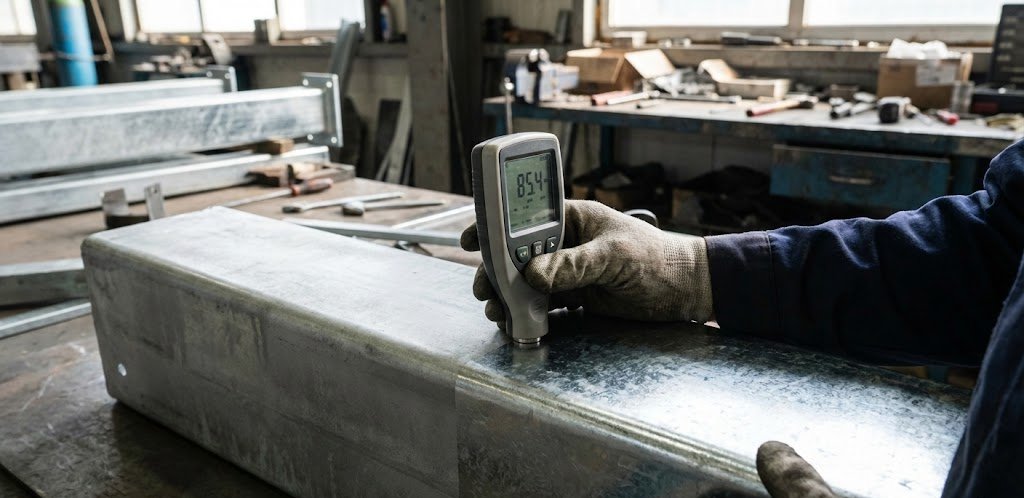
Some of the methods used to measure coating thickness include:
Micrometer Measurement:
Zinc coating thickness can be measured using precision micrometer instruments.
Magnetic Measuring Instruments:
Magnetic-based instruments can quickly and accurately measure the thickness of the zinc layer.
Wash Test:
A method used to test the durability and thickness of the zinc coating. This method is generally carried out in a laboratory environment.
Standards Determining Galvanized Coating Thickness
International standards provide guidance on coating thickness requirements. The most commonly used standards include:
ISO 1461:
This standard defines minimum zinc coating thickness requirements for hot-dip galvanized coatings.
ASTM A123:
Covers American standards established for galvanized coating thickness on steel products.
EN 10346:
Provides guidance for electrogalvanizing processes according to European standards.
Consequences of Insufficient or Excessive Coating Thickness
Insufficient galvanized coating thickness may cause the metal to rust more quickly. On the other hand, excessively thick coatings may lead to issues such as:
Increased Costs:
Using more zinc than necessary increases costs.
Installation Difficulties:
Excessively thick coatings may make it more difficult to assemble components.
Aesthetic Issues:
Very thick coatings may create an uneven surface appearance.
Galvanized coating thickness is critically important for the durability and service life of metal surfaces. The correct thickness should be selected by considering environmental conditions, the intended application, and international standards. Proper galvanizing is essential for providing long-lasting and durable protection.