Hot-Dip Galvanizing
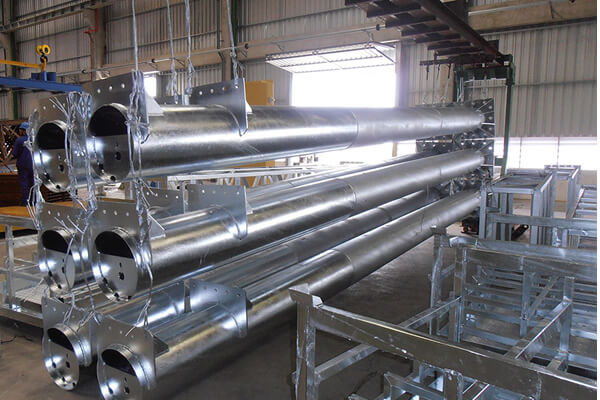
Hot-dip galvanizing is the process of creating a protective zinc coating on the surfaces of iron and steel materials by immersing them in a bath of molten zinc. This process makes steel more resistant to corrosion, rust, moisture, outdoor conditions, and chemical effects.
In hot-dip galvanizing, zinc forms a metallurgical bond with the steel surface. Therefore, the coating is not simply a temporary film on the surface; it creates a strong and long-lasting barrier that protects the steel against external factors.
This method is particularly preferred for structural steel, bridge components, power transmission lines, railings, platforms, pipes, fencing systems, agricultural equipment, and metal products used outdoors.
What Is Hot-Dip Galvanizing?
Hot-dip galvanizing is a coating process in which steel or iron parts are immersed in a bath of molten zinc after undergoing specific surface preparation processes. As a result, a protective coating consisting of zinc and zinc-iron alloy layers forms on the surface of the material.
This coating prevents the steel from coming into direct contact with oxygen and moisture. This slows down the rusting process and protects the metal surface for an extended period.
Hot-dip galvanizing is a reliable protection method, particularly for steel products used outdoors. This is because the coating can provide protection not only on flat surfaces but also on edges, corners, cavities, and recessed areas.
The main reason hot-dip galvanizing is preferred in corporate projects is its long service life and low maintenance requirements. When applied correctly, it significantly extends the service life of steel structures.
How Is the Hot-Dip Galvanizing Process Performed?
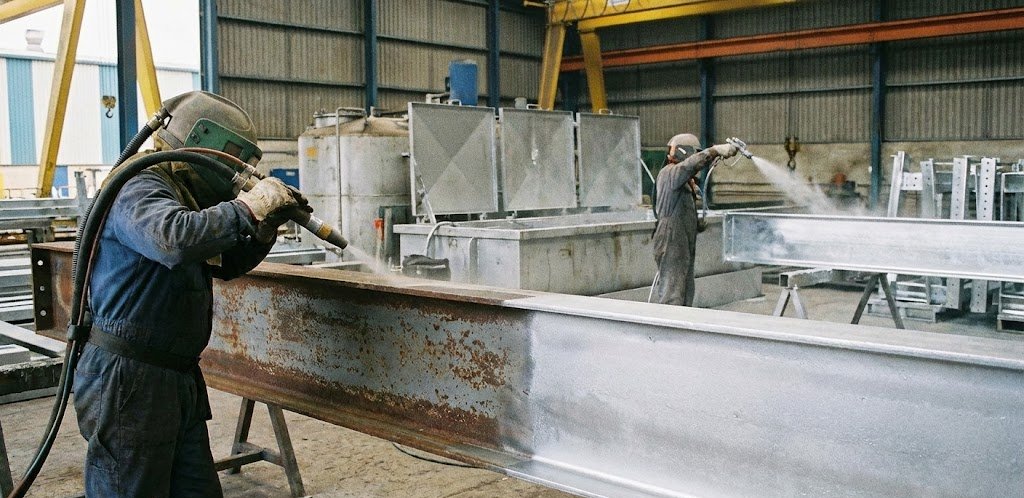
The hot-dip galvanizing process consists of controlled surface preparation and zinc coating stages. To achieve a high-quality coating, the material surface is cleaned of residues such as oil, rust, dirt, paint, and mill scale before galvanizing.
The general process steps are as follows:
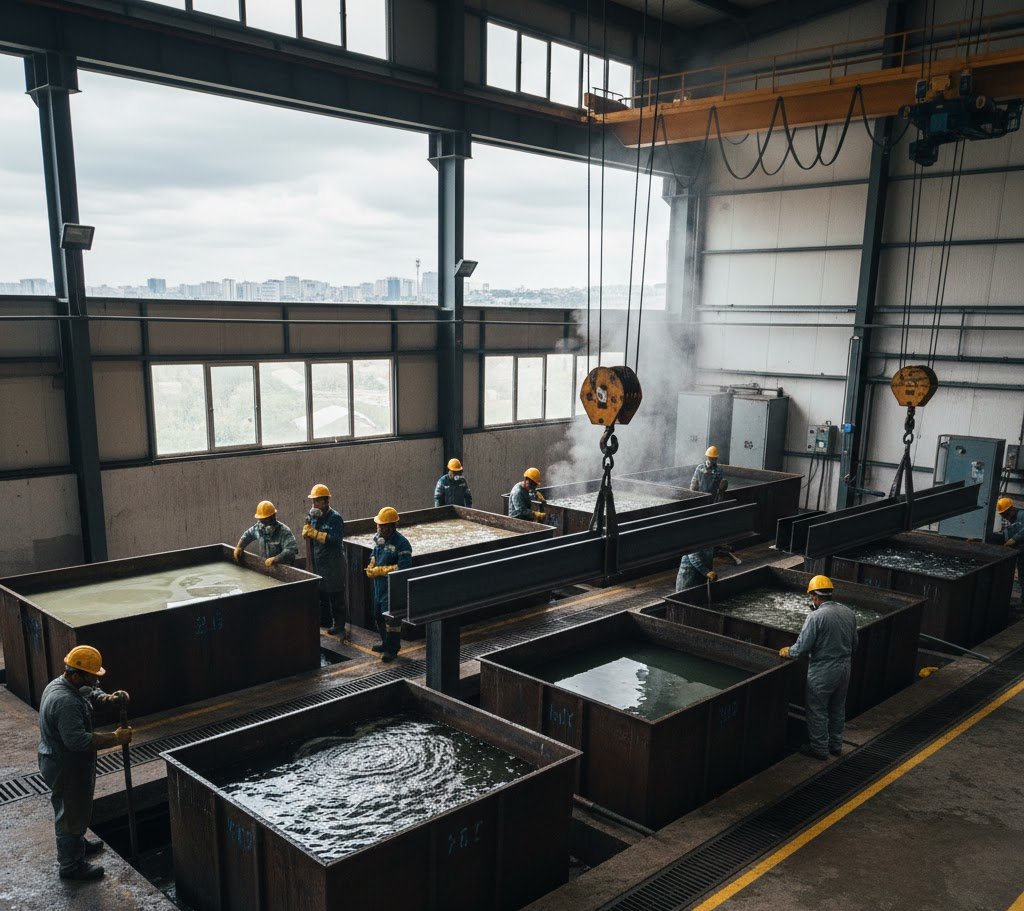
- Degreasing: Oil, grease, and dirt residues are removed from the material surface.
- Acid cleaning: Rust and mill scale are removed from the surface.
- Rinsing: Chemical residues are removed.
- Flux application: The surface is prepared for the zinc bath.
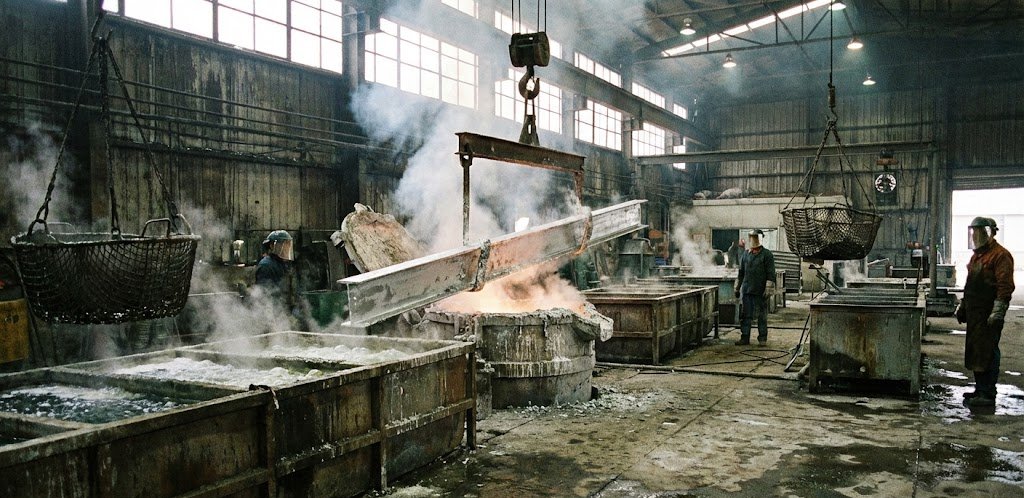
- Immersion in the zinc bath: The steel part is immersed in molten zinc.
- Draining and cooling: Excess zinc is removed and the coating solidifies.
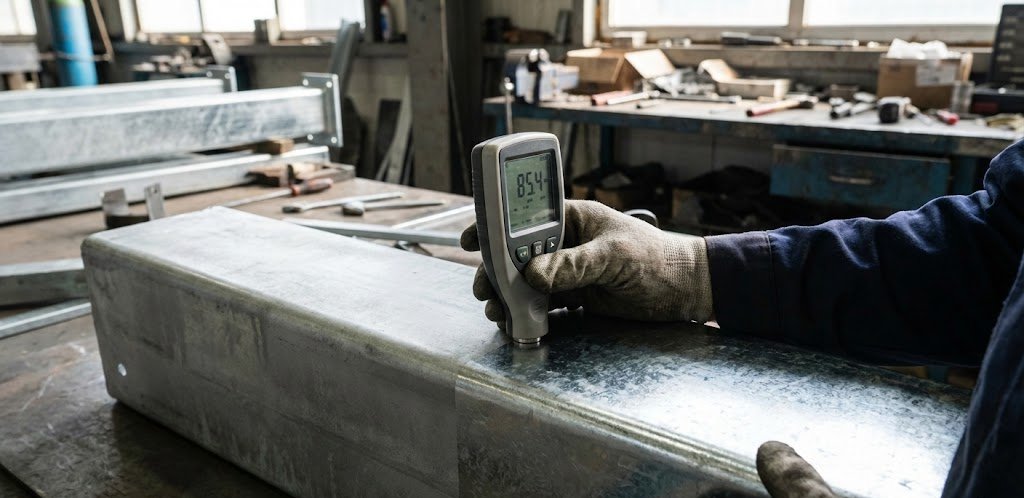
- Quality control: Coating thickness, surface appearance, and coating continuity are inspected.
The most critical factors in this process are surface cleanliness and material design. Parts that are not properly cleaned or designed for galvanizing may not achieve the desired coating quality.
Advantages of Hot-Dip Galvanizing
Hot-dip galvanizing provides steel surfaces with long-term corrosion resistance. For this reason, it is widely used in both industrial and infrastructure projects.
The main advantages include:
- Protects steel against rust and corrosion.
- Provides a long service life.
- Reduces maintenance requirements.
- Provides high resistance to outdoor conditions.
- Provides effective protection on edges, corners, and internal surfaces.
- Creates a strong coating resistant to impacts and mechanical effects.
- Provides an economical and long-term protection solution.
Hot-dip galvanizing provides significant advantages, particularly in structures where maintenance costs are high. It is preferred for bridges, energy facilities, steel structural systems, and outdoor equipment because it provides long-lasting protection.
Where Is Hot-Dip Galvanizing Used?
Hot-dip galvanizing is used in many industries where there is a risk of corrosion. It provides effective results particularly for steel products used outdoors, in humid environments, or under demanding environmental conditions.
Common applications include:
| Application Area | Benefit Provided |
|---|---|
| Steel structures | Long-lasting corrosion protection |
| Bridge and viaduct components | Resistance to outdoor conditions |
| Power transmission line poles | Reduced maintenance requirements |
| Railing and fencing systems | Protection against rust |
| Pipes and fittings | Resistance to moisture and environmental effects |
| Agricultural equipment | Suitability for outdoor use |
| Marine and coastal structures | Resistance to saline moisture |
In these applications, galvanized coating extends the service life of the material while reducing maintenance and replacement costs.
Difference Between Hot-Dip Galvanizing and Paint
Hot-dip galvanizing and paint coating are two different methods used to protect steel against corrosion. However, their protection mechanisms differ.
| Criterion | Hot-Dip Galvanizing | Paint Coating |
|---|---|---|
| Protection structure | Zinc-based metallic coating | Surface film |
| Bonding method | Metallurgical bond | Surface adhesion |
| Durability | High mechanical durability | Varies depending on the system |
| Maintenance requirements | Low | Periodic maintenance may be required |
| Aesthetic options | Metallic gray appearance | Wide range of color options |
| Application area | Outdoor and heavy-duty conditions | Aesthetic and controlled-environment applications |
Hot-dip galvanizing stands out in terms of long-lasting protection and low maintenance requirements. Paint coating may be preferred in projects where color and aesthetic expectations are a priority. In some applications, paint can also be applied over galvanizing to provide a dual protection system.
What Should Be Considered for High-Quality Hot-Dip Galvanizing?
A zinc bath alone is not sufficient for high-quality hot-dip galvanizing. Material design, surface preparation, welding quality, and pre-process inspections directly affect coating performance.
The main points to consider include:
- The material surface should be free of paint, oil, silicone, and welding slag.
- Hollow sections should have vent and drainage holes.
- Sharp edges and burrs should be removed.
- Part dimensions should be suitable for the galvanizing kettle.
- Welded areas should be clean and properly prepared for coating.
- Coating requirements should be determined according to the operating environment.
- If cutting or damage occurs after installation, an appropriate repair process should be applied.
Proper design is just as important as coating quality in hot-dip galvanizing. Parts that are not properly prepared for galvanizing may develop surface defects or coating discontinuities after processing.
Service Life of Hot-Dip Galvanized Coating
The service life of a hot-dip galvanized coating varies depending on coating thickness, operating environment, humidity, chemical exposure, and mechanical wear. Coating performance may differ between rural areas, urban atmospheres, industrial regions, and coastal environments.
In general, galvanized coatings last longer in environments with lower levels of corrosive exposure. In coastal areas, heavily industrialized regions, or environments with high chemical exposure, the zinc layer may be consumed more rapidly.
Therefore, when selecting hot-dip galvanizing, not only the material type but also the operating conditions should be evaluated. Proper environmental analysis helps determine the expected service life of the coating more accurately.
Corporate Evaluation When Selecting Hot-Dip Galvanizing
When selecting hot-dip galvanizing for corporate projects, technical capability, production capacity, quality control processes, and compliance with standards should be evaluated together. To achieve reliable coating results, the entire process from material acceptance to shipment should proceed under controlled conditions.
The following criteria should be considered during the evaluation:
- Technical capacity of the galvanizing facility
- Control of the zinc bath used
- Quality control and measurement processes
- Coating thickness inspections
- Process flow in compliance with standards
- Pre-shipment surface inspection
- Availability of project-specific technical support
When applied correctly, hot-dip galvanizing is not only a surface protection process but also a strategic investment that supports the long-term durability of the project.
What You Need to Know Before Application
- In hot-dip galvanizing, coating quality depends not only on the zinc bath but also on the preparation of the material before processing.
- Oil, paint, rust, welding slag, or chemical residues on the part surface may prevent the formation of a uniform coating.
- Proper positioning of vent and zinc drainage holes in hollow sections is necessary for safe and high-quality application.
- Material thickness, steel chemistry, and part geometry may affect coating appearance and thickness.
- Minor surface variations after galvanizing do not always indicate a quality problem; evaluation should be based on the intended use and applicable standard requirements.
Hot-dip galvanizing provides a reliable coating solution for protecting steel products against corrosion, extending their service life, and reducing maintenance costs. For long-lasting, durable, and standards-compliant galvanizing applications in your project, you can obtain professional support based on your product specifications and operating conditions. Contact us for detailed information and a quotation.