How Is Galvanized Coating Thickness Measured?
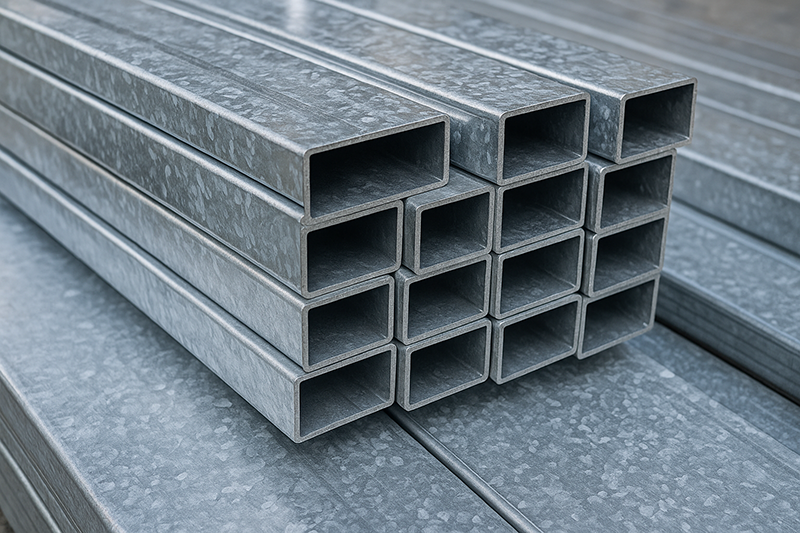
Galvanizing is one of the most widely used methods for protecting metal surfaces against corrosion and environmental exposure. The thickness of the zinc coating is an important factor in corrosion protection and service life. For this reason, accurate galvanized coating thickness measurement is a key part of quality control.
This guide explains common galvanized coating thickness measurement methods, important measurement considerations, and the quality-focused approach used for professional galvanizing projects.
Why Is Galvanized Coating Important?
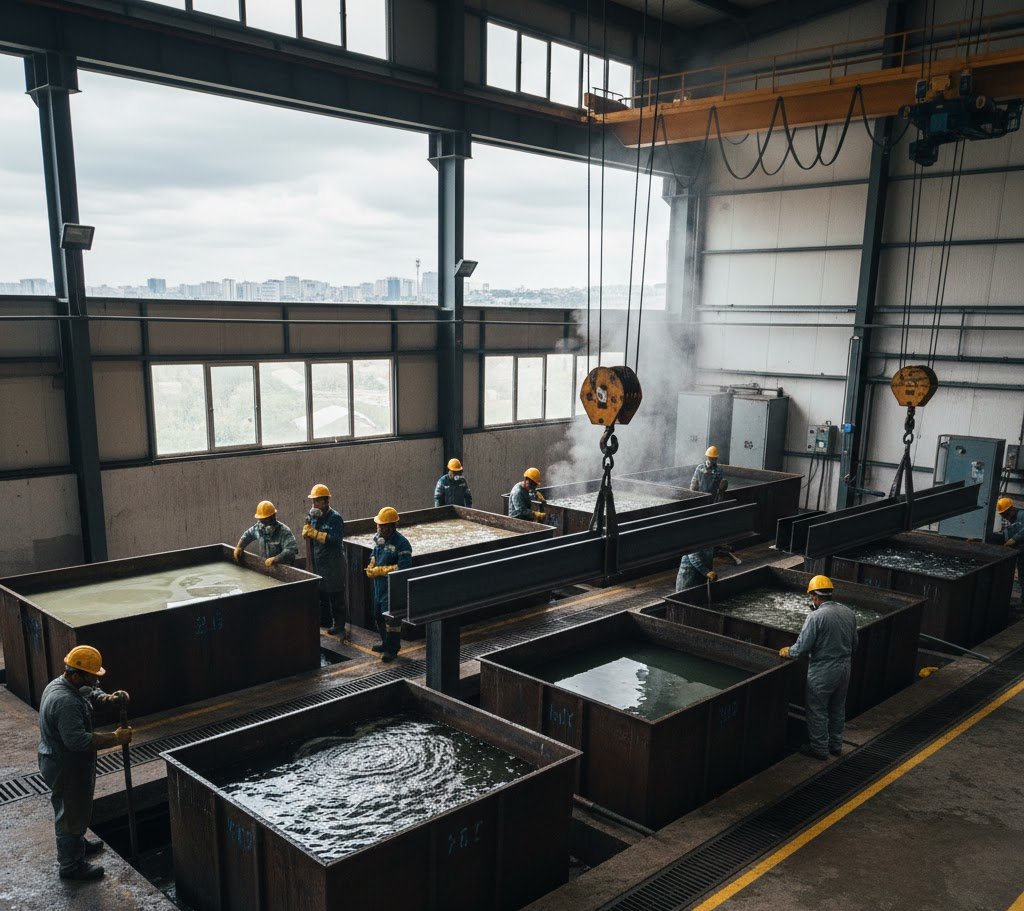
Galvanizing involves applying zinc to the surface of steel or iron. The zinc coating acts as a barrier between the underlying steel and environmental factors such as moisture and oxygen. Zinc also provides sacrificial protection if small areas of steel become exposed.
For hot-dip galvanized steel, coating thickness is one of the factors affecting potential service life. However, performance also depends on environmental corrosivity, steel chemistry, component design, exposure conditions, and maintenance.
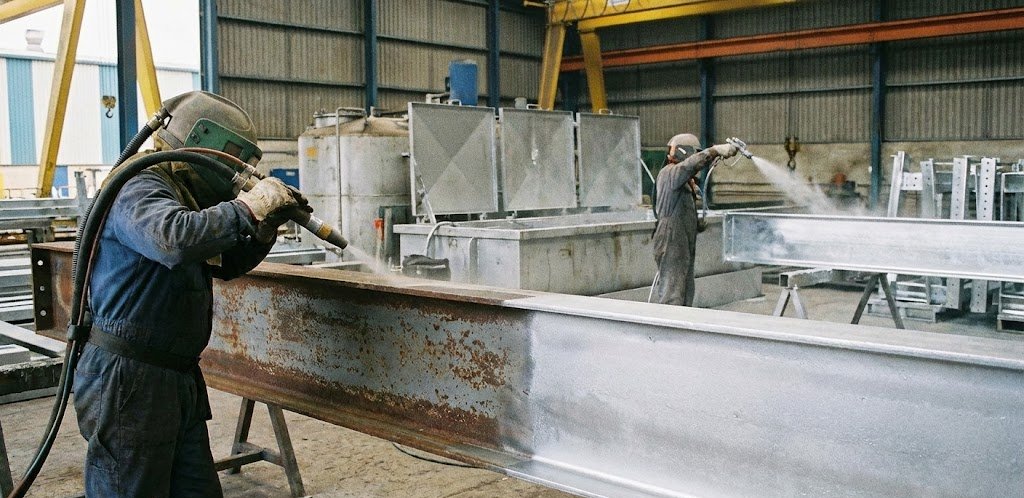
Galvanized steel is widely used in industrial facilities, construction, infrastructure, energy projects, agricultural structures, and many other applications where long-term corrosion protection is required.
Why Should Galvanized Coating Thickness Be Measured?
Coating thickness measurements help verify whether galvanized products meet the applicable project specification and coating standard.
Measurements can help:
- Verify compliance with specified coating requirements
- Identify potential production non-conformities
- Support quality documentation
- Evaluate coating consistency across representative areas
- Confirm acceptance requirements before delivery
“Coating thickness should be measured against the applicable standard, not against a universal target value.”
The required thickness depends on the galvanizing process, product category, material thickness, and technical specification.
Factors Affecting Galvanized Coating Thickness
Several factors influence the final thickness of a hot-dip galvanized coating.
1. Steel Chemistry and Surface Condition
The chemical composition of the steel can significantly influence the zinc-iron reaction. Silicon and phosphorus content, in particular, may affect coating growth and appearance.
Surface roughness can also influence coating formation.
2. Immersion Conditions
Immersion time can influence coating development, but coating thickness does not increase at a simple or constant rate. Steel chemistry, material thickness, and process conditions also play important roles.
3. Zinc Bath Temperature
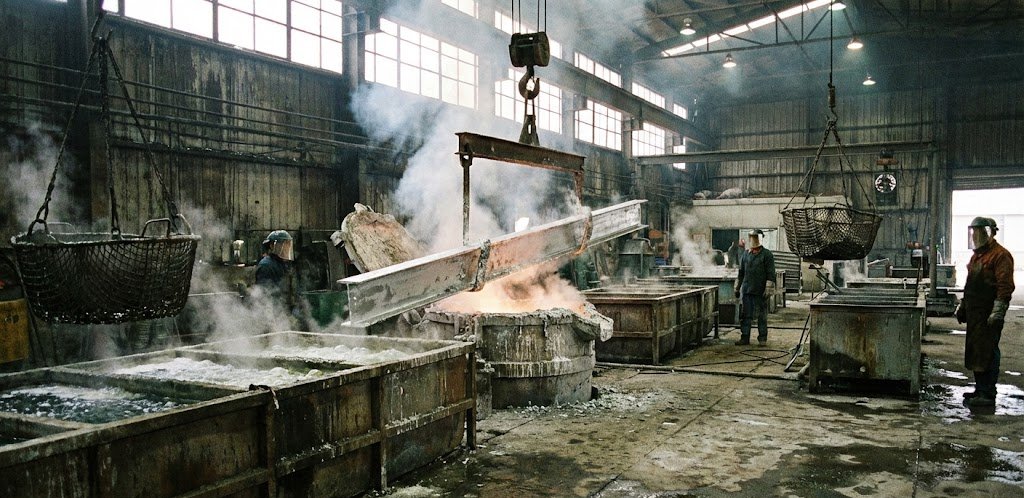
Hot-dip galvanizing is commonly performed at a zinc bath temperature of approximately 450°C. Process temperature is controlled within the galvanizing plant’s operating parameters.
4. Component Geometry and Withdrawal
Component geometry, drainage, withdrawal speed, and orientation can influence the amount and distribution of free zinc remaining on the surface.
Proper venting and drainage design is particularly important for hollow and complex fabricated components.
Galvanized Coating Thickness Measurement Methods
Several methods can be used to evaluate zinc coating thickness. The appropriate method depends on the substrate, coating system, product type, and applicable standard.
Magnetic Measurement Method
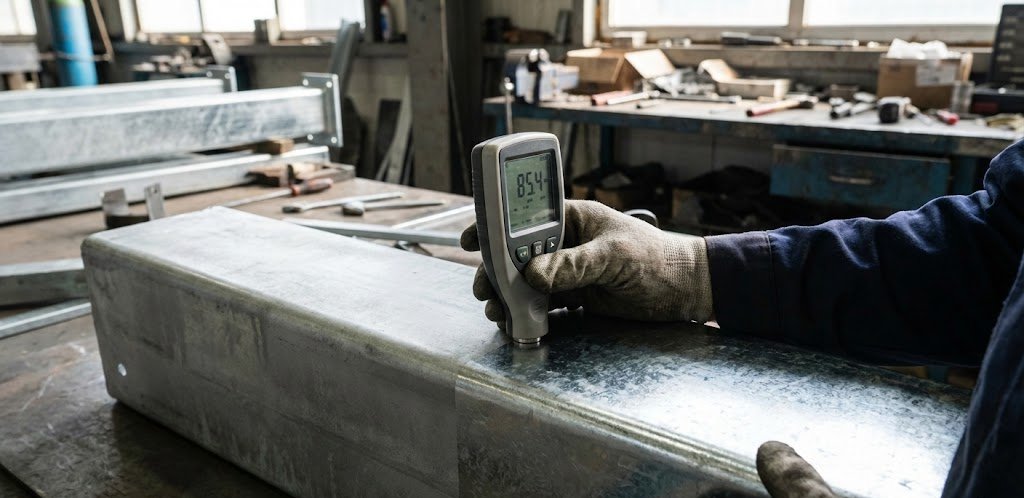
Magnetic coating thickness gauges are widely used for measuring non-magnetic zinc coatings on ferromagnetic steel substrates.
The instrument evaluates the magnetic response between the probe and the steel through the zinc coating and converts this into a thickness reading.
Advantages:
- Non-destructive
- Fast
- Portable
- Suitable for field and production inspections
- Widely used for hot-dip galvanized steel
For reliable results, the instrument should be properly calibrated or verified and used according to the applicable measurement procedure.
Eddy Current Method
Eddy current instruments are commonly used to measure non-conductive coatings on conductive, non-ferrous substrates. Their suitability depends on the electrical properties of the substrate and coating.
Because zinc and many metallic substrates are electrically conductive, eddy current measurement should not automatically be assumed suitable for every zinc-coated metal combination.
The correct instrument should always be selected according to the coating/substrate system.
Gravimetric Method
Gravimetric methods determine coating mass by measuring the mass difference associated with removal of the zinc coating from a known surface area.
This method is generally performed under controlled laboratory conditions.
Characteristics:
- Can provide coating mass information
- Requires controlled sample preparation
- Is destructive to the tested coating
- Is not normally used for routine field inspection
Microscopic Cross-Section Measurement
A coated sample can be sectioned, prepared, and examined under a calibrated microscope to measure coating thickness and study the structure of the coating layers.
This method is useful for:
- Laboratory investigations
- Failure analysis
- Research and development
- Detailed examination of coating structure
Because a sample must be cut, it is a destructive method.
How Are Measurement Results Evaluated?
Galvanized coating thickness is commonly expressed in micrometers (µm). However, there is no single correct thickness range that applies to every galvanized product.
For batch hot-dip galvanized fabricated iron and steel articles, EN ISO 1461 defines minimum coating requirements according to the type and thickness of the steel article.
Therefore, generic ranges such as “50–100 µm for all hot-dip galvanized steel” should not be used as universal acceptance criteria.
The correct approach is to:
- Identify the applicable standard.
- Determine the relevant material category.
- Take measurements at the required representative locations.
- Calculate the required local and mean values where applicable.
- Compare the results with the specified acceptance criteria.
Important Considerations for Accurate Measurement
Several factors can affect measurement accuracy:
Surface Condition: The measurement location should be clean and suitable for probe contact.
Instrument Calibration: The gauge should be calibrated or verified according to the manufacturer’s instructions and relevant procedure.
Multiple Measurements: Measurements should be taken at representative locations rather than relying on a single reading.
Surface Geometry: Measurements near edges, corners, welds, curved surfaces, and highly rough areas may require additional care.
Probe Position: The probe should be positioned correctly and consistently.
Substrate Characteristics: Steel thickness, geometry, and magnetic properties can influence certain instruments.
→ One reading is not a coating inspection; representative sampling is essential.
Professional Coating and Thickness Control with Avrasya Galvaniz
Avrasya Galvaniz provides hot-dip galvanizing solutions for fabricated steel and industrial projects. Coating thickness control can be incorporated into the quality inspection process according to the applicable standard and project specification.
Project-specific quality evaluation may include:
- Visual inspection
- Magnetic coating thickness measurement
- Representative sampling
- Evaluation according to specified coating requirements
- Inspection documentation where required
- Technical coordination before production
Providing technical drawings, material thicknesses, quantities, and coating requirements before production helps align the galvanizing and inspection processes with project expectations.
Quality Control Supports Long-Term Performance
Galvanized coating thickness is an important parameter for evaluating corrosion protection, but it should always be considered together with coating continuity, steel chemistry, product design, environmental exposure, and the applicable standard.
For routine inspection of hot-dip galvanized steel, magnetic coating thickness measurement is one of the most practical and widely used non-destructive methods. Laboratory techniques such as gravimetric analysis and microscopic cross-section measurement may be used where more detailed evaluation is required.
For project-specific galvanizing and coating thickness inspection requirements, Avrasya Galvaniz can evaluate your technical drawings, component dimensions, material thicknesses, quantities, and quality specifications.