Galvanizing Technology
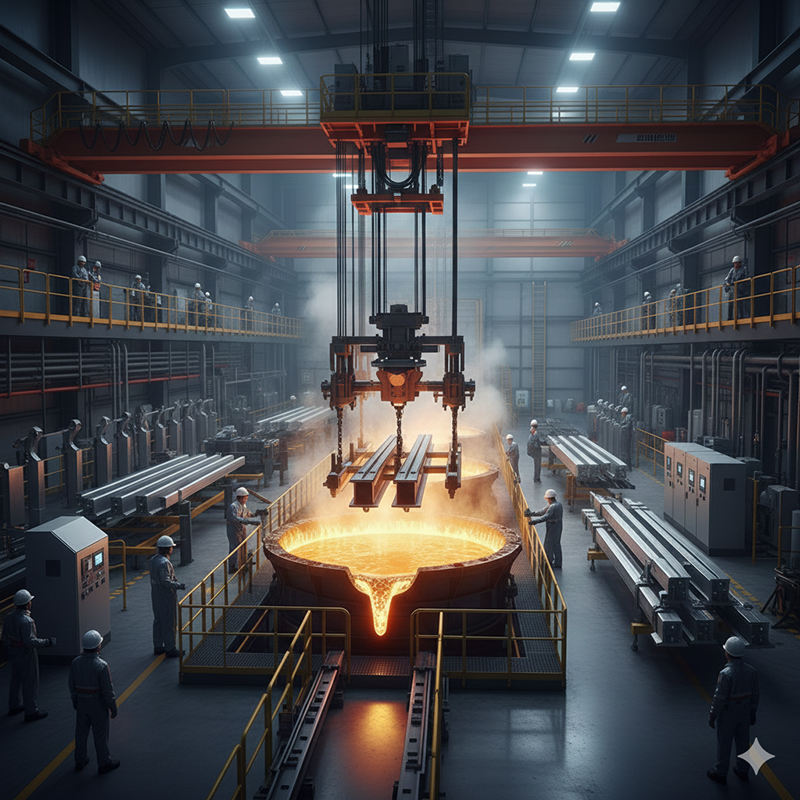
Galvanizing technology is one of the most established methods used to protect metal surfaces against corrosion over extended periods. Steel and iron are continuously exposed to atmospheric conditions, and this exposure can eventually lead to oxidation and corrosion. Zinc coatings help reduce this risk, extend product service life, and lower corrosion-related maintenance requirements.
Galvanizing is widely used in industrial facilities, construction, infrastructure, energy, automotive manufacturing, agriculture, and other sectors where steel requires reliable corrosion protection.
Main Purpose of Galvanizing
The primary purpose of galvanizing is to protect steel against atmospheric exposure, moisture, and other corrosive conditions. Outdoor metals are regularly exposed to rain, humidity, pollutants, salts, and temperature changes, all of which can accelerate corrosion.
Zinc coatings protect steel through two mechanisms:
Barrier protection: The zinc coating reduces direct contact between the steel and the surrounding environment.
Sacrificial protection: Zinc is more electrochemically active than steel. Around small exposed areas, zinc can corrode preferentially and help protect the underlying steel.
This combination is one of the main reasons zinc coatings are widely used for corrosion protection.
How Does Galvanizing Technology Work?
The objective of galvanizing is to create a suitable zinc coating on a properly prepared metal surface. The exact process depends on the galvanizing method.
A typical hot-dip galvanizing process includes:
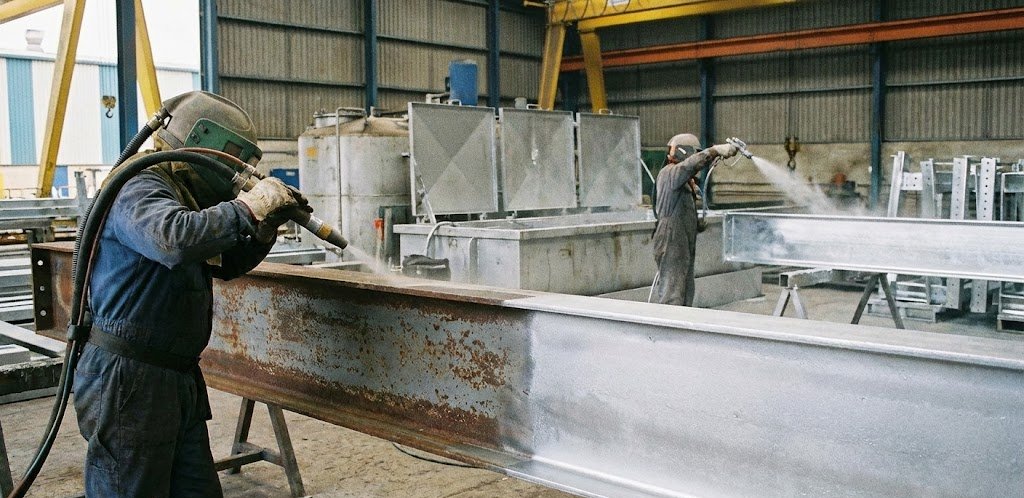
Surface Preparation
The steel surface must be properly cleaned before galvanizing. Oil, grease, rust, and mill scale can interfere with the zinc-steel reaction.
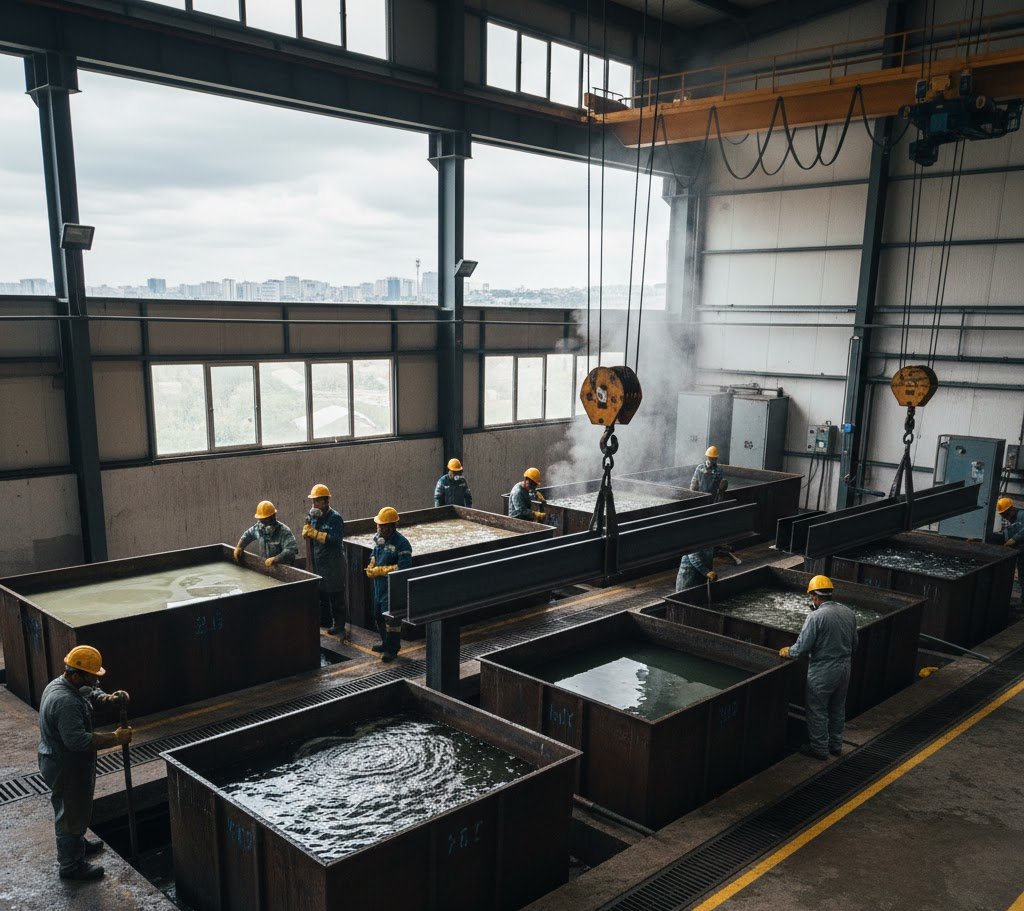
Common preparation stages include:
- Degreasing
- Rinsing
- Pickling
- Additional rinsing where required
- Fluxing
Surface preparation is one of the most important factors affecting successful coating formation.
Galvanizing
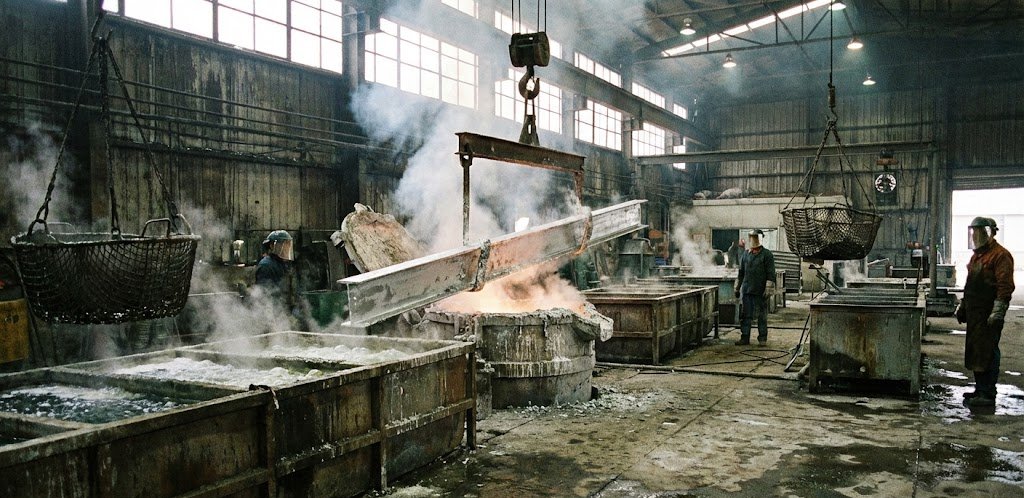
After preparation, the component is immersed in molten zinc. During hot-dip galvanizing, zinc reacts metallurgically with the steel and forms zinc-iron alloy layers with an outer zinc layer.
Other zinc coating technologies, including electrogalvanizing and mechanical galvanizing, use different deposition mechanisms.
Cooling and Inspection
After galvanizing, the component is withdrawn under controlled conditions, excess zinc drains from the surface, and the coating solidifies.
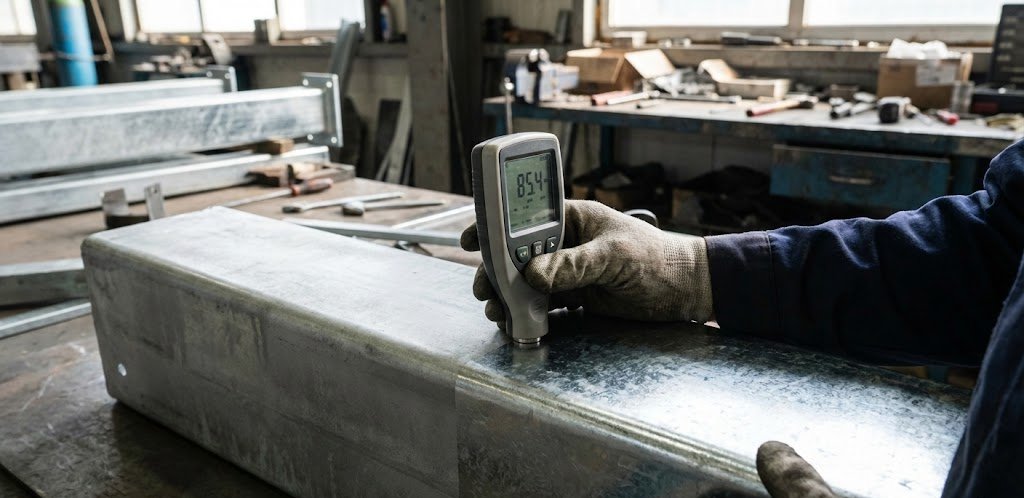
Inspection may include visual examination and coating thickness measurements according to the applicable standard or project specification.
Hot-Dip Galvanizing Technology
Hot-dip galvanizing is one of the most widely used methods for protecting fabricated steel products against atmospheric corrosion.
Steel components are typically immersed in molten zinc at approximately 450°C. The zinc reacts with the steel surface to create metallurgically bonded coating layers.
Hot-dip galvanizing is commonly used for:
- Structural steel
- Bridges and infrastructure components
- Highway barriers
- Utility poles
- Transmission structures
- Steel construction
- Industrial platforms
- Agricultural structures
- Solar panel support systems
One of its main advantages is the relatively robust zinc coating produced on suitable fabricated steel products.
Electrogalvanizing Technology
Electrogalvanizing deposits zinc onto a metal surface using an electrochemical process.
Compared with batch hot-dip galvanizing, it generally provides a thinner and more controlled coating. It is often selected where surface finish, dimensional precision, or controlled coating thickness is important.
Potential advantages include:
- Smooth surface finish
- Controlled coating thickness
- Suitability for high-volume manufacturing
- Compatibility with certain subsequent coating systems
Electrogalvanizing is commonly used for sheet products, automotive components, fasteners, and other manufactured parts, depending on the required specification.
Mechanical Galvanizing Technology
Mechanical galvanizing uses mechanical energy to deposit zinc onto suitable metal components. The parts are typically processed with zinc powder and other materials in specialized equipment.
This method is commonly used for certain:
- Fasteners
- Small components
- Precision parts
Because it does not require immersion in molten zinc, mechanical galvanizing can be useful for components where high-temperature processing is undesirable.
Importance of Galvanizing Technology in Industry
Galvanizing is widely used because it can provide:
- Long-term corrosion protection
- Relatively low maintenance requirements
- Durable zinc coatings
- Sacrificial corrosion protection
- Compatibility with many fabricated steel products
- Potential lifecycle cost advantages
- Recyclability of steel and zinc
However, galvanizing does not completely eliminate corrosion under every possible condition. Performance depends on coating thickness, environmental corrosivity, exposure conditions, steel design, and maintenance.
Importance of Galvanized Coating Thickness
Coating thickness is an important factor affecting the corrosion protection provided by zinc.
For batch hot-dip galvanized fabricated iron and steel articles, standards such as EN ISO 1461 specify minimum coating requirements according to the relevant material category and steel thickness.
Coating thickness is influenced by several factors, including:
- Steel chemistry
- Material thickness
- Surface condition
- Galvanizing temperature
- Immersion conditions
- Component geometry
- Withdrawal and drainage
A thicker coating is not automatically the correct specification for every product. The appropriate requirement should be determined according to the applicable standard and project conditions.
Quality Control in Galvanizing
Quality control helps verify whether galvanized products comply with specified coating requirements.
Common inspection steps may include:
- Visual examination
- Coating thickness measurement
- Evaluation of uncoated areas
- Inspection of zinc accumulations
- Checking critical connection areas
- Dimensional inspection where required
- Documentation according to project specifications
For batch hot-dip galvanized fabricated steel, magnetic coating thickness gauges are widely used for non-destructive measurement.
A galvanized surface does not need to have a perfectly identical color or texture everywhere. Variations from bright silver to matte gray can occur because of steel chemistry and process conditions without necessarily affecting corrosion protection.
Economic Advantages of Galvanizing
The cost of corrosion protection should be evaluated across the complete service life of a product rather than only by its initial coating price.
Galvanizing can reduce:
- Repainting requirements
- Maintenance frequency
- Repair costs
- Downtime
- Replacement frequency
These advantages can make hot-dip galvanizing economically attractive for structures where long-term maintenance would be difficult or expensive.
The actual lifecycle benefit depends on the environment, service-life target, maintenance strategy, and alternative coating systems being compared.
Environmental Considerations
Steel and zinc can both be recovered through established recycling processes, and extending the service life of steel can reduce replacement requirements.
However, environmental performance should be assessed across the complete galvanizing process.
Important considerations include:
- Energy consumption
- Chemical management
- Wastewater treatment
- Air emissions
- Zinc ash and dross recovery
- Water consumption
- Transportation
- Recycling at end of life
Modern galvanizing facilities can use process monitoring, filtration, recovery, and treatment technologies to improve resource efficiency and environmental performance.
Importance of Professional Galvanizing Services
Galvanizing is a technical process that requires appropriate component design, surface preparation, process control, material handling, and inspection.
Poor preparation or unsuitable component design can result in:
- Uncoated areas
- Poor drainage
- Excessive zinc accumulation
- Distortion
- Surface defects
- Assembly difficulties
For hollow components, correct venting and drainage are particularly important for both process safety and coating quality.
Galvanizing Solutions from Avrasya Galvaniz
Avrasya Galvaniz provides hot-dip galvanizing solutions for fabricated steel and industrial projects.
Project evaluation may include:
- Steel characteristics
- Component dimensions
- Product geometry
- Surface condition
- Venting and drainage requirements
- Applicable coating standard
- Inspection requirements
- Production quantities
- Delivery schedule
Providing technical drawings before fabrication can help identify design details that may affect galvanizing safety, coating quality, handling, and drainage.
Applications of Galvanizing Technology
Galvanizing technology is used across a wide range of applications, including:
- Steel structures
- Energy transmission systems
- Utility poles
- Highway infrastructure
- Automotive components
- Machinery
- Agricultural equipment
- Telecommunications towers
- Steel fencing and panel systems
- Solar panel support structures
- Industrial platforms
- Selected marine and coastal structures
The appropriate zinc coating system should be selected according to the product type and environmental exposure.
Galvanizing and Paint Compatibility
Galvanized steel can be painted, but proper surface preparation and compatible coating materials are essential.
A system combining hot-dip galvanizing with paint is known as a duplex coating system. It can provide:
- Additional corrosion protection
- A specific architectural color
- Improved performance in certain aggressive environments
However, freshly galvanized surfaces should not simply be painted without appropriate preparation. The required preparation depends on surface condition, coating system, and paint manufacturer recommendations.
The Role of Modern Technology in Galvanizing
Modern galvanizing facilities increasingly use technology to improve production consistency, process safety, efficiency, and quality control.
Examples include:
- Automated material handling
- Zinc bath temperature monitoring
- Chemical process control
- Production tracking
- Digital coating thickness measurement
- Energy monitoring
- Emissions control
- Wastewater treatment
- Zinc recovery systems
Technology supports the galvanizing process, but reliable coating performance still depends on sound metallurgy, correct component design, controlled surface preparation, and experienced technical management.
Long-Term Corrosion Protection with Galvanizing Technology
Galvanizing technology provides an established method for protecting steel against corrosion across construction, infrastructure, energy, agriculture, transportation, and industrial applications.
Hot-dip galvanizing, electrogalvanizing, and mechanical galvanizing serve different technical requirements. Selecting the appropriate method requires consideration of product geometry, operating environment, coating specification, expected service life, and subsequent manufacturing processes.
For fabricated steel projects requiring hot-dip galvanizing, Avrasya Galvaniz can evaluate technical drawings, dimensions, quantities, steel characteristics, coating requirements, and delivery schedules to provide a project-specific solution.