Galvanizing Standards
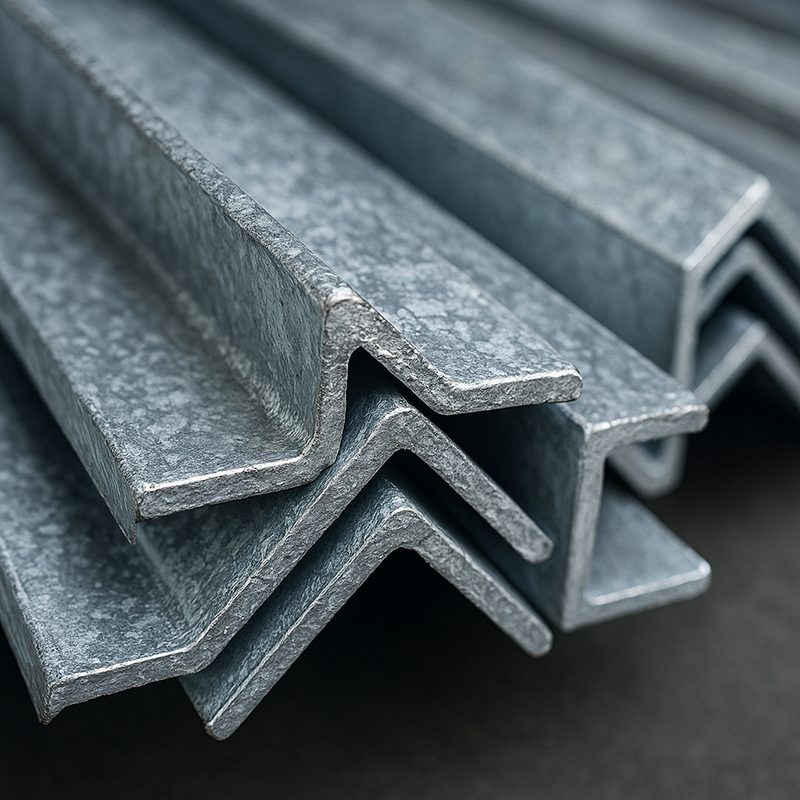
Galvanizing is one of the most established surface protection methods used to protect metal against corrosion. Correct application of galvanizing standards is particularly important for extending the service life of steel and iron products used outdoors and for ensuring that specified coating requirements can be objectively verified.
Galvanized steel is widely used in construction, energy, automotive manufacturing, agriculture, infrastructure, railways, transportation, and industrial production.
Internationally recognized galvanizing standards define requirements for specific products and coating processes. Depending on the standard, these requirements may cover coating thickness, appearance, sampling, testing, repair, design guidance, and corrosion protection performance.
What Is the Main Purpose of Galvanizing?
The primary purpose of galvanizing is to protect steel against corrosion and extend its service life.
Zinc provides two important protection mechanisms:
- Barrier protection: The zinc coating separates the underlying steel from moisture and oxygen.
- Sacrificial protection: Zinc is more electrochemically active than steel and can corrode preferentially around small exposed areas, helping protect the steel.
Hot-dip galvanized coatings can therefore provide long-term corrosion protection with relatively low maintenance requirements.
The expected service life depends on coating thickness, environmental corrosivity, product design, exposure conditions, and maintenance.
Quality Criteria in Galvanizing Processes
Galvanizing quality should be evaluated according to the applicable product and coating standard rather than a single universal set of requirements.
For batch hot-dip galvanized fabricated steel, common acceptance criteria include:
- Coating thickness
- Coating continuity
- Surface condition
- Inspection sampling
- Uncoated areas
- Repair requirements
- Freedom from defects that interfere with intended use
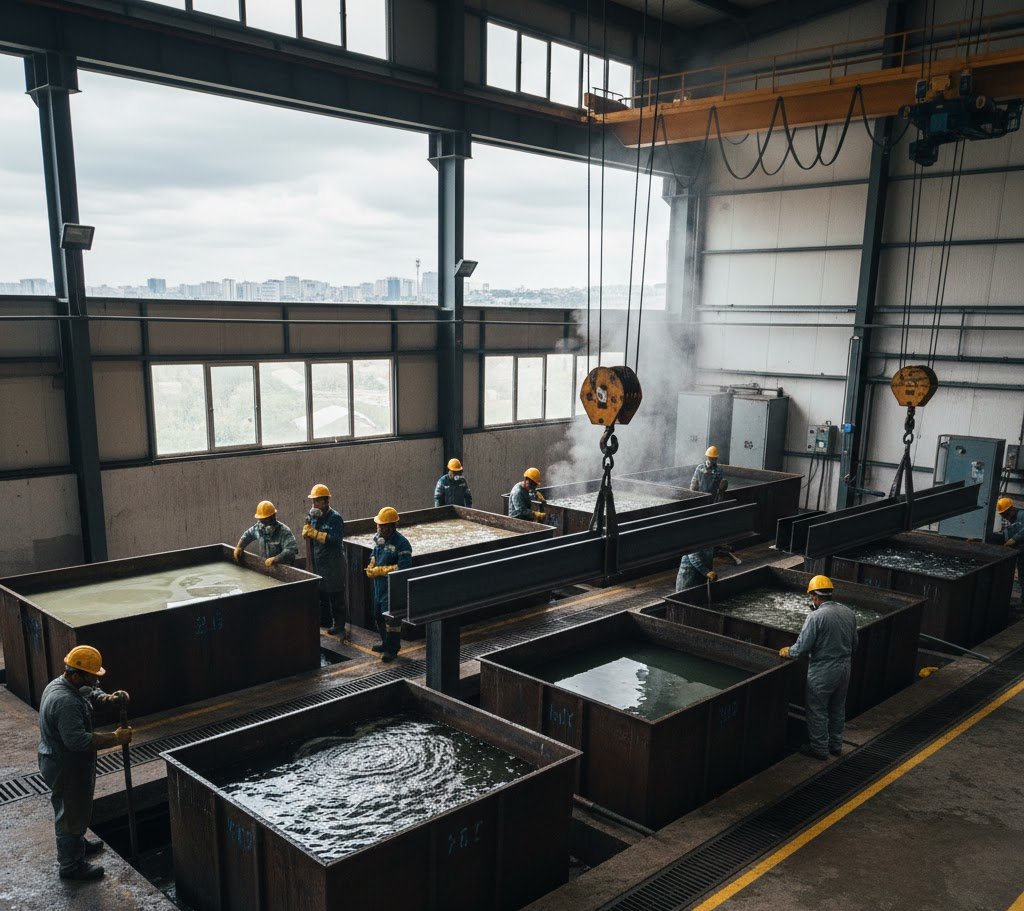
Surface preparation is also essential to successful hot-dip galvanizing. Steel is typically cleaned through degreasing, pickling, rinsing, and fluxing before immersion in molten zinc.
Process variables such as zinc bath conditions, steel chemistry, immersion, withdrawal, and drainage also influence the final coating.
Scope of International Galvanizing Standards
Different galvanizing standards apply to different products and processes. This distinction is important because fabricated steel, continuously coated sheet, fasteners, and centrifuged components may not be covered by the same requirements.
Standards provide a common technical framework for manufacturers, galvanizers, engineers, inspectors, and customers.
Surface Preparation
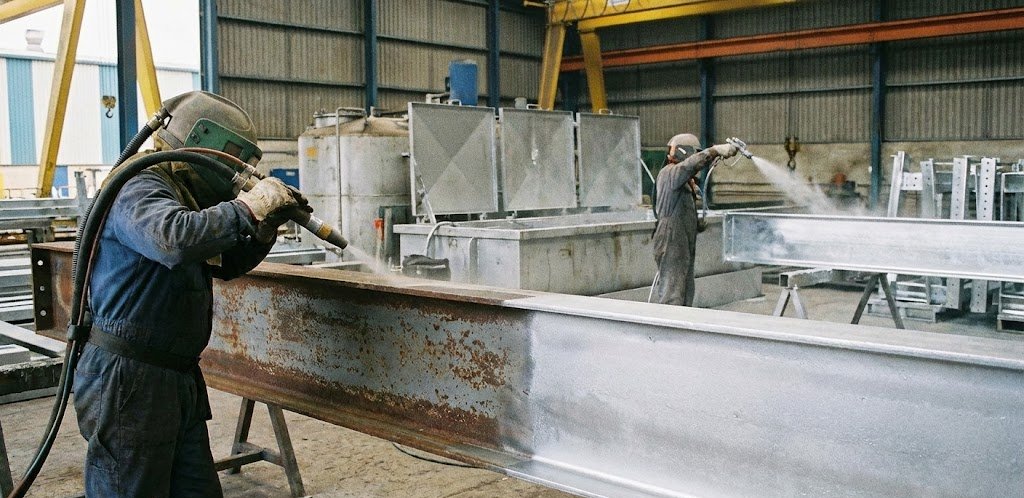
Successful hot-dip galvanizing requires a properly prepared steel surface. Standard chemical pretreatment processes typically remove oil, rust, mill scale, and other contaminants that would prevent the zinc from reacting with the steel.
Some contaminants, such as certain paints, welding residues, or heavy surface contamination, may require additional preparation before standard chemical cleaning.
Coating Thickness Requirements
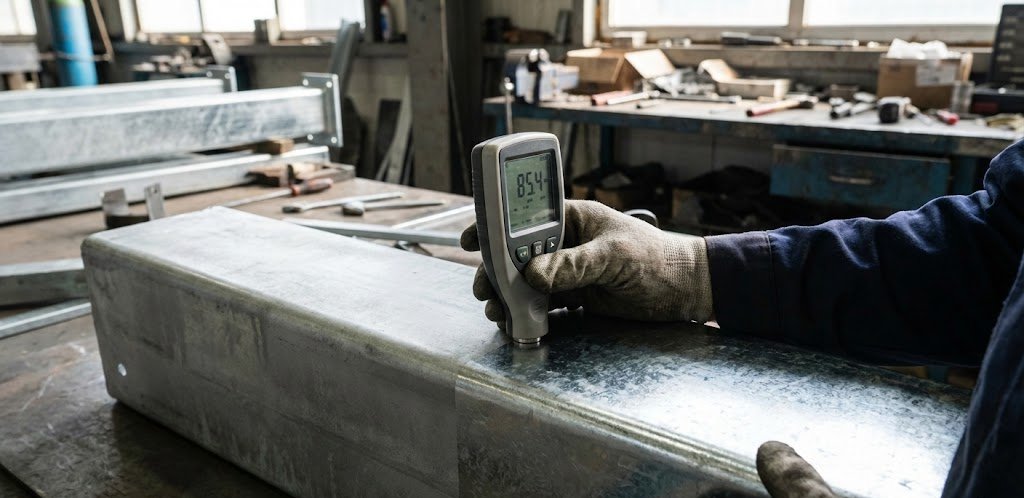
Coating thickness is one of the most important measurable characteristics of a galvanized coating.
For batch hot-dip galvanized fabricated iron and steel articles, EN ISO 1461 specifies minimum local and mean coating thickness requirements according to the relevant material category and steel thickness.
The required thickness should therefore be determined from the applicable standard rather than by specifying an arbitrary universal value.
Coating Appearance and Continuity
A galvanized coating does not need to have a perfectly identical color, brightness, or texture across the entire surface.
Steel chemistry and process conditions can produce bright, matte, gray, or locally different appearances without necessarily reducing corrosion protection.
Inspection should focus on standard-based acceptance criteria such as coating continuity and whether surface conditions interfere with the intended use of the product.
Mechanical Performance
Hot-dip galvanized coatings are metallurgically bonded to steel and generally provide good resistance to handling and mechanical wear.
Routine mechanical adhesion testing is not necessarily required for every batch of hot-dip galvanized fabricated steel. If a project or product standard requires a specific mechanical test, the prescribed standardized method should be used.
Important Hot-Dip Galvanizing Standards
Several standards are commonly referenced for zinc corrosion protection.
| Standard | General Scope |
|---|---|
| EN ISO 1461 | Hot-dip galvanized coatings on fabricated iron and steel articles — specifications and test methods |
| ISO 14713-1 | General principles of corrosion protection of iron and steel structures by zinc coatings |
| ISO 14713-2 | Design guidance for hot-dip galvanized zinc coatings |
| ASTM A123/A123M | Zinc coatings on iron and steel products under ASTM requirements |
| EN 10346 | Continuously hot-dip coated steel flat products for cold forming |
These standards should not be treated as interchangeable. The correct standard depends on the product, galvanizing process, market, and project specification.
Why Is EN ISO 1461 Important?
EN ISO 1461 is one of the primary standards used for batch hot-dip galvanized fabricated iron and steel articles.
It addresses subjects including:
- Coating requirements
- Minimum coating thickness
- Sampling
- Test methods
- Appearance and surface condition
- Repair of uncoated or damaged areas
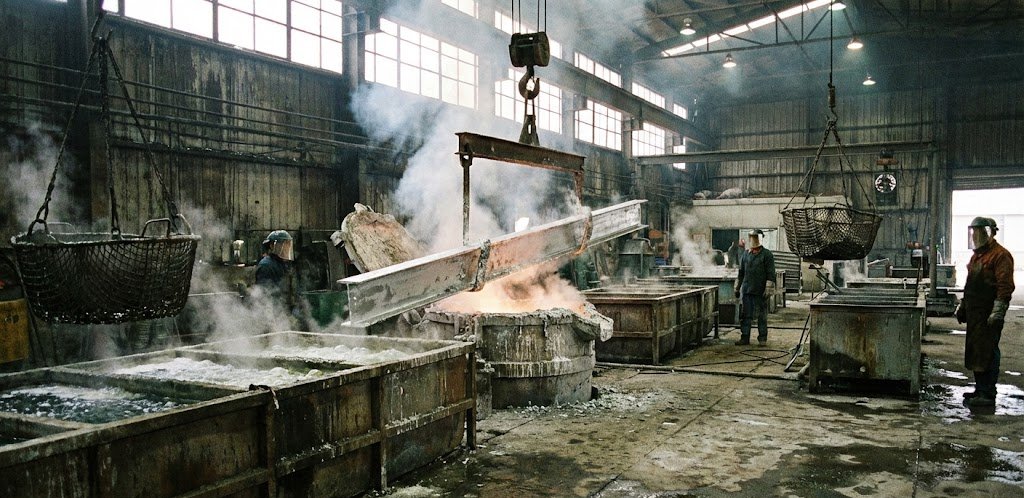
Hot-dip galvanizing is commonly carried out in molten zinc at approximately 450°C, although plant operating parameters can vary within controlled process ranges.
The standard applies to the galvanized coating. It does not replace separate structural, welding, fabrication, installation, or safety standards that may apply to the finished product.
Galvanizing Standards Across Industrial Sectors
The required coating specification varies according to the product and industry.
Construction
Structural steel, railings, stairs, platforms, and fabricated components may use batch hot-dip galvanizing where long-term atmospheric corrosion protection is required.
Energy
Utility poles, transmission structures, solar support systems, and substation steelwork often require corrosion protection suitable for long-term outdoor exposure.
Transportation and Infrastructure
Highway components, bridge elements, barriers, and other infrastructure products may require both galvanizing specifications and separate product-performance standards.
Agriculture
Greenhouses, fencing, animal shelters, and agricultural equipment can benefit from zinc coatings where moisture and outdoor exposure are significant.
Industrial Manufacturing
Galvanized steel is used in many fabricated products where corrosion protection, low maintenance, and long service life are important.
Choosing the Right Galvanizing Company
Selecting a galvanizing provider should involve more than comparing prices.
Important criteria include:
- Galvanizing capacity
- Zinc bath dimensions
- Technical experience
- Process control
- Quality inspection
- Ability to work with applicable standards
- Technical communication
- Delivery planning
- Documentation capabilities
Project drawings should ideally be reviewed before fabrication when components include hollow sections, enclosed spaces, complex assemblies, or critical drainage requirements.
Galvanizing Solutions from Avrasya Galvaniz
Avrasya Galvaniz provides hot-dip galvanizing solutions for fabricated steel and industrial projects.
Project-specific requirements can be evaluated according to:
- Component dimensions
- Steel thickness and characteristics
- Product geometry
- Venting and drainage requirements
- Applicable galvanizing standard
- Required coating inspection
- Production quantities
- Delivery schedule
Providing technical drawings and specifications before production helps coordinate fabrication and galvanizing requirements more effectively.
How Do Galvanizing Standards Affect Project Service Life?
Standards provide measurable acceptance criteria, but compliance with a galvanizing standard alone does not determine an exact service life.
Long-term performance also depends on:
- Environmental corrosivity
- Zinc coating thickness
- Steel and component design
- Drainage and moisture retention
- Exposure to salts and chemicals
- Mechanical damage
- Maintenance conditions
Insufficient coating, unsuitable design, or inappropriate material selection can shorten service life and increase maintenance costs.
Correctly specified galvanizing can reduce maintenance and replacement requirements and support long-term resource efficiency.
Key Points When Specifying Galvanizing
Before issuing a galvanizing specification, confirm:
- Which product is being galvanized?
- Which coating process will be used?
- Which standard applies?
- What environmental conditions will the product face?
- Are the components designed for safe venting and drainage?
- What inspection and documentation are required?
- Will painting or another coating be applied over the galvanized surface?
- Are there critical dimensions, threads, or connection interfaces?
→ The right galvanizing standard begins with the right product classification.
Galvanizing standards provide the technical framework required to evaluate zinc coatings consistently and reliably. From coating thickness and inspection to design guidance and repair requirements, the correct standard helps align manufacturers, galvanizers, engineers, and customers around measurable quality criteria.
For project-specific hot-dip galvanizing requirements, Avrasya Galvaniz can evaluate technical drawings, component dimensions, quantities, applicable standards, and quality documentation requirements to support an appropriate galvanizing solution.