Galvanizing Process Time
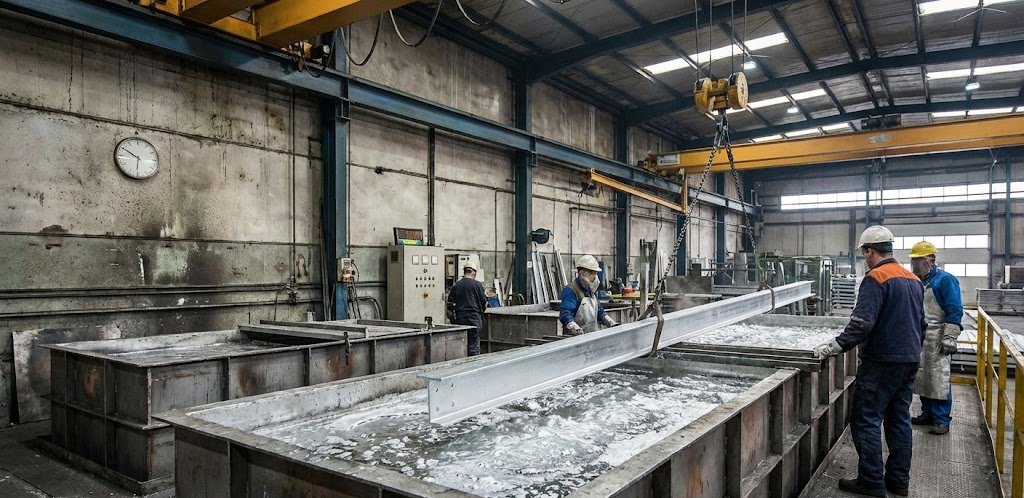
Galvanizing provides long-term corrosion protection for steel, but galvanizing process time is not a single fixed value that can be applied to every component. In hot-dip galvanizing, processing time depends on steel chemistry, component mass, geometry, surface condition, zinc bath conditions, and the time required for the steel to reach an appropriate temperature in the molten zinc.
Professional galvanizing facilities manage these variables together rather than using immersion time alone to control coating thickness.
What Determines Galvanizing Process Time?
Hot-dip galvanizing time is influenced by several factors, including:
- Steel chemistry
- Material thickness and mass
- Component dimensions
- Product geometry
- Surface preparation
- Zinc bath temperature
- Zinc bath chemistry
- Immersion conditions
- Heating behavior of the component
- Venting and drainage design
The objective is to allow the steel and molten zinc to complete the required metallurgical reaction while maintaining suitable coating characteristics.
“Galvanizing time is a process variable, not a universal coating specification.”
For this reason, a fixed immersion time such as 2, 5, or 10 minutes should not automatically be specified for every steel product.
Role of the Zinc-Iron Reaction
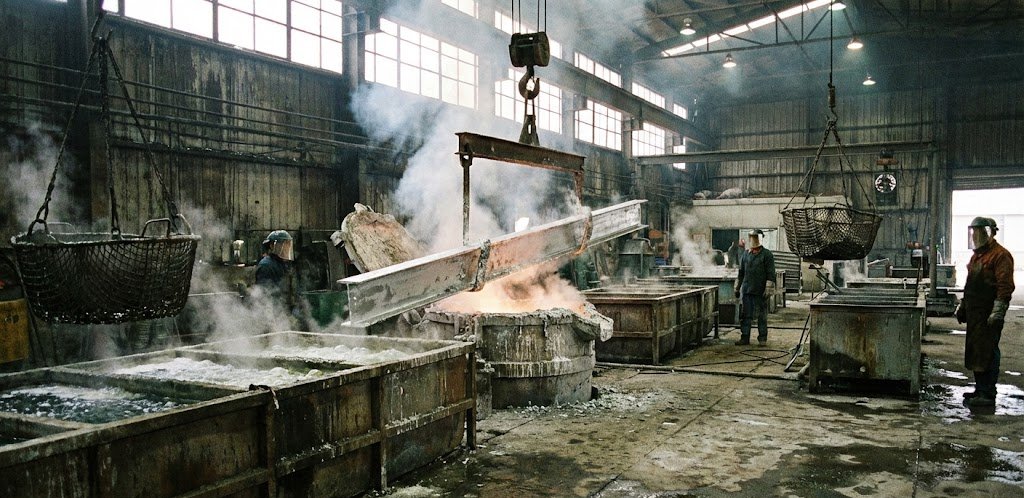
During hot-dip galvanizing, properly prepared steel is immersed in molten zinc, commonly at approximately 450°C.
Zinc reacts with iron at the steel surface to form metallurgically bonded zinc-iron alloy layers. The rate and extent of this reaction depend strongly on steel chemistry and process conditions.
Increasing bath temperature does not provide a simple, universally predictable percentage increase in reaction rate. The relationship is metallurgically complex and varies according to steel composition and the operating temperature range.
Therefore, higher temperature should not be treated as a shortcut for reducing immersion time.
Effect of Steel Chemistry
Steel chemistry is one of the most important factors affecting hot-dip galvanized coating growth.
Silicon and phosphorus content can significantly influence the reaction between steel and molten zinc. Certain steel compositions can be more reactive and produce thicker zinc-iron alloy layers than other steels processed under similar conditions.
This is why material certificates can be valuable before galvanizing important structural components.
The relationship between silicon content, immersion time, and coating thickness is not sufficiently simple to support universal statements such as a specific silicon percentage requiring an exact number of seconds or minutes.
Effect of Surface Preparation
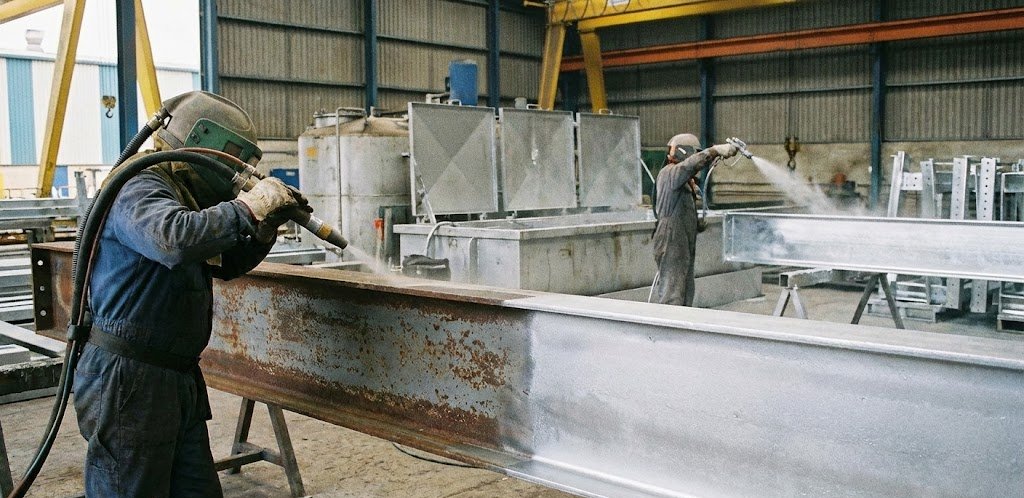
Successful galvanizing requires a clean and chemically active steel surface.
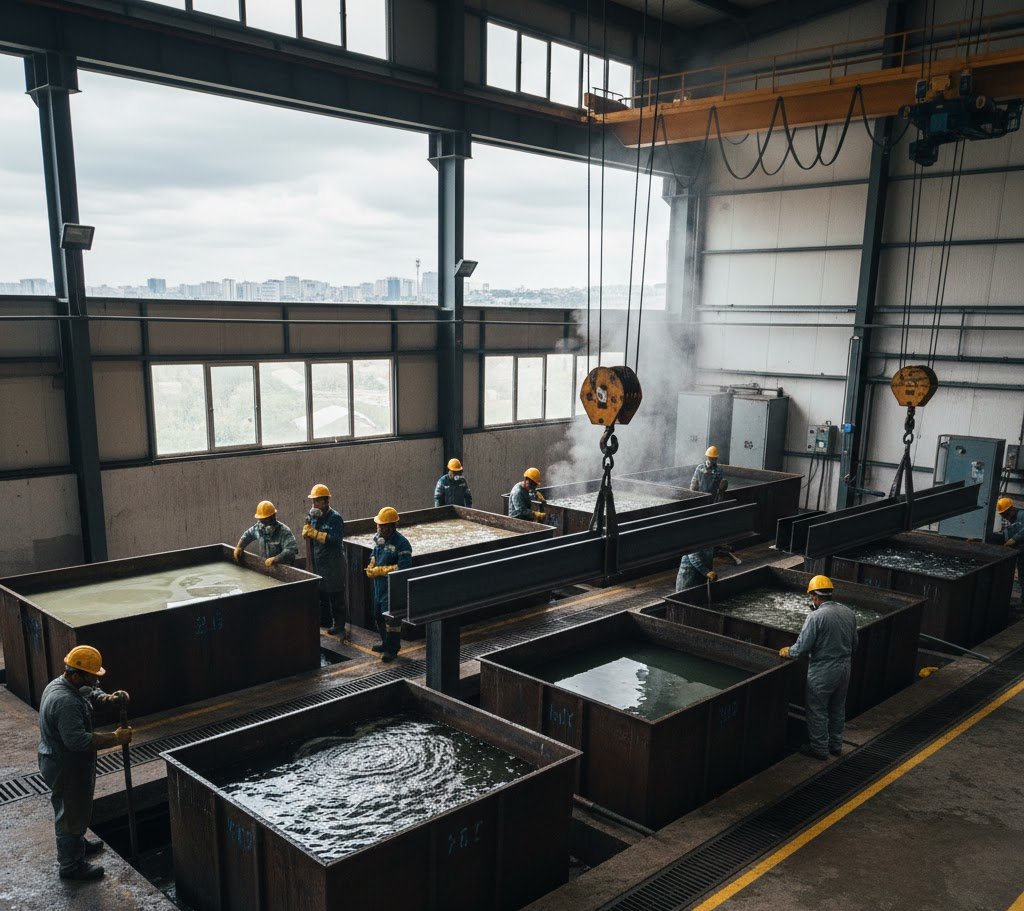
Surface preparation typically includes:
- Degreasing
- Rinsing
- Pickling
- Rinsing
- Fluxing
Oil, grease, paint, rust, mill scale, and other contaminants can interfere with the galvanizing reaction.
There is no reliable universal rule stating that a specific oxide thickness will reduce reaction speed by a fixed percentage. Instead, surface preparation should be controlled according to the galvanizing plant’s process requirements.
How Is Galvanizing Time Determined?
Galvanizing time is generally determined operationally rather than calculated using a universal formula based solely on desired coating thickness.
The galvanizer evaluates factors such as:
- Component mass
- Steel thickness
- Steel chemistry
- Product geometry
- Bath conditions
- Thermal behavior
- Zinc reaction
- Drainage characteristics
The component must remain immersed long enough to reach suitable thermal conditions and complete the required galvanizing reaction.
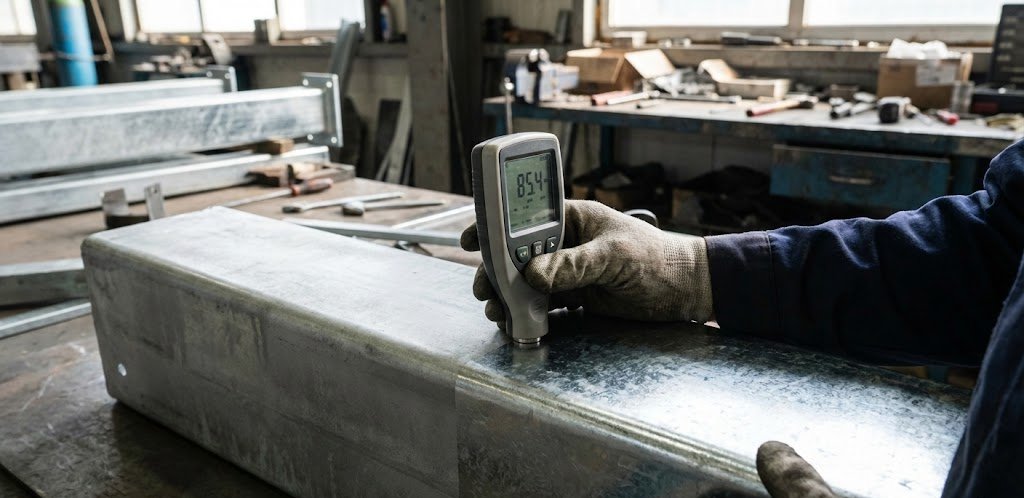
Coating thickness should then be verified according to the applicable coating specification rather than assuming that a particular number of minutes automatically produces a particular number of micrometers.
Step-by-Step Process Considerations
A practical production sequence includes:
- Review the steel and component design.
- Check dimensions, geometry, venting, and drainage.
- Complete surface preparation.
- Flux the prepared steel.
- Immerse the component in molten zinc.
- Allow sufficient time for heating and metallurgical reaction.
- Withdraw the component under controlled conditions.
- Allow excess zinc to drain.
- Cool the component.
- Inspect the finished coating.
- Measure coating thickness where required.
- Compare results with the applicable specification.
This approach provides more reliable process control than specifying immersion time alone.
Why Does Galvanizing Time Vary?
Hot-dip galvanizing time varies because steel products behave differently when immersed in molten zinc.
Component Thickness and Mass
A lightweight steel component generally heats more quickly than a heavy fabricated structure.
Thick structural components require more energy and time to approach the zinc bath temperature. Exact heating times depend on component geometry, mass, initial temperature, and process conditions.
Geometric Complexity
Complex components may require additional consideration because molten zinc must flow through and drain from:
- Hollow sections
- Internal cavities
- Corners
- Narrow openings
- Overlapping areas
Proper vent and drain holes are essential.
Poor drainage should be corrected through component design rather than compensated for simply by increasing immersion time.
Production Conditions
Plant workload alone should not determine galvanizing quality. Professional facilities control bath conditions, pretreatment chemistry, material handling, and process parameters so that production requirements remain within defined operating limits.
Relationship Between Galvanizing Time and Coating Thickness
Longer immersion can influence coating development, but the relationship is not universally linear.
Doubling immersion time does not necessarily double zinc coating thickness.
Steel chemistry can have a stronger influence on coating growth than immersion time. Reactive steels may develop relatively thick alloy layers even without unusually long immersion.
For this reason, generic tables that assign a fixed coating thickness to one, two, three, or five minutes of immersion should not be used as universal engineering data.
The finished coating should instead be measured and evaluated according to the applicable standard.
Optimizing Hot-Dip Galvanizing Time
Process optimization requires control of multiple variables rather than focusing only on immersion time.
Important factors include:
- Stable zinc bath conditions
- Controlled surface preparation
- Suitable flux chemistry
- Proper component design
- Correct venting and drainage
- Controlled material handling
- Representative coating inspection
→ Optimize the complete process, not just the clock.
This approach supports consistent coating quality while avoiding unnecessary processing.
Managing Zinc Bath Temperature
Hot-dip galvanizing is commonly carried out at approximately 450°C.
The exact operating range is determined by the galvanizing facility and process requirements. Stable temperature control is important because large uncontrolled variations can affect production conditions and coating development.
There is no universal requirement that every galvanizing bath must remain within exactly ±2°C to achieve compliant coating quality unless such a requirement is specified by a particular process or internal quality procedure.
Effect of Fluxing
Flux helps protect the cleaned steel surface from oxidation before immersion and supports wetting by molten zinc.
Important flux parameters can include:
- Concentration
- Temperature
- pH
- Density
- Iron contamination
The correct values depend on the specific flux chemistry and plant process.
A single universal density range should therefore not be treated as applicable to every galvanizing facility.
Surface Preparation and Production Efficiency
Good surface preparation supports a consistent zinc-steel reaction and reduces the risk of uncoated areas.
Poor preparation can cause production delays or require reprocessing, but universal claims such as a specific number of seconds of delay causing a fixed percentage loss in daily capacity should be avoided unless supported by actual plant data.
Production efficiency should be measured using facility-specific operating information.
Galvanizing Time and Corrosion Resistance
Corrosion resistance depends primarily on the characteristics of the finished zinc coating and the environment in which it is used.
Important factors include:
- Coating thickness
- Coating continuity
- Environmental corrosivity
- Salt exposure
- Industrial pollutants
- Product design
- Mechanical damage
- Maintenance conditions
Longer immersion time alone does not guarantee longer service life.
Likewise, specifying an arbitrary 100 or 120 µm coating does not automatically produce a predictable number of service years in every environment.
Process Control and Time Consistency
Modern galvanizing plants may use monitoring and automation systems to improve process consistency.
Depending on the facility, these may include:
- Zinc bath temperature monitoring
- Material tracking
- Pretreatment chemistry monitoring
- Crane and handling controls
- Production timing systems
- Digital quality records
- Coating thickness measurement equipment
These technologies support process control, but experienced technical management remains essential.
Data Analytics in Galvanizing
Digital production systems can collect and analyze operating data such as bath temperature, processing times, material categories, coating measurements, and production throughput.
Advanced analytics may help facilities identify trends and improve process consistency.
However, claims that machine-learning systems universally reduce production losses by a specific percentage should only be made when supported by documented facility-specific evidence.
Avrasya Galvaniz and Process Time Management
Avrasya Galvaniz provides hot-dip galvanizing solutions for fabricated steel and industrial projects.
Project-specific process planning can consider:
- Steel characteristics
- Component dimensions
- Material thickness
- Product geometry
- Surface condition
- Venting and drainage
- Applicable coating standard
- Quality inspection requirements
- Production quantities
- Delivery schedule
Rather than relying on a fixed immersion time for every product, the process should be adjusted according to the actual component and verified through finished-coating inspection.
What Is the Ideal Galvanizing Time?
There is no single ideal galvanizing time for all industrial products.
Lightweight components may require relatively short immersion periods, while large fabricated structures may require longer periods to reach suitable thermal conditions.
The correct duration is the time necessary to:
- Heat the component appropriately
- Complete the zinc-steel reaction
- Produce the required coating
- Allow safe processing and drainage
The finished product should then be evaluated according to the relevant coating standard.
For batch hot-dip galvanized fabricated iron and steel articles, EN ISO 1461 is commonly used as a reference for coating requirements and test methods.
How to Improve Galvanizing Process Efficiency
Practical methods include:
- Review steel chemistry before production where relevant.
- Design hollow components with suitable vent and drain holes.
- Complete fabrication before galvanizing whenever practical.
- Maintain controlled pretreatment chemistry.
- Monitor zinc bath operating conditions.
- Plan component orientation for effective drainage.
- Use suitable material handling procedures.
- Inspect coating thickness at representative locations.
- Record production and quality data.
- Coordinate unusual components with the galvanizer before fabrication.
These measures improve overall process stability without depending on arbitrary immersion-time targets.
Long-Term Coating Performance
For long-term corrosion protection, galvanizing should be specified according to the product and operating environment.
A successful corrosion protection strategy considers:
- Applicable galvanizing standard
- Environmental corrosivity
- Required service life
- Steel design
- Zinc coating requirements
- Maintenance accessibility
- Potential mechanical damage
- Additional paint protection where required
In aggressive environments, a duplex system combining hot-dip galvanizing and a compatible paint system may be considered.
Galvanizing process time is therefore only one part of a larger metallurgical and production process. Steel chemistry, component mass, surface preparation, zinc bath conditions, geometry, drainage, and quality inspection all contribute to the finished coating.
For project-specific hot-dip galvanizing requirements, Avrasya Galvaniz can evaluate technical drawings, component dimensions, steel characteristics, quantities, coating specifications, and delivery requirements to determine an appropriate process.