Galvanizing Plants
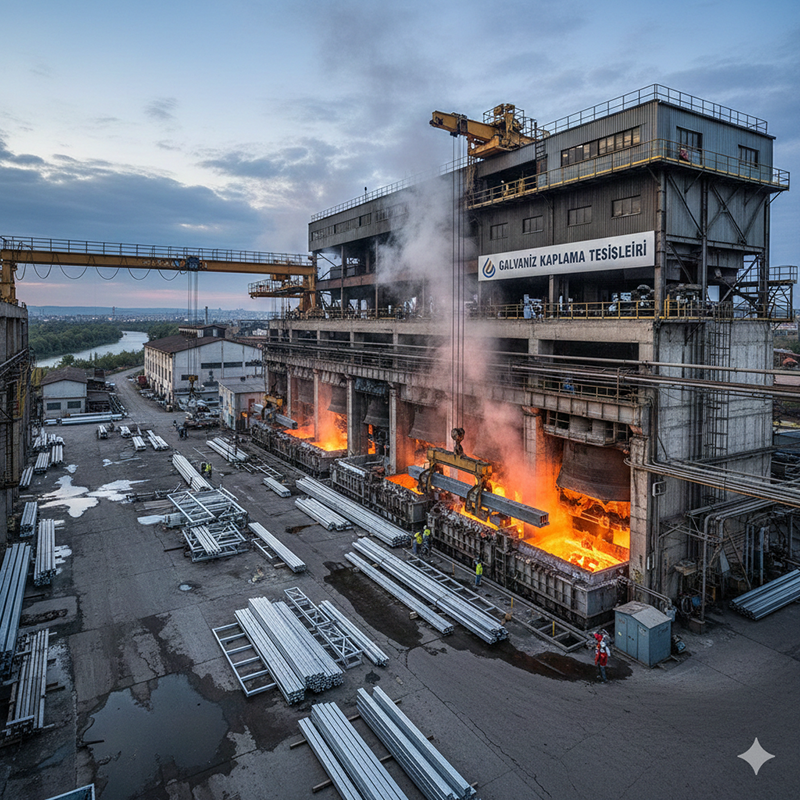
Galvanizing plants are industrial facilities where steel and iron products are coated with zinc to protect them against corrosion and environmental exposure. Through controlled galvanizing processes, fabricated steel components can achieve long-term corrosion protection, particularly in outdoor, humid, industrial, and infrastructure applications.
Galvanizing plants do more than apply a surface coating. Their production capability, process control, material handling, quality inspection, and environmental management directly influence the consistency and efficiency of the finished product.
For this reason, galvanizing facilities play an important role in industries such as construction, energy, agriculture, infrastructure, transportation, and machinery manufacturing.
Main Stages of the Galvanizing Process
The hot-dip galvanizing process consists of several stages, each of which can affect the final coating quality.
A typical process includes:
- Material inspection and preparation
- Degreasing
- Rinsing
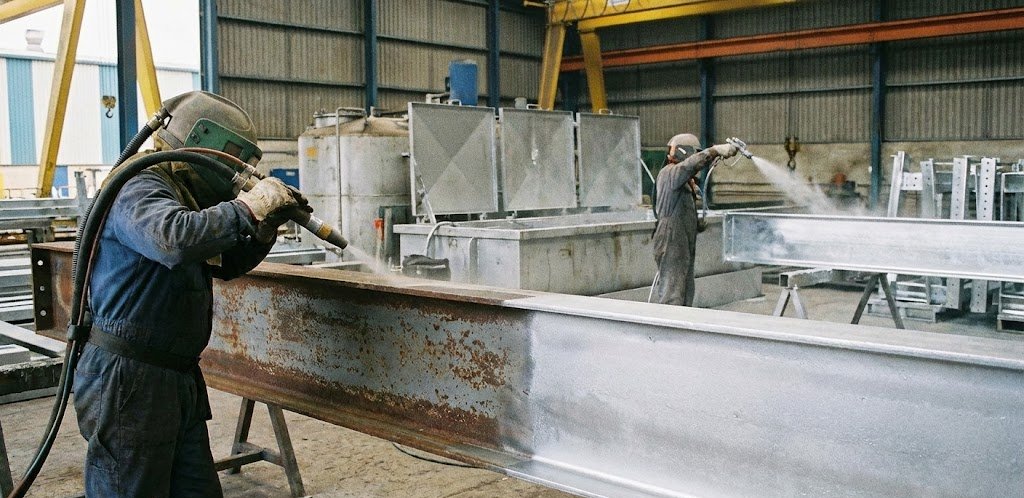
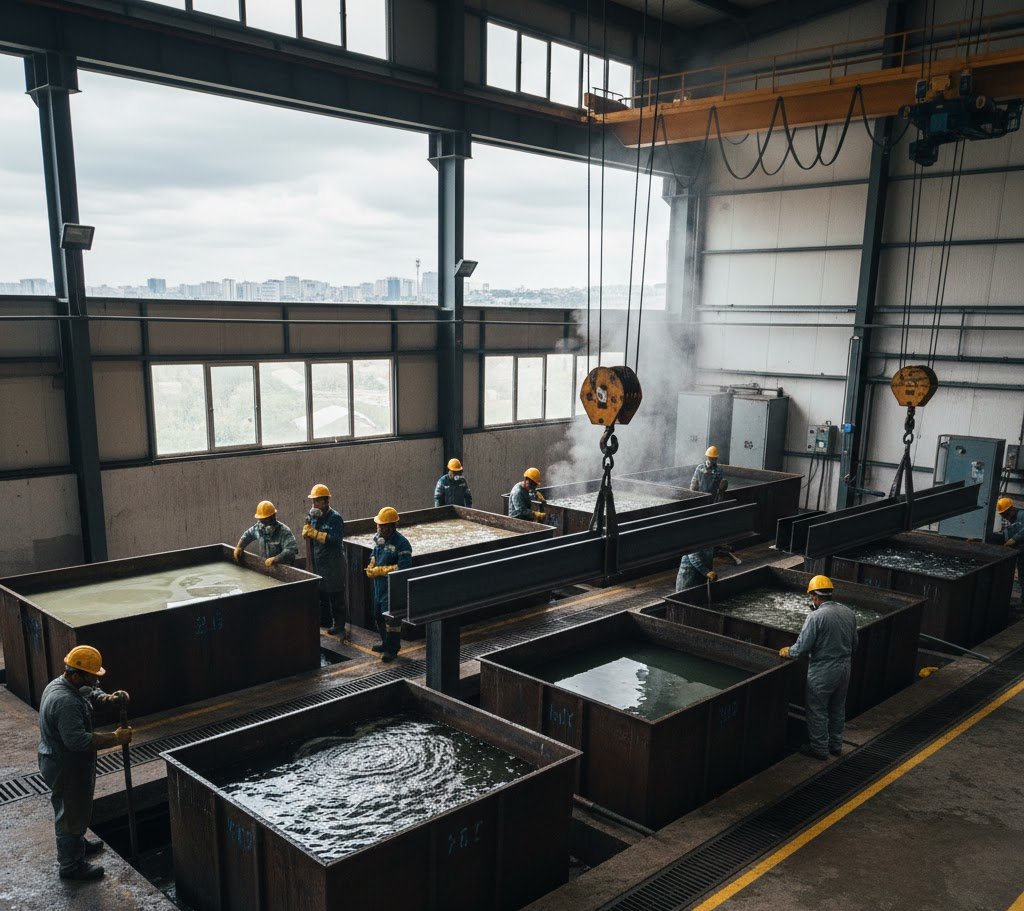
- Pickling to remove rust and mill scale
- Additional rinsing where required
- Fluxing
- Drying or preheating, depending on the plant process
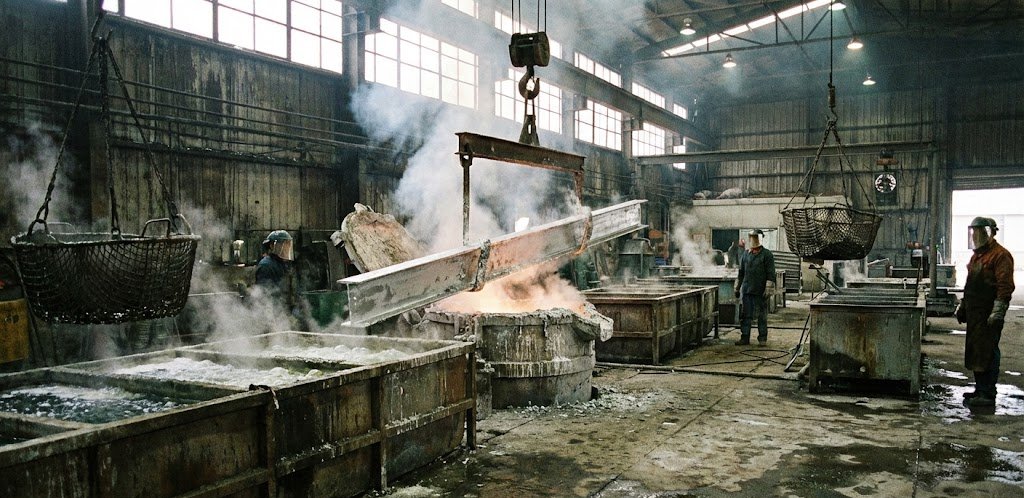
- Immersion in molten zinc
- Controlled withdrawal and drainage
- Cooling
- Inspection and finishing
During immersion, zinc reacts metallurgically with the steel surface, forming zinc-iron alloy layers with an outer zinc layer.
Although these stages follow the same general principle, plant layout, automation level, component handling, bath dimensions, and process controls can vary between facilities.
The Role of Galvanizing in Industry
Galvanizing is widely used across industries where steel products require long-term corrosion protection.
Common applications include:
- Structural steel
- Steel construction components
- Utility poles
- Transmission structures
- Highway infrastructure
- Railings and barriers
- Agricultural equipment
- Greenhouse structures
- Solar panel support systems
- Industrial platforms
- Machinery components
- Urban infrastructure
Outdoor steel products are continuously exposed to moisture, oxygen, pollutants, salts, and changing weather conditions. Zinc coatings help reduce corrosion-related deterioration and can significantly extend service life.
The Role of Technology in Galvanizing Plants
Modern galvanizing facilities use technology to improve process consistency, production efficiency, worker safety, environmental performance, and quality control.
Depending on the facility, technological systems may include:
- Automated or semi-automated material handling
- Zinc bath temperature monitoring
- Chemical pretreatment control
- Production tracking systems
- Ventilation and emissions control
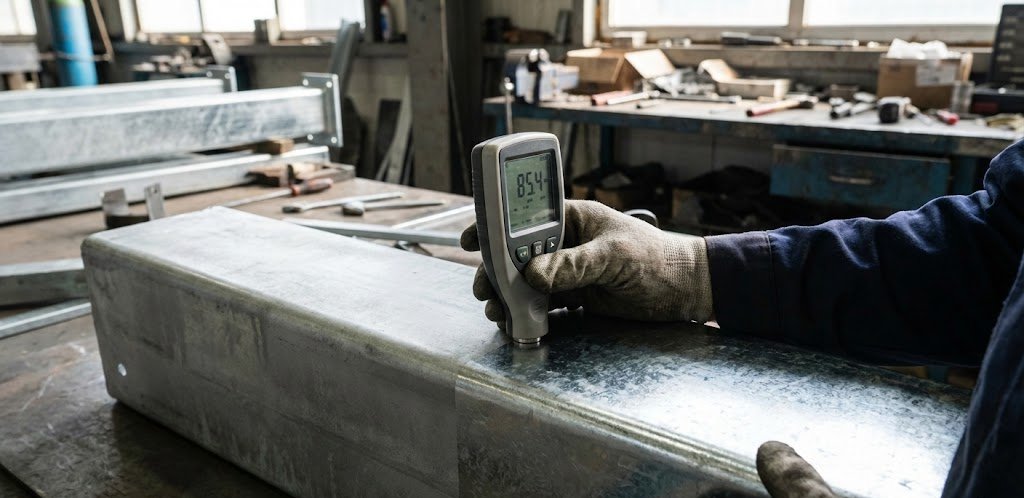
- Coating thickness measurement equipment
- Crane and lifting systems
- Wastewater treatment
- Zinc recovery and dross management
- Energy monitoring systems
Automation can help reduce process variability, but coating quality still depends on correct steel preparation, component design, bath management, trained personnel, and technical inspection.
Quality Management in Galvanizing Plants
A modern galvanizing facility requires more than advanced machinery. Effective quality management and process control are equally important.
Key quality factors include:
- Incoming material condition
- Surface preparation
- Steel chemistry
- Component geometry
- Venting and drainage
- Zinc bath conditions
- Coating thickness
- Surface condition
- Inspection procedures
- Repair requirements
- Documentation
For batch hot-dip galvanized fabricated iron and steel articles, EN ISO 1461 is commonly used as a reference for coating requirements and test methods, depending on the project specification.
→ Modern equipment controls the process; technical quality management controls the result.
What Should Be Considered When Choosing a Galvanizing Plant?
Companies selecting a galvanizing facility should evaluate more than price alone.
Important criteria include:
Zinc Bath Dimensions
The bath must be suitable for the dimensions and geometry of the components being galvanized.
Production Capacity
Large-volume projects require sufficient handling, galvanizing, inspection, and delivery capacity.
Technical Experience
Complex steel fabrications, hollow sections, large structures, and precision components may require technical evaluation before galvanizing.
Quality Control
The facility should have appropriate inspection procedures and coating thickness measurement capabilities.
Standards
The galvanizing process should be evaluated according to the applicable product and coating standards.
Delivery Planning
Production schedules, loading requirements, transportation, and project deadlines should be coordinated in advance.
Environmental and Occupational Controls
Chemical handling, emissions, wastewater, zinc residues, energy consumption, and worker safety should be managed according to applicable regulatory requirements.
Process Chemistry and Zinc Bath Management
Professional galvanizing requires controlled bath and pretreatment chemistry.
The zinc bath is not simply “replaced regularly” as a routine quality measure. Instead, bath chemistry, zinc additions, dross formation, ash, temperature, and process conditions are monitored and managed continuously according to plant procedures.
Similarly, pretreatment solutions require controlled concentration, contamination management, and maintenance.
Stable process chemistry supports more consistent production and efficient material use.
Avrasya Galvaniz as an Industrial Galvanizing Facility
Avrasya Galvaniz provides hot-dip galvanizing solutions for fabricated steel and industrial projects.
Project-specific evaluation can include:
- Component dimensions
- Steel thickness and characteristics
- Product geometry
- Surface condition
- Venting and drainage requirements
- Production quantities
- Applicable galvanizing specification
- Inspection requirements
- Delivery schedule
For large or complex components, reviewing technical drawings before fabrication can help identify design details that may affect galvanizing safety, drainage, coating quality, or handling.
Environmental Management in Galvanizing Plants
Zinc and steel can both be recovered through established recycling processes, but galvanizing operations still require careful environmental management.
Important environmental considerations include:
- Chemical storage and handling
- Wastewater treatment
- Acid management
- Air emissions
- Zinc ash and dross recovery
- Energy consumption
- Water use
- Waste segregation
- Spill prevention
Modern filtration, treatment, monitoring, and recovery systems can reduce environmental impacts and improve resource efficiency.
The environmental performance of a galvanizing plant should therefore be assessed across the entire production process rather than based solely on the recyclability of zinc.
Long-Term Benefits of Galvanizing
Galvanizing is more than a surface finishing process. It is a corrosion protection strategy that can reduce maintenance requirements and extend the useful life of steel products.
Potential lifecycle benefits include:
- Long-term corrosion protection
- Reduced repainting requirements
- Lower maintenance frequency
- Reduced downtime
- Extended steel service life
- Reduced replacement frequency
- Recyclability of steel and zinc
The actual benefits depend on coating thickness, environmental exposure, steel design, installation conditions, and maintenance requirements.
Choosing the Right Galvanizing Plant for Your Project
A reliable galvanizing plant combines suitable production capacity with process control, technical expertise, quality inspection, environmental management, and delivery planning.
For industrial and structural steel projects, the galvanizer should ideally be involved before fabrication is completed. This is particularly important for hollow sections, complex assemblies, large components, and products requiring controlled venting and drainage.
Avrasya Galvaniz can evaluate technical drawings, component dimensions, quantities, coating specifications, and delivery requirements to provide a project-specific hot-dip galvanizing solution.