Galvanizing Methods for Long-Lasting Outdoor Structures

Galvanizing is the process of coating metal surfaces such as steel and iron with zinc to protect them against corrosion. This coating helps shield the underlying metal from direct exposure to oxygen and moisture, extending its service life. Metal structural components used outdoors are directly exposed to rain, snow, wind, humidity, and temperature changes. For this reason, galvanizing plays an important role in extending the service life of outdoor structures.
Galvanizing not only improves corrosion resistance but can also reduce maintenance requirements and provide long-term lifecycle cost advantages.
Advantages of Galvanizing for Outdoor Structures
Outdoor conditions are constantly changing, so structural components must be selected according to the environment in which they will be used. Galvanized steel can provide several advantages:
Corrosion Resistance
Galvanized surfaces provide strong protection against atmospheric corrosion. However, exposure to salt, industrial pollutants, chemicals, and persistent moisture can increase the rate at which the zinc coating is consumed. This is particularly important in coastal and industrial environments.
Long Service Life
Properly specified galvanized coatings can protect steel for decades. The actual service life depends on coating thickness, environmental corrosivity, component design, exposure conditions, and maintenance.
Low Maintenance Requirements
Hot-dip galvanized structures generally require relatively little routine maintenance. This can provide savings in both time and lifecycle costs, particularly for structures where future maintenance access is difficult.
Cost-Effective Protection
Although the initial cost should be evaluated on a project-specific basis, galvanizing can provide long-term economic advantages by reducing the need for repeated painting, repair, or replacement.
Galvanizing Methods and Their Characteristics
Different zinc coating methods can be used according to the product, environment, and required performance. Each method has its own advantages and suitable applications.
Hot-Dip Galvanizing
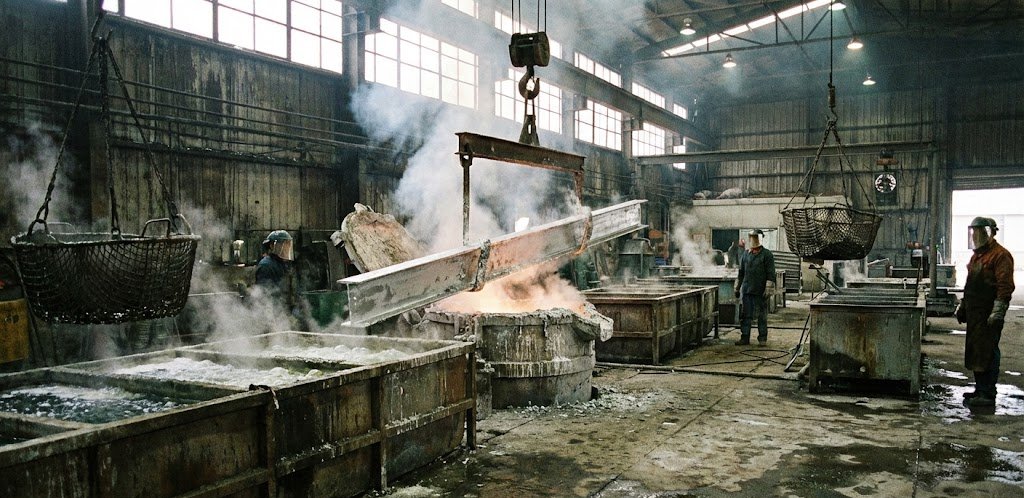
In this method, fabricated steel is immersed in a bath of molten zinc. A metallurgically bonded zinc-iron coating forms on the steel surface. Hot-dip galvanizing is widely used for outdoor structures requiring robust, long-term corrosion protection.
Advantages:
- High corrosion resistance
- Long service life
- Coating of accessible surfaces, including many edges and internal areas when the component is properly designed
- Good resistance to handling and mechanical wear
Electrogalvanizing
Electrogalvanizing uses an electric current to deposit zinc onto a metal surface. It generally produces a thinner and more uniform coating than batch hot-dip galvanizing.
Advantages:
- Smooth and controlled surface finish
- Suitable for precision components
- Controlled coating thickness
- Useful for applications where dimensional tolerances are important
For demanding outdoor structures, the suitability of electrogalvanizing should be evaluated carefully according to the required corrosion protection.
Mechanical Galvanizing
Mechanical galvanizing bonds zinc particles to suitable metal components through a mechanical process. It is commonly used for small parts such as certain fasteners.
Advantages:
- Does not require high-temperature immersion
- Suitable for certain small components
- Can provide controlled zinc coating on appropriate parts
Which Galvanizing Method Should Be Used?
The appropriate galvanizing method for an outdoor project should be determined according to the application, environmental conditions, product geometry, steel type, required service life, and relevant technical specifications.
For large fabricated steel components such as pedestrian bridges, parking structures, outdoor support systems, railings, and structural frames, hot-dip galvanizing is often considered where long-term outdoor corrosion protection is required.
For smaller components requiring a smoother, thinner coating, electrogalvanizing may be suitable depending on the exposure conditions.
Mechanical galvanizing may be considered for suitable fasteners and small components where the process meets the relevant project requirements.
The correct method should be selected according to performance requirements rather than appearance alone.
How Does the Hot-Dip Galvanizing Process Work?
Hot-dip galvanizing follows a controlled series of steps:
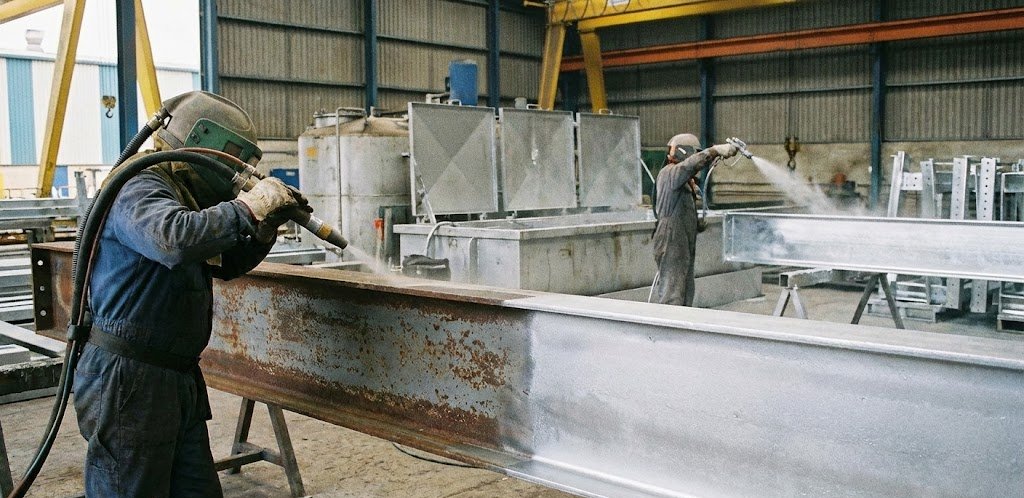
- Cleaning: Oil, grease, and suitable contaminants are removed from the metal surface.
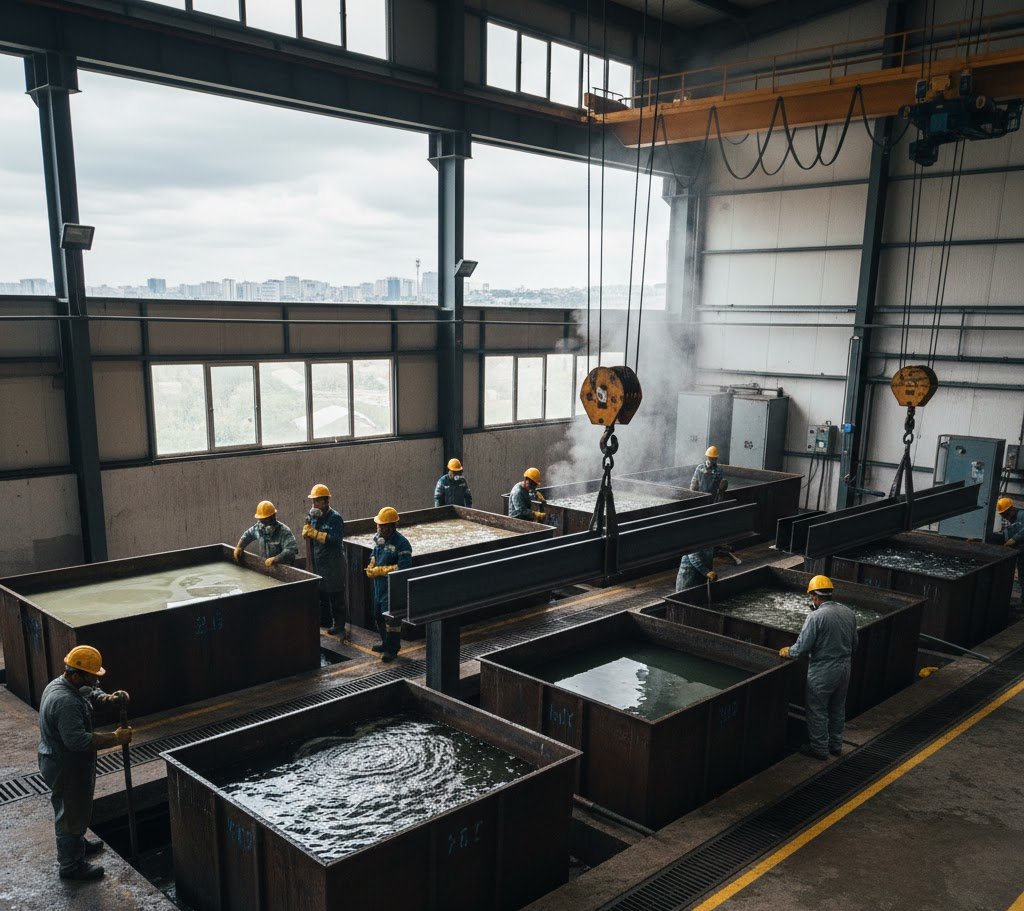
- Pickling: Rust and mill scale are removed through chemical surface preparation.
- Fluxing: The surface is prepared to reduce oxidation before immersion and support the galvanizing reaction.
- Galvanizing: The steel component is immersed in molten zinc.
- Withdrawal and Drainage: The component is removed under controlled conditions, allowing excess zinc to drain.
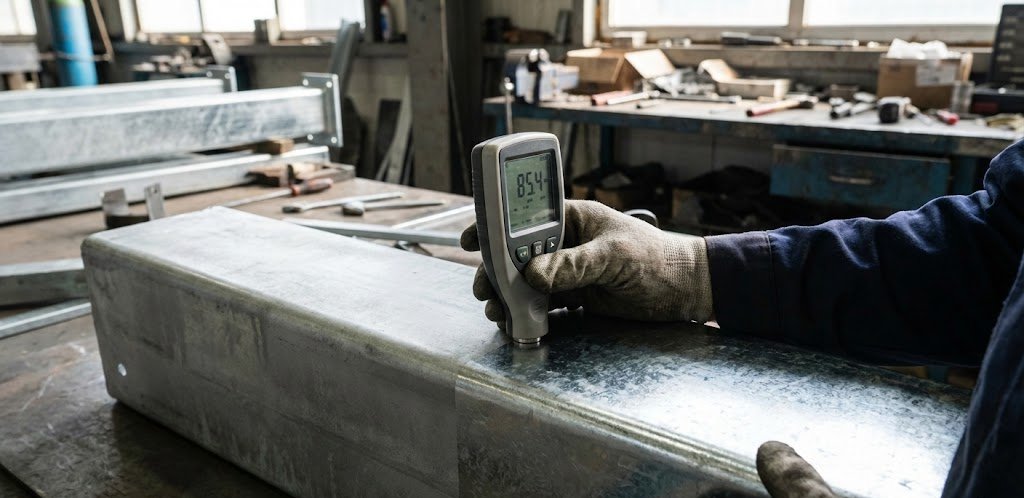
- Cooling and Inspection: The coating solidifies and is inspected according to applicable quality requirements.
Proper component design, including venting and drainage for hollow sections, is important for safe and effective hot-dip galvanizing.
Why Is Choosing the Right Galvanizing Company Important?
The performance of a galvanized coating depends not only on the selected method but also on surface preparation, steel chemistry, component design, process control, handling, and inspection.
Poor fabrication or inappropriate galvanizing preparation can lead to problems such as:
- Uncoated areas
- Excessive zinc accumulation
- Distortion
- Poor drainage
- Unsafe closed sections
- Difficulties during assembly
For this reason, technical coordination between the fabricator and galvanizer should begin before production whenever possible.
Project-Specific Solutions from Avrasya Galvaniz
For outdoor structural projects requiring hot-dip galvanizing, Avrasya Galvaniz provides project-specific corrosion protection solutions.
Services and capabilities can include:
- Hot-dip galvanizing
- Technical evaluation of fabricated steel components
- Project-specific production planning
- Quality control processes
- Coordination of component dimensions and galvanizing requirements
- Delivery planning
Sharing technical drawings, component dimensions, quantities, steel characteristics, and intended application before production can help determine the appropriate galvanizing process.
Applications of Galvanized Structures
Galvanized materials are widely used across many sectors, particularly in outdoor projects:
Agriculture: Greenhouses, animal shelters, fencing, and irrigation equipment
Transportation Infrastructure: Pedestrian bridges, highway guardrails, traffic structures, and support systems
Energy: Utility poles, transmission structures, solar panel support systems, and outdoor steel components
Urban Infrastructure: Lighting poles, barriers, railings, and selected street furniture structures
Construction: Structural steel components, platforms, stairs, railings, and scaffolding systems
The appropriate coating specification should be selected according to the environment and intended service life of each application.
Long-Term Protection Starts with the Right Galvanizing Method
Galvanizing can help outdoor structures achieve long service life, strong corrosion resistance, and reduced maintenance requirements. Hot-dip galvanizing is particularly suitable for many fabricated steel structures exposed to demanding outdoor conditions, while other zinc coating methods can serve different product and performance requirements.
The key is to match the coating method to the component design, environmental exposure, applicable standards, and expected service life.
For project-specific hot-dip galvanizing requirements, Avrasya Galvaniz can evaluate your technical drawings, dimensions, quantities, and operating conditions to help determine a suitable coating solution.