Galvanizing Methods
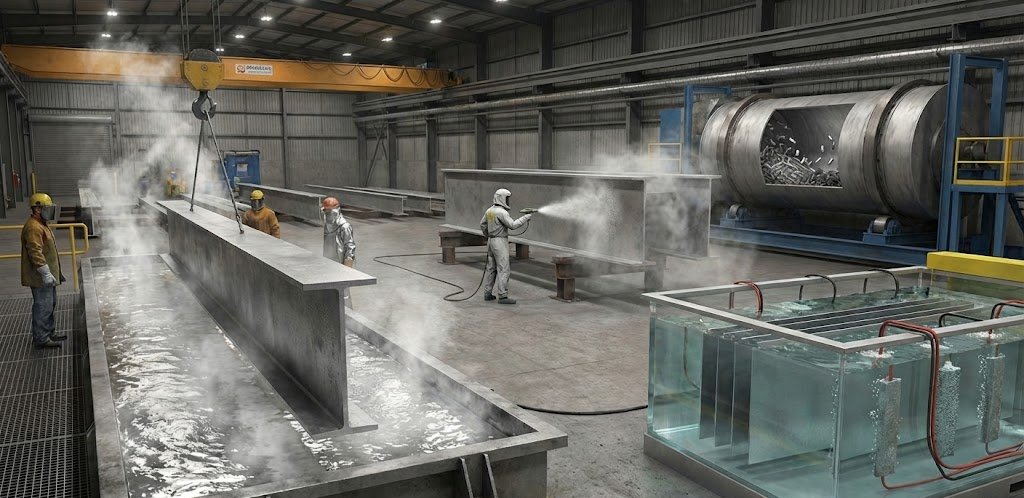
Galvanizing is one of the most widely used methods for protecting metals, particularly steel, against corrosion. A zinc coating creates a protective layer between the steel surface and environmental exposure, significantly slowing oxidation and rust formation. Today, zinc-based coating methods are used across industrial facilities, construction, automotive manufacturing, energy infrastructure, agriculture, and transportation.
Because corrosion can reduce the performance and service life of metal products, selecting an appropriate corrosion protection system can provide significant long-term economic benefits. Reduced maintenance requirements are one of the main reasons galvanizing is widely used.
General Principle of Galvanizing Methods
The basic principle of galvanizing is to apply zinc to a metal surface.
Zinc can protect steel in two ways:
- Barrier protection: The zinc coating reduces direct contact between steel and environmental factors such as moisture and oxygen.
- Sacrificial protection: Zinc is more electrochemically active than steel and can corrode preferentially around small exposed areas, helping protect the underlying steel.
Different zinc coating methods are selected according to the manufacturing process, required coating thickness, component geometry, operating environment, surface finish, and project cost.
Hot-Dip Galvanizing
Hot-dip galvanizing is one of the most widely used methods for providing long-term corrosion protection to fabricated steel products.
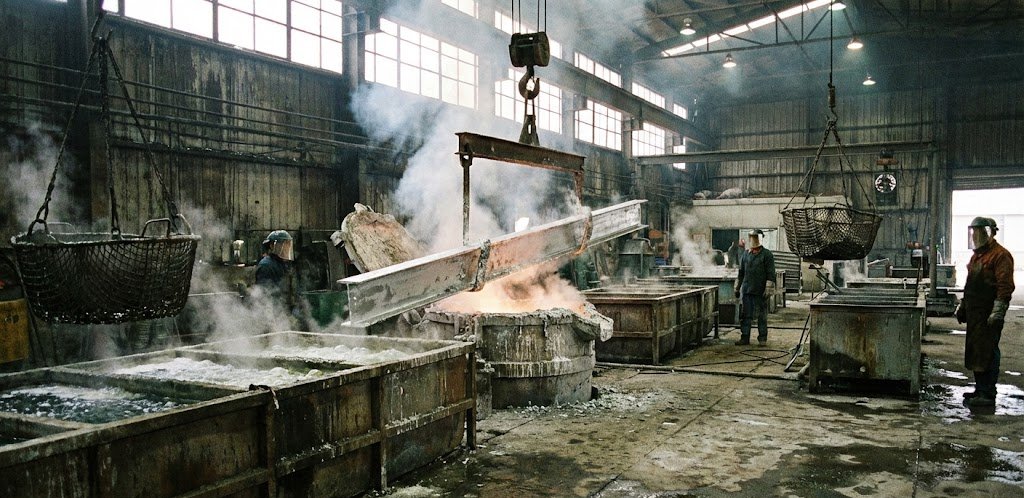
In this process, properly prepared steel is immersed in a bath of molten zinc, typically at approximately 450°C. Zinc reacts metallurgically with the steel surface and forms zinc-iron alloy layers with an outer zinc layer.
Hot-dip galvanizing is commonly used for:
- Structural steel
- Power transmission structures
- Utility poles
- Highway barriers
- Greenhouse structures
- Industrial platforms
- Railings
- Infrastructure components
- Selected port and coastal structures
Its suitability for outdoor fabricated steel is one of the reasons it is widely used in infrastructure and construction projects.
Electrogalvanizing
Electrogalvanizing uses an electrochemical process to deposit zinc onto a metal surface. It generally creates a thinner and more controlled coating than batch hot-dip galvanizing.
This method is commonly used where smooth appearance, dimensional control, or compatibility with subsequent manufacturing processes is important.
Applications may include:
- Automotive components
- Sheet metal products
- Fasteners
- Electrical components
- Precision-manufactured parts
The thinner coating can provide advantages for dimensional tolerances, but the required corrosion performance should always be evaluated according to the intended environment.
Thermal Spray Zinc Coating
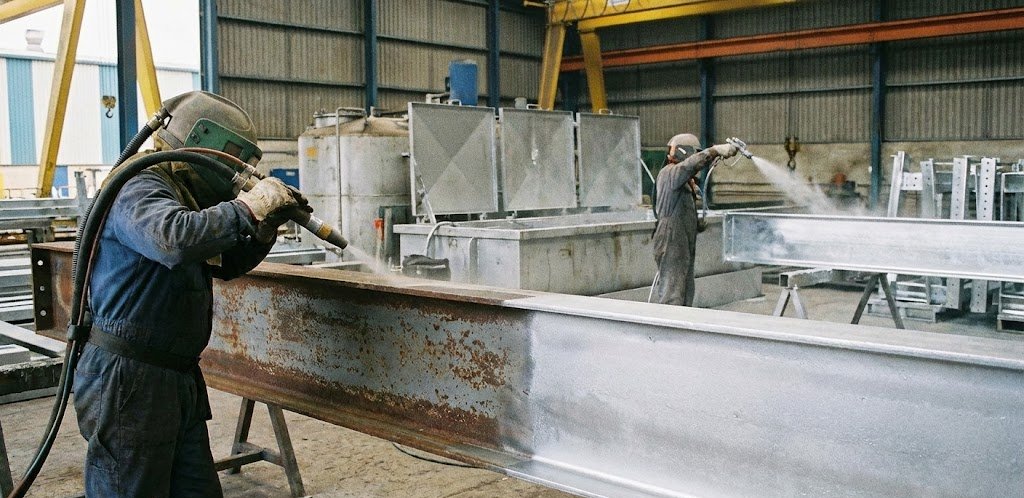
Thermal spraying applies zinc by melting zinc wire or powder and propelling the material onto a properly prepared steel surface.
Unlike hot-dip galvanizing, the component does not need to be immersed in a zinc bath. This makes thermal spraying useful for certain large structures, components that cannot be immersed, and some maintenance applications.
Typical applications may include:
- Bridges
- Large steel structures
- Industrial equipment
- Port structures
- Tanks and large fabricated components
Surface preparation is particularly important for thermal spray coatings because coating adhesion depends strongly on the prepared substrate.
Mechanical Galvanizing
Mechanical galvanizing deposits zinc onto suitable metal components through mechanical impact in specialized processing equipment.
The process is commonly used for certain small components such as:
- Bolts
- Nuts
- Washers
- Springs
- Fasteners
One important advantage is that the process can avoid the hydrogen charging associated with some acid/electroplating processes, making it useful for certain high-strength components where hydrogen embrittlement is a concern.
The correct process should still be selected according to the fastener specification and mechanical requirements.
Zinc-Rich Paint and Cold Galvanizing
The term “cold galvanizing” is commonly used commercially for zinc-rich paints or coatings applied by brush, roller, or spray.
These products should not be confused with hot-dip galvanizing because they do not form the same metallurgically bonded coating.
Zinc-rich coatings are often useful for:
- Repairing damaged galvanized areas
- Touch-up work
- Field maintenance
- Welded or modified areas
- Components that cannot be immersed
Their performance depends on zinc content, surface preparation, coating thickness, binder chemistry, application quality, and environmental exposure.
Comparison of Galvanizing Methods
| Method | Typical Coating Characteristic | Common Application |
|---|---|---|
| Hot-Dip Galvanizing | Robust, metallurgically bonded zinc coating | Structural and outdoor fabricated steel |
| Electrogalvanizing | Thin, controlled and smooth zinc coating | Automotive, sheet and precision components |
| Thermal Spray Zinc | Adjustable sprayed zinc coating | Large structures and field applications |
| Mechanical Galvanizing | Mechanically deposited zinc | Fasteners and small components |
| Zinc-Rich Coating | Paint-based zinc protection | Repairs and maintenance |
No single method is suitable for every application.
How to Choose the Right Galvanizing Method
Several factors should be considered when selecting a zinc coating method:
- Indoor or outdoor use
- Environmental corrosivity
- Required service life
- Required coating thickness
- Component dimensions
- Product geometry
- Mechanical loading
- Dimensional tolerances
- Surface appearance
- Subsequent painting or manufacturing
- Applicable technical standard
- Maintenance accessibility
- Lifecycle cost
→ Choose the coating for the environment, not simply by its initial price.
For example, fabricated structural steel exposed outdoors may benefit from hot-dip galvanizing, while precision components requiring thin coatings may be more suitable for electrogalvanizing.
Importance of Professional Galvanizing Services
Galvanizing requires technical knowledge, appropriate equipment, process control, and quality inspection.
For hot-dip galvanizing, important considerations include:
- Steel chemistry
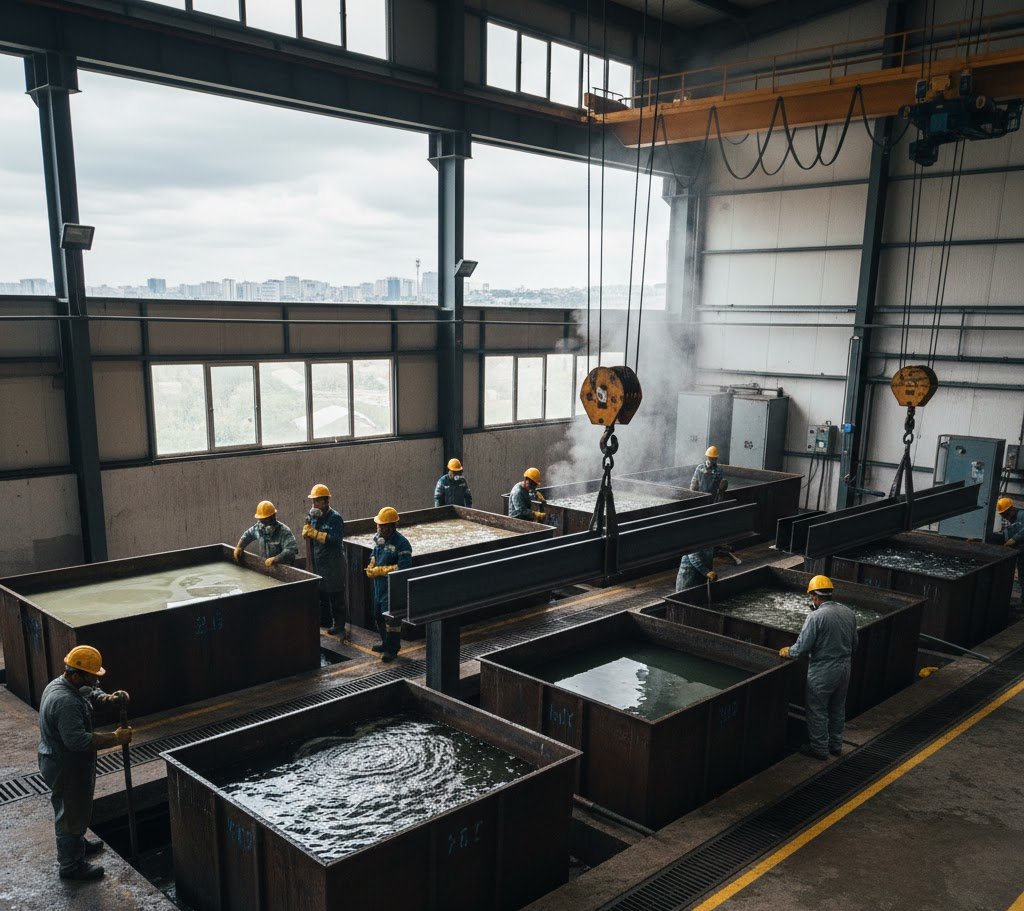
- Surface preparation
- Component design
- Venting and drainage
- Zinc bath conditions
- Material handling
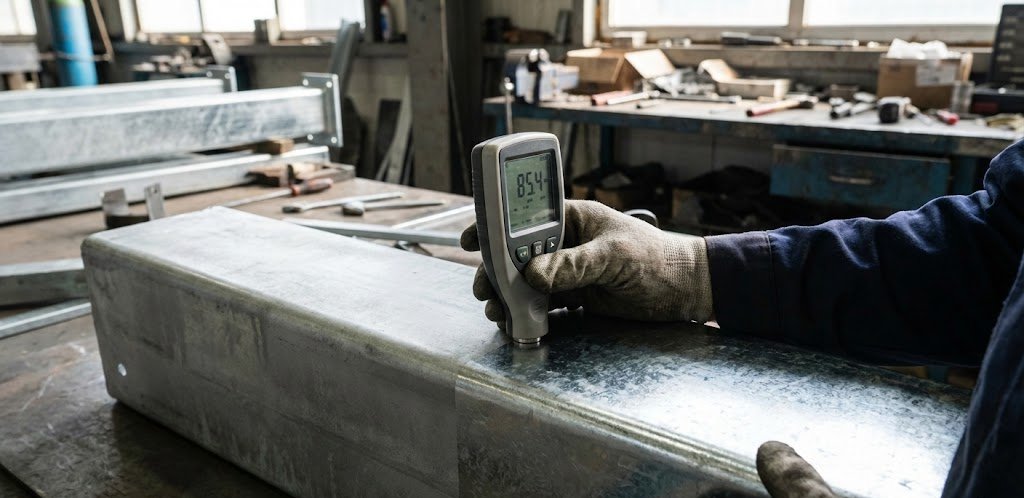
- Coating thickness
- Visual inspection
- Applicable standards
Poor component design or process preparation can lead to coating problems, drainage issues, distortion, or difficulties during assembly.
Galvanizing Solutions from Avrasya Galvaniz
Avrasya Galvaniz provides galvanizing solutions for fabricated steel and industrial projects. For hot-dip galvanizing requirements, project-specific factors such as component dimensions, geometry, steel characteristics, quantities, coating specifications, and delivery schedules can be evaluated before production.
Providing technical drawings before fabrication is particularly useful for hollow sections and complex components where venting and drainage need to be coordinated.
Importance of Galvanizing in Industry
Galvanizing supports industrial projects by extending the service life of steel and reducing corrosion-related maintenance.
Potential benefits include:
- Long-term corrosion protection
- Reduced repainting
- Lower maintenance frequency
- Reduced downtime
- Longer component service life
- Recyclability of steel and zinc
The overall environmental performance depends on the complete lifecycle, including production, galvanizing, transportation, maintenance, and recycling.
Selecting the Appropriate Zinc Coating
Hot-dip galvanizing, electrogalvanizing, thermal spraying, mechanical galvanizing, and zinc-rich coatings all serve different technical requirements.
The appropriate method depends on the product, environment, expected service life, dimensional requirements, maintenance strategy, and applicable standard.
For fabricated steel projects requiring professional hot-dip galvanizing, Avrasya Galvaniz can evaluate technical drawings, component dimensions, quantities, coating requirements, and delivery needs to provide a project-specific solution.