Galvanizing Equipment
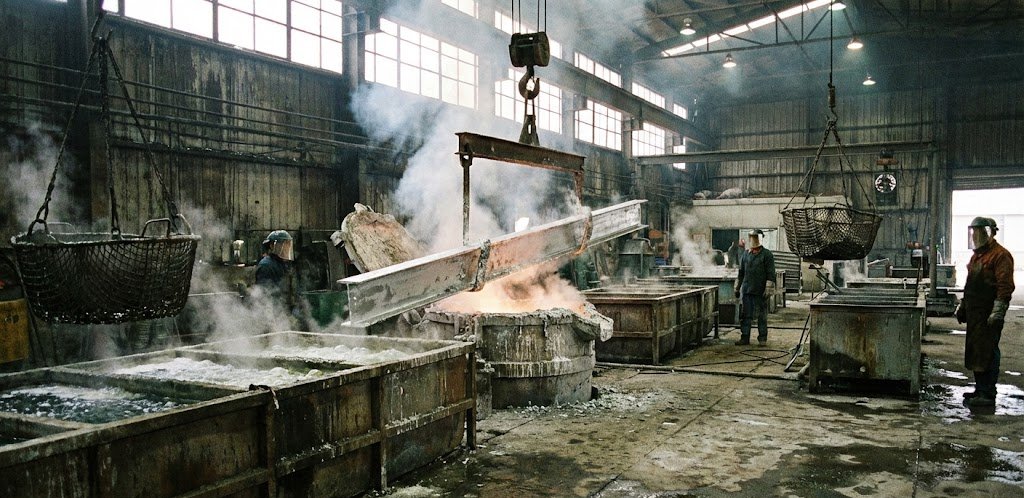
Galvanizing equipment consists of the plant components used to clean, prepare, coat, transport, and inspect iron and steel products. In a hot-dip galvanizing line, surface preparation tanks, rinsing sections, a flux tank, drying equipment, a zinc kettle, material handling systems, ventilation equipment, and quality control instruments work together as an integrated production system.
Selecting the right equipment is not only about production capacity. Component dimensions, weight, surface condition, processing sequence, maintenance accessibility, and occupational safety must also be considered.
Every section of a galvanizing line directly influences the stages that follow. For this reason, galvanizing equipment should be evaluated as an interconnected production system rather than as a collection of independent machines.
Main Purpose of Galvanizing Equipment
The primary purpose of galvanizing equipment is to create the controlled conditions required for zinc to react properly with a prepared steel surface.
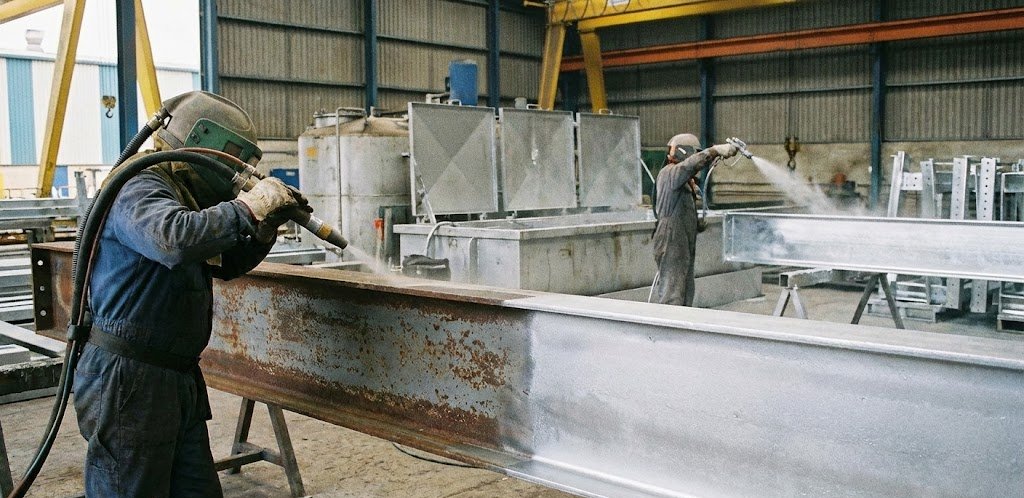
Before galvanizing begins, contaminants such as oil, grease, rust, mill scale, and production residues must be addressed.
After surface preparation, the component is prepared for immersion in molten zinc. Drying, material handling, immersion, withdrawal, and drainage must be managed under controlled conditions.
Following galvanizing, the component is cooled and inspected according to the applicable quality requirements.
“Galvanizing quality depends on the performance of the complete production line, not only on the zinc kettle.”
Insufficient cleaning, poor material handling, unsuitable component design, or uncontrolled process conditions can result in uncoated areas, zinc accumulations, drainage problems, or other surface irregularities.
Main Components of a Galvanizing Line
A galvanizing line contains equipment that operates in a defined sequence from incoming material inspection to final quality control.
| Equipment Group | Primary Function | Key Selection Consideration |
|---|---|---|
| Material receiving area | Inspect and classify components | Dimensions, weight and surface condition |
| Racking and lifting equipment | Handle components safely | Balance, lifting points and capacity |
| Degreasing tank | Remove oils and suitable contaminants | Tank capacity and chemical resistance |
| Pickling tank | Remove rust and mill scale | Ventilation and construction material |
| Rinsing tank | Reduce chemical carryover | Water management and overflow control |
| Flux tank | Prepare cleaned steel for galvanizing | Chemistry and contamination control |
| Drying unit | Remove moisture where the process requires | Heat distribution and airflow |
| Zinc kettle | Perform hot-dip galvanizing | Dimensions, heating and temperature control |
| Material handling system | Move components between stations | Load capacity and positioning control |
| Inspection area | Verify finished coating | Measurement, documentation and visual access |
The line layout should support efficient material flow and minimize unnecessary movement.
Surface Preparation Equipment
Surface preparation equipment forms the foundation of a hot-dip galvanizing line.
If the steel surface is not suitable for galvanizing, molten zinc cannot react consistently with it.
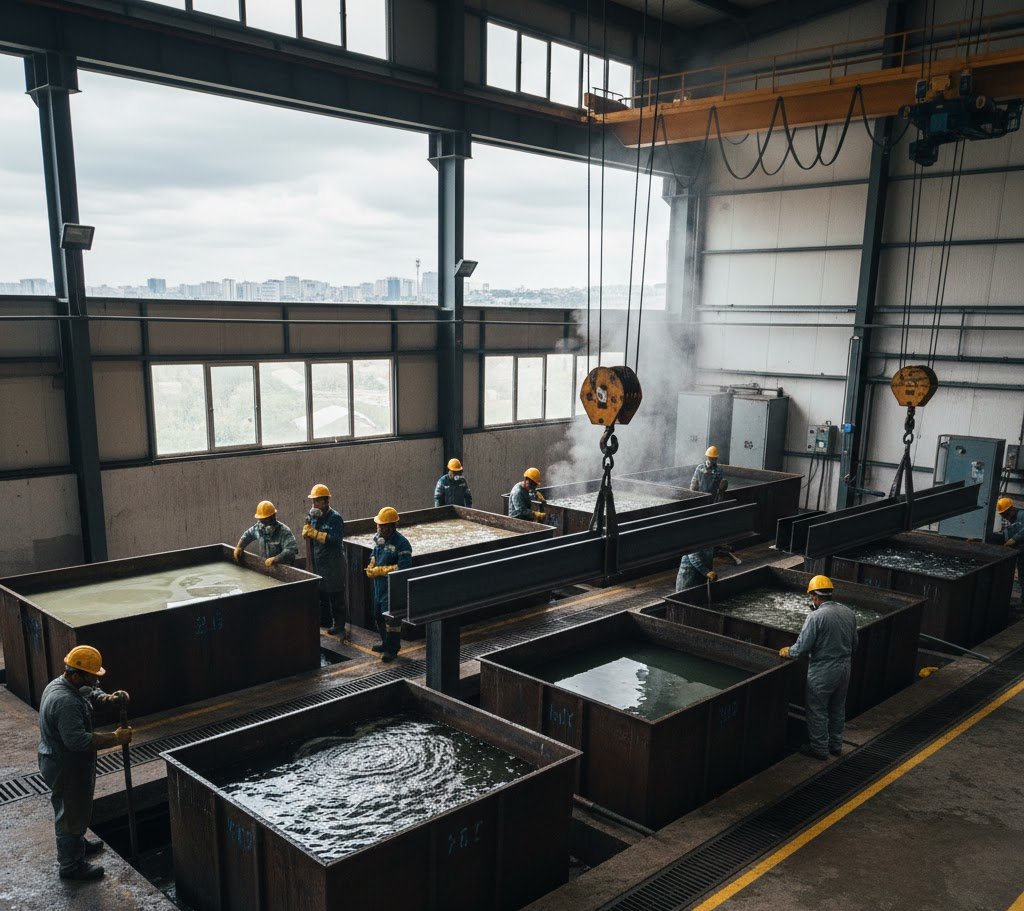
Degreasing Tanks
Degreasing tanks remove oil, grease, and suitable organic contaminants remaining from fabrication and handling.
The tank should be selected according to:
- Component dimensions
- Cleaning chemistry
- Process temperature
- Chemical resistance
- Maintenance requirements
Pickling Tanks
Pickling tanks remove rust and mill scale from steel using controlled acid chemistry.
Important considerations include:
- Tank construction material
- Acid resistance
- Ventilation
- Chemical monitoring
- Safe access
- Spill containment
Rinsing Tanks
Rinsing reduces chemical carryover between process stages.
Efficient rinsing can help stabilize process chemistry and reduce unnecessary contamination of subsequent baths.
Flux Tanks
Fluxing helps reduce oxidation of the cleaned steel before immersion and supports wetting by molten zinc.
Flux chemistry must be monitored and maintained according to the plant’s operating procedure.
Drying Equipment
Some galvanizing lines use drying or preheating equipment before immersion.
Removing moisture is particularly important because water contacting molten zinc can create a serious safety hazard.
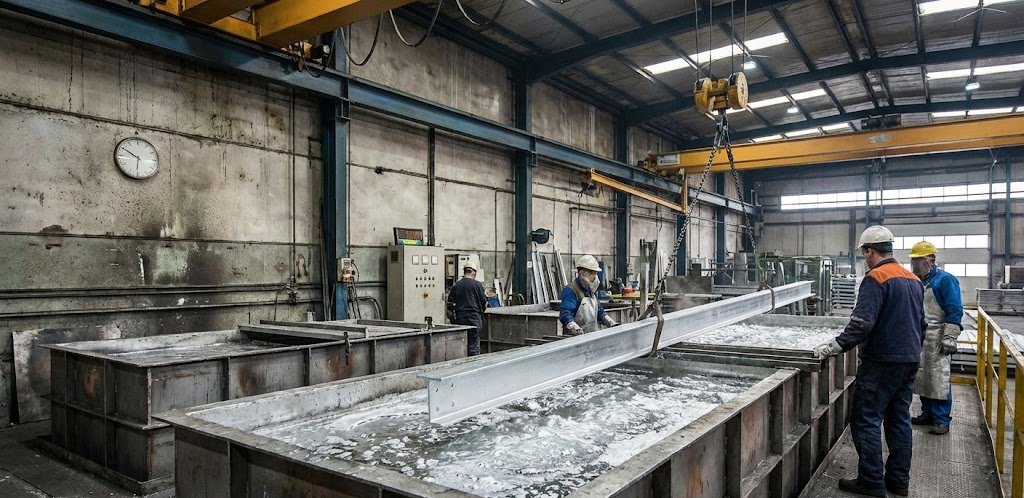
Zinc Kettle and Heating System
The zinc kettle is the central production component of a batch hot-dip galvanizing line.
Its dimensions should be selected according to the:
- Length of components
- Width
- Height
- Weight
- Product mix
- Required immersion orientation
The kettle should not be considered simply as a container large enough to fit a component.
Immersion angle, lifting equipment, safe operating clearances, venting, drainage, and zinc level must also be considered.
Heating System
The heating system maintains the molten zinc within the plant’s controlled operating temperature range.
Hot-dip galvanizing is commonly performed at approximately 450°C.
The heating arrangement may include:
- Burners
- Temperature sensors
- Control panels
- Furnace insulation
- Monitoring systems
Stable and controlled bath conditions support consistent production and efficient energy use.
Material Handling and Automation Equipment
Material handling systems move components between surface preparation tanks, drying areas, the zinc kettle, cooling areas, and inspection stations.
Common equipment includes:
- Overhead cranes
- Hoists
- Lifting beams
- Racks
- Chains and fixtures
- Conveyors in suitable production layouts
Load capacity should not be determined from component weight alone.
The system must also account for:
- Lifting accessories
- Component length
- Center of gravity
- Dynamic movement
- Swing
- Immersion orientation
Automation may monitor variables such as process time, tank levels, temperature, and material movement.
“Automation does not replace process decisions; it makes production more measurable and traceable.”
The appropriate balance between manual and automated operation depends on plant capacity and product diversity.
Ventilation and Occupational Safety Equipment
Galvanizing plants combine chemical baths, hot surfaces, molten zinc, heavy suspended loads, and industrial material handling.
For this reason, ventilation and safety equipment are integral parts of the production system.
Important equipment may include:
- Local exhaust ventilation
- Tank extraction systems
- Fume enclosures
- Scrubbers where required
- Spill containment
- Guarding
- Emergency stop systems
- Access control
- Non-slip flooring
- Lockout/tagout provisions
- Warning and monitoring systems
Crane travel paths and pedestrian routes should be separated wherever practical.
Risk should be controlled through equipment and process design before relying solely on operator intervention.
Quality Control Equipment
Quality inspection verifies whether galvanized products comply with the applicable coating specification.
Common equipment can include:
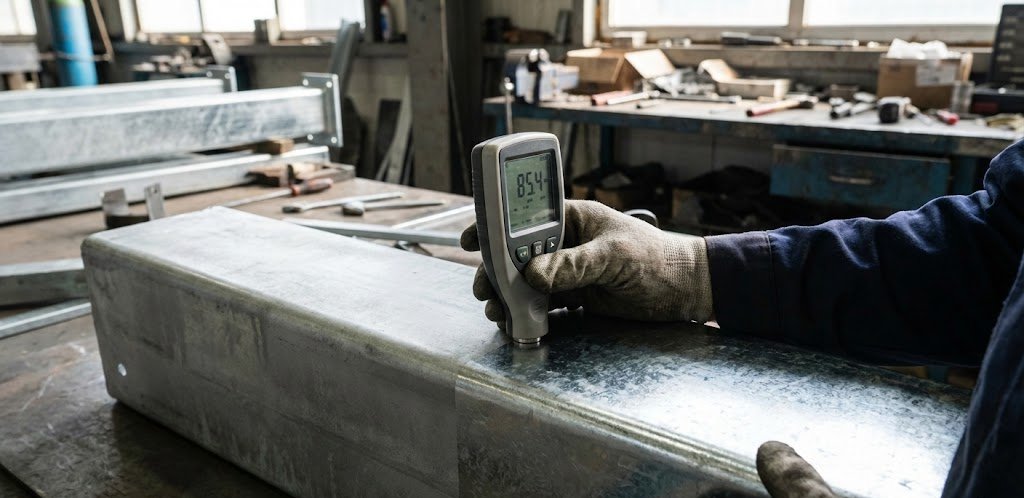
Magnetic Coating Thickness Gauges
Used for non-destructive measurement of zinc coating thickness on steel.
Visual Inspection Areas
Adequate lighting and safe access allow inspectors to evaluate coating continuity and surface conditions.
Dimensional Measuring Equipment
Used where holes, threads, connection surfaces, or other critical dimensions must be checked after galvanizing.
Digital Recording Systems
Production and inspection data can be stored for traceability where required by the project.
For batch hot-dip galvanized fabricated iron and steel articles, EN ISO 1461 is commonly used as a reference for coating requirements and test methods.
Key Criteria When Selecting Galvanizing Equipment
Before selecting equipment, the facility should define the products it expects to process.
Important criteria include:
- Maximum component dimensions
- Maximum component weight
- Target daily production capacity
- Product diversity
- Tank and kettle durability
- Material handling capacity
- Automation requirements
- Maintenance accessibility
- Ventilation
- Occupational safety
- Environmental controls
- Future capacity expansion
The capacity of a galvanizing line is not determined by the zinc kettle alone.
Surface preparation tanks, cranes, drying equipment, inspection areas, and logistics systems must support the same production flow.
Maintenance of Galvanizing Equipment
Regular maintenance supports production continuity and safety.
Important maintenance areas include:
- Crane and lifting equipment inspection
- Tank condition
- Kettle monitoring
- Burner maintenance
- Temperature sensors
- Ventilation equipment
- Chemical handling systems
- Safety devices
- Control panels
- Coating thickness instruments
Preventive maintenance can reduce unplanned downtime and help identify equipment deterioration before it affects production.
Environmental Control Equipment
Modern galvanizing plants also require systems for managing environmental impacts.
Depending on plant design and regulatory requirements, these may include:
- Air filtration
- Scrubbers
- Wastewater treatment
- Chemical storage systems
- Spill containment
- Zinc ash and dross recovery
- Water management
- Energy monitoring
Environmental management should be integrated into plant design rather than treated as a separate process.
Avrasya Galvaniz and Industrial Production
Avrasya Galvaniz provides hot-dip galvanizing services for fabricated steel and industrial projects.
Its production approach considers material receiving, surface preparation, galvanizing, inspection, and delivery as interconnected stages.
Different product groups may include:
- Structural steel
- Steel poles
- Railings
- Industrial components
- Infrastructure steelwork
- Various fabricated metal products
For each project, component dimensions, weight, geometry, surface condition, venting and drainage, coating requirements, and delivery planning should be evaluated together.
Operational Priorities in Galvanizing Lines
For sustainable and consistent production:
- Surface preparation tanks and the zinc kettle should support the intended product dimensions.
- Cranes, lifting beams, chains, and fixtures should be inspected regularly.
- Process conditions and production records should be monitored.
- Ventilation systems should remain effective during operation.
- Quality inspection results should be reviewed alongside production and maintenance data.
- Maintenance access should be considered during equipment layout.
- Future capacity requirements should be considered during plant planning.
Galvanizing equipment does not consist of independent machines. Surface preparation, material handling, molten zinc processing, ventilation, environmental controls, and quality inspection must operate as a coordinated system.
Appropriate equipment selection and disciplined process management support coating quality, production continuity, worker safety, and efficient operation. For industrial hot-dip galvanizing requirements, Avrasya Galvaniz can evaluate component dimensions, quantities, technical drawings, and project specifications to support an appropriate production process.