Disadvantages of Galvanizing
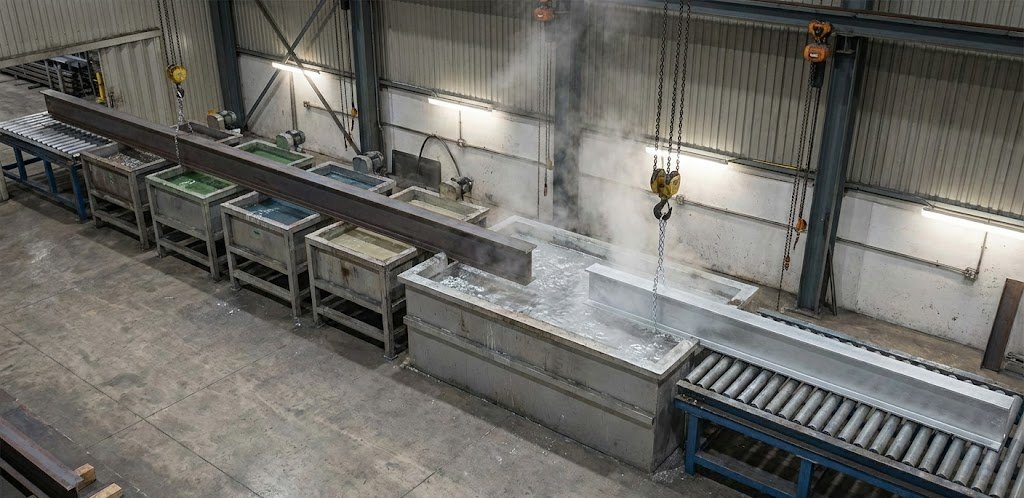
Galvanizing is an effective method for protecting steel against corrosion, but it is not ideal for every application. Product geometry, dimensional tolerances, operating environment, steel chemistry, fabrication details, and surface appearance requirements can create limitations that should be considered during project planning.
Hot-dip galvanizing forms metallurgically bonded zinc-iron layers on steel. These coatings are generally durable, but excessively thick coatings on certain reactive steels can become more susceptible to mechanical damage. For this reason, the coating should meet the applicable technical requirements rather than simply being made as thick as possible.
Complex geometries can also make galvanizing more challenging. Internal corners, narrow openings, overlapping surfaces, and enclosed sections require careful design to allow zinc and process solutions to flow safely.
Appearance Limitations of Galvanized Coatings
Hot-dip galvanizing is primarily a corrosion protection process rather than a decorative finishing method.
The finished surface can vary from bright silver to matte gray. Differences in color, texture, spangle, roughness, and local appearance can occur because of:
- Steel chemistry
- Material thickness
- Cooling conditions
- Surface condition
- Zinc drainage
- Fabrication details
These differences do not necessarily indicate poor coating quality.
For architectural projects requiring highly consistent color or appearance, additional finishing may be necessary. A compatible paint system can be applied over galvanized steel when a particular color or finish is required.
Energy Consumption and Production Costs
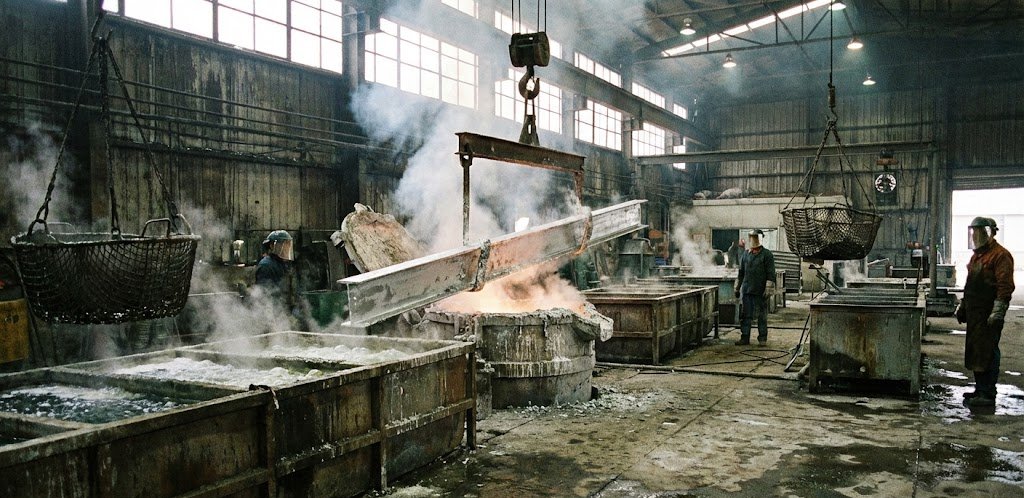
Hot-dip galvanizing requires molten zinc to be maintained at approximately 450°C, along with energy for material handling, pretreatment, drying, ventilation, and other plant operations.
As a result, energy is an important production input.
Galvanizing costs can also be affected by:
- Zinc market prices
- Energy prices
- Component weight
- Surface area
- Product geometry
- Surface condition
- Production volume
- Transportation
- Handling requirements
However, initial processing cost should be considered alongside lifecycle costs. Reduced maintenance and repainting requirements may offset a higher initial cost in suitable applications.
Welding and Mechanical Processing Considerations
Fabrication should generally be completed before hot-dip galvanizing whenever practical.
Welding galvanized steel requires appropriate procedures because heating the zinc coating can generate zinc oxide fumes. Suitable ventilation, fume extraction, work procedures, and personal protective equipment are therefore important.
Cutting, drilling, grinding, or welding after galvanizing can also remove or damage the zinc coating. These areas may require repair using an appropriate method.
Dimensional Tolerances
Galvanizing adds coating thickness to steel surfaces. This can affect:
- Threads
- Holes
- Close-fitting connections
- Precision assemblies
- Sliding components
Components with tight tolerances should therefore be designed with the coating process in mind.
Excess Zinc Accumulation
Complex geometry or poor drainage can result in excessive zinc accumulation in certain areas.
Potential problem areas include:
- Corners
- Holes
- Overlapping surfaces
- Internal cavities
- Drainage points
- Threaded areas
Excessive zinc may interfere with assembly or create sharp projections.
Correct component design, appropriate venting and drainage, controlled withdrawal, and post-galvanizing inspection can reduce these issues.
→ Design for drainage before galvanizing, not after coating problems appear.
Hydrogen Embrittlement Risk
Hydrogen embrittlement is an important consideration for certain high-strength steels.
The risk is particularly associated with processes that can introduce hydrogen into susceptible steels, including acid cleaning and some electroplating operations.
Electrogalvanized high-strength components may require specific process controls and post-treatment according to the relevant material and fastener standards.
For hot-dip galvanizing, high-strength steels also require careful evaluation. Material strength, hardness, manufacturing history, and pretreatment conditions should be reviewed before selecting the coating process.
The correct approach is to assess hydrogen embrittlement risk according to the specific steel and applicable technical standard.
Limitations for Large Components
The dimensions of a hot-dip galvanizing bath and the plant’s lifting equipment impose practical limits on the components that can be processed.
Large or unusually shaped components may require:
- Design segmentation
- Alternative fabrication arrangements
- Special handling
- Progressive or double-end dipping where technically appropriate
- A different corrosion protection method
These requirements should be discussed with the galvanizer during the design stage.
Risk of Distortion
Hot-dip galvanizing exposes fabricated steel to elevated temperatures. Some components can distort because of:
- Residual stresses from welding
- Asymmetrical fabrication
- Large differences in material thickness
- Poor structural balance
- Inappropriate fabrication sequence
Distortion is not inevitable, but susceptible designs should be reviewed before galvanizing.
Fabrication methods, welding sequence, component symmetry, and lifting arrangements can all influence dimensional stability.
Not Every Environment Is Suitable for Zinc Alone
Galvanized steel performs well in many atmospheric environments, but zinc is not equally resistant to every chemical condition.
Aggressive acids, strong alkalis, certain chemicals, persistent salt exposure, and unusual industrial environments can accelerate zinc consumption.
In such cases, project designers may consider:
- A duplex galvanizing-and-paint system
- Alternative metallic coatings
- Specialized protective coating systems
- Different material selection
Environmental exposure should therefore be assessed before specifying galvanizing.
Proper Design Can Reduce Many Limitations
Many problems associated with galvanizing can be prevented during the design and fabrication stages.
Before hot-dip galvanizing, consider:
- Component dimensions relative to bath capacity
- Venting and drainage requirements
- Hollow sections and enclosed spaces
- Steel chemistry
- Material thickness differences
- Welding sequence
- Threads and dimensional tolerances
- Required surface appearance
- Post-galvanizing fabrication
- Operating environment
Early coordination between the designer, fabricator, and galvanizer can significantly reduce production risks.
Minimizing Galvanizing Limitations with Professional Process Control
Working with an experienced galvanizing provider can help identify potential issues before production begins.
Avrasya Galvaniz provides hot-dip galvanizing solutions for fabricated steel and industrial projects. Project-specific evaluation can include:
- Technical drawing review
- Component dimensions
- Steel characteristics
- Venting and drainage
- Surface preparation requirements
- Coating specifications
- Quality inspection
- Production planning
- Delivery requirements
Professional process control cannot eliminate every limitation of galvanizing, but it can help determine whether the method is suitable for the component and reduce avoidable production problems.
Galvanizing offers strong long-term corrosion protection, but its limitations should be considered alongside its advantages. Surface appearance, dimensional tolerances, component size, steel characteristics, welding requirements, chemical exposure, and fabrication design can all influence whether galvanizing is the appropriate solution.
For the best results, the coating method should be selected according to the actual project requirements rather than assuming galvanizing is automatically suitable for every steel component.